Translate

Saturday, 23 April 2022

Fossil Fuels:20 oil and gas firms who support Paris Agreement projected to spend $932bn on new sites by 2030- A report from Sky News


Fossil fuels: 20 oil and gas firms who support Paris Agreement projected to spend $932bn on new sites by 2030

All 20 firms have voiced support for the Paris Agreement, but UN scientists warn any new oil and gas sites would put 1.5C Paris goal beyond reach.

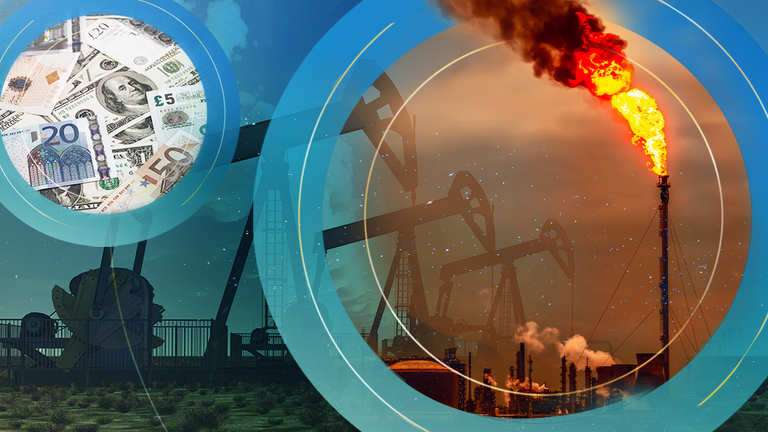
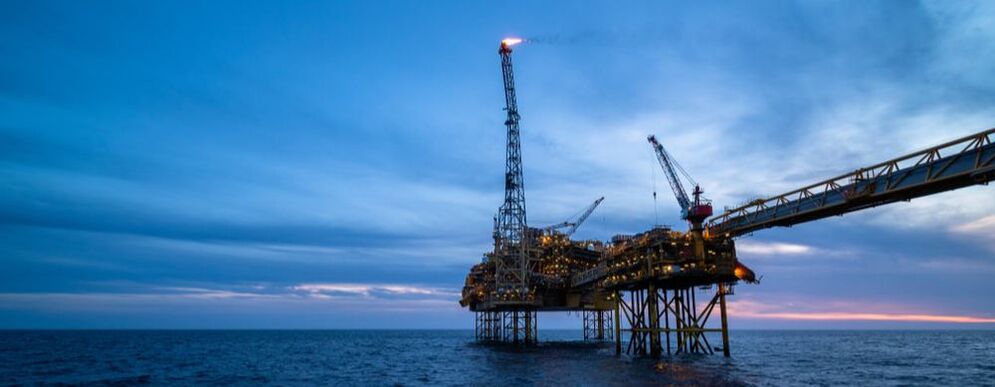
climate teaser illustrating oil/gas extraction and cash
Image: Twenty oil and gas companies who support Paris climate accord are projected to spend billions developing new sites

Just 20 fossil fuel firms including Shell and BP are projected to spend $932 billion (£715 bn) on new oil and gas fields by 2030, according to new research shared exclusively with Sky News.

All the oil majors have pledged support for the Paris Agreement, which commits to limiting global warming to ideally 1.5C above pre-industrial levels - firms who hadn't were discounted from the list.

The analysis from campaigners Global Witness and Oil Change International comes a week after the United Nations (UN) called it "moral and economic madness" to invest in new oil and gas.

UN scientists (IPCC) warned those assets risked becoming stranded by mid-century, and that new fossil fuel projects would tip the world well over the 1.5C Paris target.

Investments from companies that say they are aligned with Paris look "deeply hypocritical" and stand in "stark contrast" with the IPCC's findings, said Global Witness campaigner Barnaby Pace.

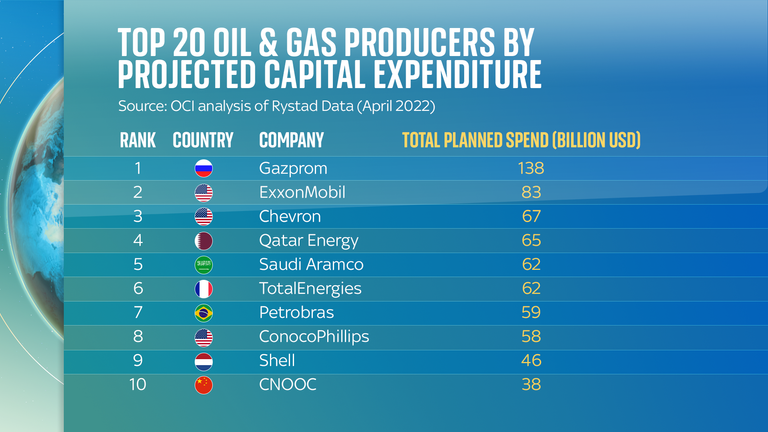
Twenty oil and gas companies who support Paris climate accord are projected to spend billions developing new sites
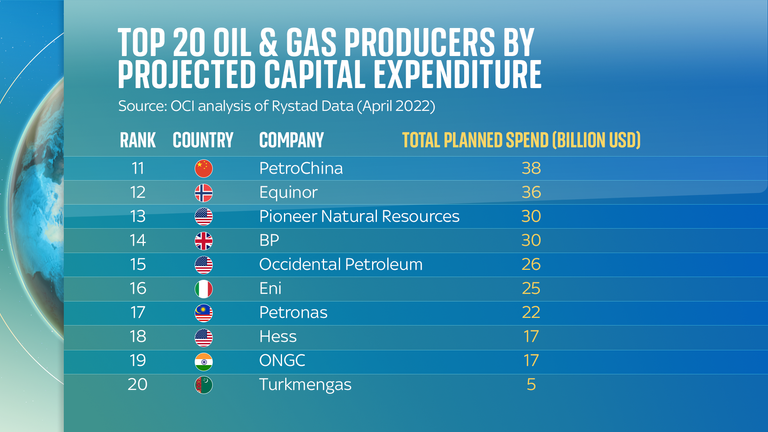
Image: The list excludes fossil fuel majors that haven't pledged alignment with the Paris Agreement
Twenty oil and gas companies who support Paris climate accord are projected to spend billions developing new sites
Image: The analysis predicts spend will increase to $1.5trillion by 2040

Russian state company Gazprom topped the list with a predicted spend of $138bn (£105bn), Shell ranked ninth with $46bn and BP fourteenth with $30bn, according to the researchers' analysis of Rystad Energy data.

The figures cover new oil and gas sites being explored or developed, not those already up and running.

"We aren't ready to stop using oil and gas overnight, but these are investments in new oil and gas fields that will be only coming online in years or decades to come," added Mr Pace.

By the end of 2040, the collective spend is expected to reach $1.5 trillion, the analysis shows.

Clean energy investments by the oil and gas industry accounted for around 1% of total capital expenditure in 2020, according to the International Energy Agency.

ExxonMobil - which ranked second with a projected spend of $83bn - said it planned to invest $15bn in "lower-emissions technologies". These include hydrogen, biofuels, and technology to suck carbon out of the air - which scientists say is necessary and should be reserved for very limited sectors - but not renewable energy, other than to electrify some operations.

Shell expects a gradual decline in total oil production of about 1-2% a year, and plans to invest around £15bn in "low and zero-carbon" energy - including offshore wind and hydrogen - in Britain, representing 75% of their UK investment.

Chevron said oil and natural gas are "critical to ensuring reliable energy for decades" and it was reducing the emissions from the extraction process.

"As the energy transition unfolds, demand for fossil fuels will likely fall and companies must ensure that they... don't sanction high cost products that are not needed and ultimately will fail to deliver a return to their shareholders," said Mike Coffin from financial think tank Carbon Tracker.

That means companies planning on sanctioning new oil and gas projects are "thus effectively betting both on the collective failure to limit warming to 1.5 degrees, and on [the failure of] renewables and technologies such as battery storage to substitute for oil and gas," he said.


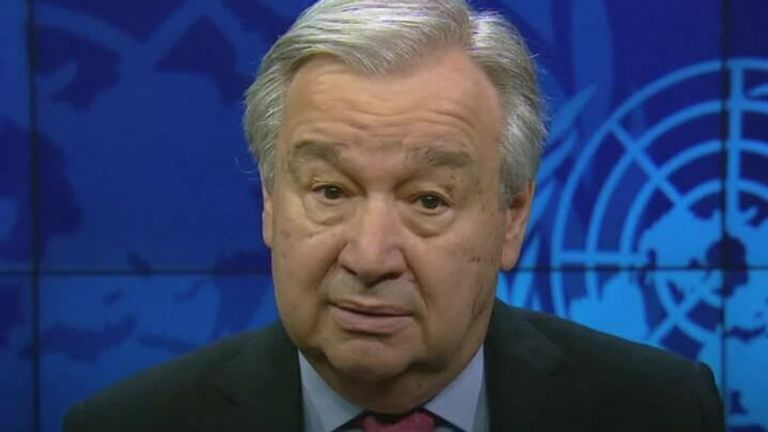
In his statement, Antonio Guterres said ‘high emitting governments and corporations’ were turning a blind eye to the imminent climate ‘disaster’

The British Government last week sparked criticism when it confirmed in its new Energy Security Strategy it would grant new licences for new oil and gas fields in the North Sea.

Unfortunately, this is what a lot of people have predicted would happen and just makes a farce of the whole COP26 agreement, as usual it is all about money.  What will it take to make these people stop?

It is so frustrating and sad that the human race is prepared to go down the road of destruction for money, we are screaming as loud as we can but they can't hear because they have their heads stuck in the sand.  I have always thought that prevention is better than cure but we all seem to be on this downward spiral to potential disaster if everyone doesn't do their part.

Just one person can make a difference!

The blog song for today is: " We can work it out" by the Beatles

TTFN

Monday, 18 April 2022

The Big Plastic Count - the UK's biggest ever investigation into household plastic waste for one week, 16-22 May 2022 (UK only)

 I’m joining #TheBigPlasticCount – the UK’s biggest ever investigation into household plastic waste. For one week, 16–22 May, people all over the country are counting their plastic packaging waste to help gather new, game-changing evidence of the true scale of the plastic problem. The results will show the government what really needs to be done to tackle it, and the more people who take part, the more impact we'll have. Will you join me? Here’s the link: https://act.gp/3iOmgvD

How do I order my pack?

When you sign up you’ll be asked for your mailing address to receive a physical pack. Of course it’s plastic-free and printed on recycled paper, but you can also opt out if you’d rather download a digital version.

Can we take part as a group?

We’d love community groups and teams of colleagues to get together and join The Big Plastic Count! Simply sign up individually and then you can swap tips during the week and share your results between yourselves.

My pack hasn’t arrived yet, what can I do?

Most packs will arrive a week before the count in May. If there’s an issue though you can access the digital pack here or it’s in the email you recieved when you first signed up. It includes a printable tally sheet – or you can tally online too.

What do I do if I miss a day of counting?

Don’t worry if you miss a day of counting – when you submit your results you can select how many days you counted for.

What if I miss an item of plastic?

If everyone does 7 whole days and counts all their plastic waste we get better data, but if you miss something, don’t worry! Your data is still important.

How do I work out which category to put an item in?

Use your instinct and judgement to categorise your plastic, you’ll probably get it right! But if you’re still unsure and would like some more help, visit our help page where you can find a long list of examples and definitions.

What aren’t we counting?

Don’t include: plasters, medication packaging, non-dairy milk/juice cartons (TetraPak), nappies, dog poo bags, plastic cutlery or period products.

What if we use a lot of plastic?

Please remember, this isn’t about feeling guilty about the amount of plastic you use! Too much single-use plastic is produced and there aren’t reusable alternatives that suit everyone’s needs. Together we’re gathering the evidence needed to push for proper action on plastic.

What should I do with my plastic afterwards?

Dispose of your plastic waste in the same way you would normally – reuse what you can, recycle what you can and throw away the rest. We know it may feel disheartening, but you’re doing your bit, and with the evidence you’re helping us build, we’ll push the government, big brands and supermarkets to do theirs.


Why is The Big Plastic Count only over one week

The aim for The Big Plastic Count is to get lots and lots of people involved, counting their household plastic packaging. One week is enough time to collect useful data without taking up too much of people's time.

How do you work out my footprint?

Once we have an individual household’s count results, we apply national data on different types of plastic to calculate how much, on average, would be collected for recycling, what’s then likely to happen to it, and what that means for your footprint.

I wish there was something like this here in Spain, although I am hoping that after the UK one, they may follow because it is linked to Greenpeace! I will be counting my plastic all the same, just out of curiosity!

It will be really interesting to see the results! I fear that we already know it will be bad, unfortunately official bodies like numbers, so that is the way it is done!

The blog song for today is: "Isis"  by Bob Dylan

TTFN

Saturday, 16 April 2022

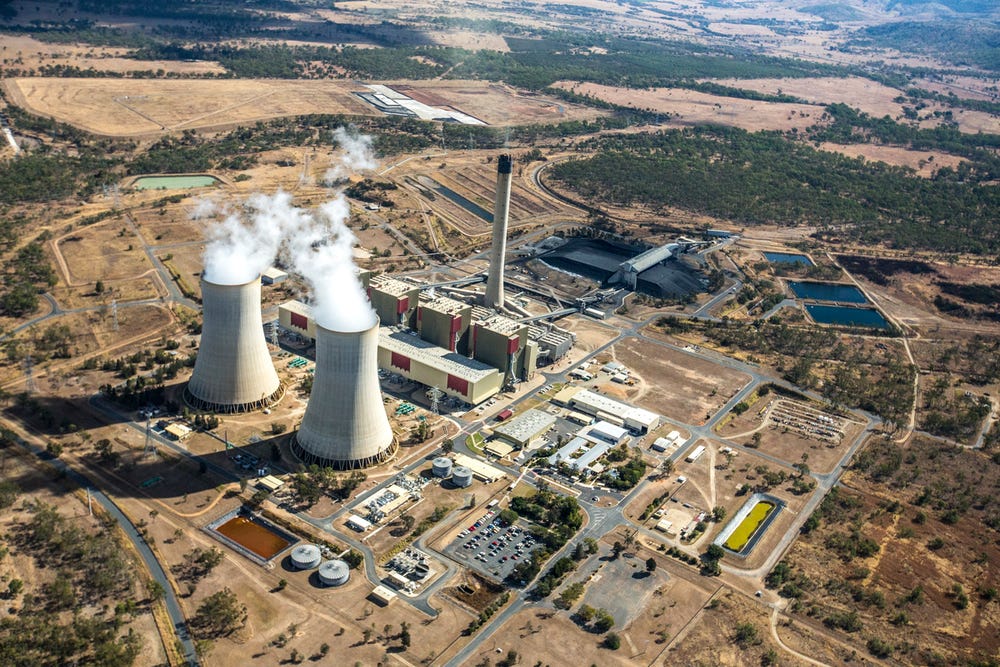
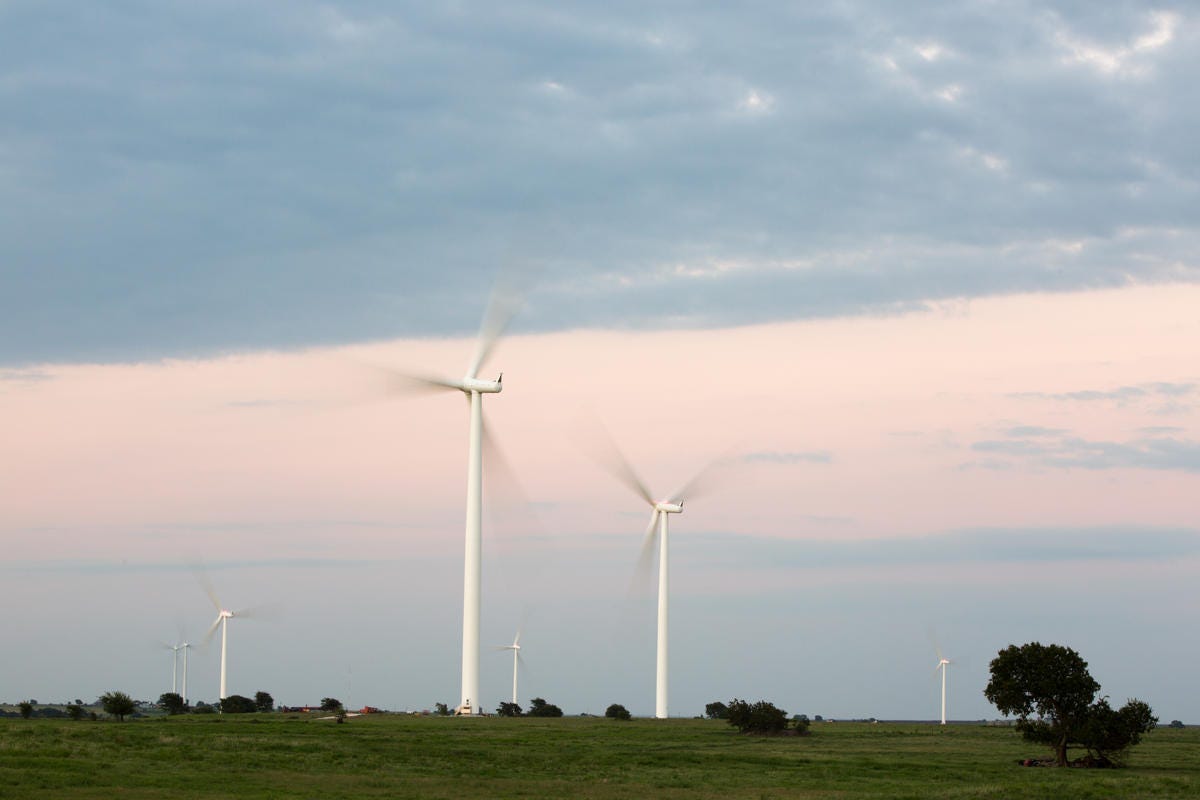
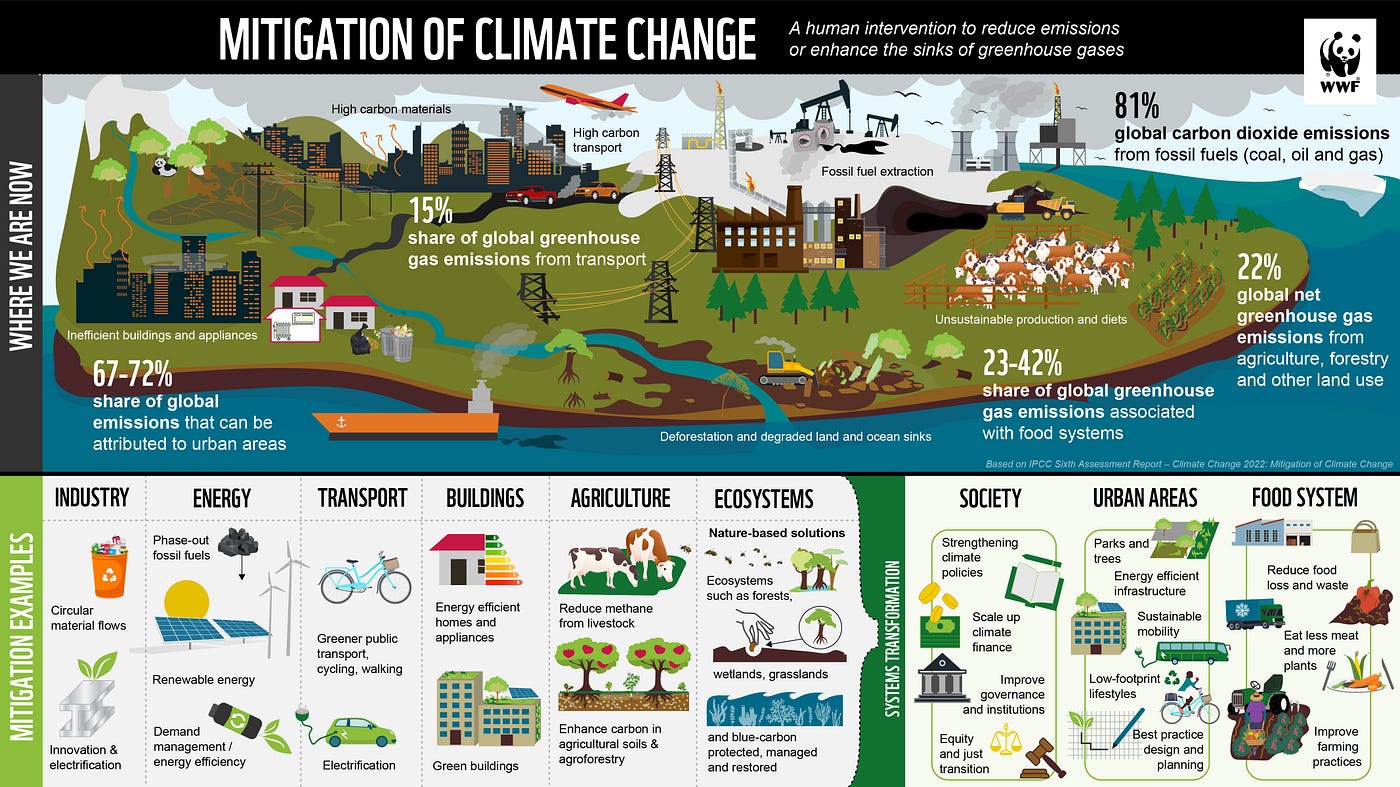
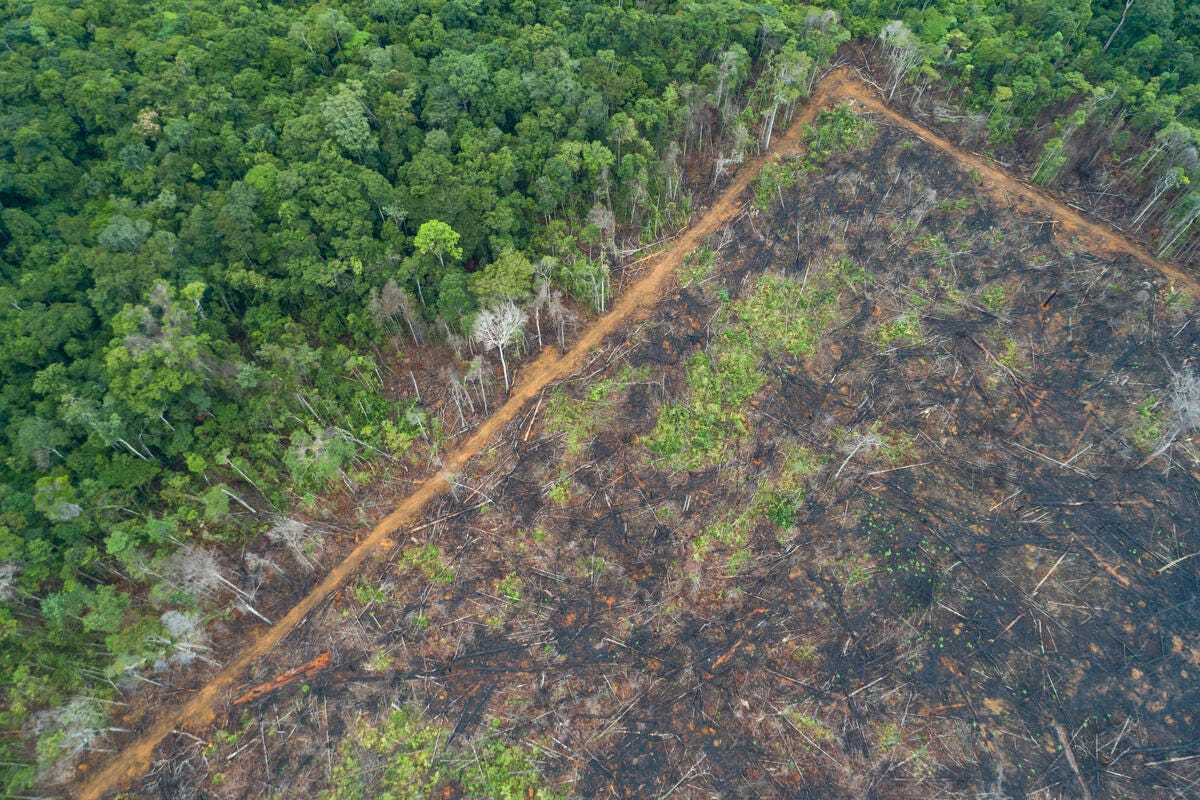
We have all the tools to cut emissions, but time is short- a report from WWF dated Apr 4 · a 5 min read


We have all the tools to cut emissions, but time is short

© WWF / James Morgan
© WWF-US / Eric Kruszewski
© Andre Dib / WWF-Brazil

Friday, 15 April 2022

Why we need a windfall tax on oil companies- A report from: Tax Justice UK


Why we need a windfall tax on oil companies

11/2/2022

 
Picture

Last year the oil company BP made more money in two minutes than a middling British family makes in a year. The company made £9.5 billion profit in 2021, that’s £18,000 per minute.
 
At the same time, the latest figures show that BP paid no tax on its North Sea oil and gas business. Instead the UK treasury paid BP a subsidy of £35 million.
 
A system of generous tax breaks means that BP has paid no tax on its North Sea business. In fact, it’s effective tax rate is a whopping minus 54%.
 
The revelation came from climate campaign group Uplift. They’ve done great work uncovering the generous tax arrangements given to oil giants like BP.
 
Big oil companies are making bumper profits, and receiving subsidies from the government. Yet families are struggling to keep the lights on.
 
We’ve joined Uplift, and other campaigners, in calling for a windfall tax on the big oil companies. This would help fund proper support for families struggling with higher energy bills.
 
During the pandemic some companies and wealthy individuals have done very well financially. At the same time, many families have struggled.
 
Oxfam recently revealed that the world’s ten richest saw their wealth double over the last two years. Last year we found that six companies shared excess profits of £16 billion during the pandemic. We called for a Pandemic Profits tax to help pay for the recovery from covid.
 
Among those hardest hit by the cost of living squeeze are carers, the disabled and people who have lost their jobs.
 
A new plan, written by people with experience of the benefits and welfare system, sets out how to deal with entrenched povertyThe Commission on Social Security proposed a guaranteed decent income for all and a welfare system that has dignity at its heart.
 
These are ambitions we support.

If you would like to know more about this subject visit the website, 

( https://www.taxjustice.uk/ )it is full of interesting stuff and campaigns that you can get involved in. I think it applies to wherever you live, this is an ongoing system of avoidance that needs to change.

The blog song for today is:" Don't tell me"by Madonna

TTFN


Wednesday, 13 April 2022

How the next generation of activists are tackling one of the biggest climate issues - a rrport from Earthday.org


The Great Global Cleanup

How the next generation of activists are tackling one of the biggest climate issues

Key Takeaways: Earth Day Live – Community and Youth Activism: The Next Generation

Environmental youth activists are the future of our planet, with our youngest generations set to inherit a planet plagued by the devastating effects of global climate change. Perhaps one of the most prevalent environmental issues, plastic pollution, is being faced head on by youth activists around the world. 

On March 31st, 2022, EARTHDAY.ORG hosted a panel of youth activists discussing the importance of addressing plastic pollution, as well as ways they are creating change in their communities and countries worldwide. 

Moderated by Broadcaster and Journalist Colm Flynn, the panel included Lefteris Arapakis of Greece, Lilith (Lilly) Electra Platt of The Netherlands, Pedro Urioste of Brazil, and Heidi Solba of Estonia. 

Pedro Urioste is a 16-year-old activist working on the interconnectedness of Brazil’s social and environmental issues. Brazil is not new to the environmental crisis, suffering decades worth of deforestation and pollution. While progress continues to be made, Pedro believes more needs to be done. Currently, only 3% of recyclable material in Brazil is actually being recycled. Polluted neighborhoods in Brazil is a social issue as well, with Pedro noting, “When we talk about plastic and we talk about pollution in general, we must always remember who are the ones who must carry the burden of all of this pollution.”

Pedro currently works with Limpia Brasil and founded the Youth Who Clean Program, which aims at promoting cleaning efforts and lectures in local schools. 

On the other side of the world, Lilith (Lilly) Electra Platt is working to inspire people to reduce their plastic usage. At just 13-years-old, Lilly has founded Lilly’s Plastic Cleanup. She estimates that she has collected over 200,000 pieces of garbage since her movement started. When asked about why she believes people litter, Lilly simply stated, “A lot of people just think it’s convenient,” adding that people genuinely might know the consequences of their actions but do it anyway. 

Lefteris Arapakis, Co-founder and Director of Enaleia, works at motivating fishing communities to clean up plastic pollution in our oceans. Coming from a family of fishermen himself, Lefteris is no stranger to the amount of plastic pollution in our water. Rather than collecting trash and plastic that gets caught in fishing nets, Lefteris noticed that most fishermen simply threw it back in the ocean. Rather than continuing to be part of the problem, Lefteris set off to organize a movement in his community to be part of the solution through plastic collection. Lefteris has even joined forces with recycling companies to refurbish this plastic into something new, like clothes. 

Lefteris sees plastic pollution as an economic failure. He states, “We need to go from a linear economy to a circular economy. We need to make sure that the products and the plastic can be recycled and we use less virgin plastic overall.”

Finally, Heidi Solba works with the Lets Do It Movement, operating in over 164 countries worldwide. Heidi emphasizes the duty of humans to our planet, and shifting our mindset and behavior to greener societies. Heidi states, “Cleanups are a really great opportunity to realize and bring the people into the action and realize what is the waste and to see the waste and understand their behavior…through cleanups we are actually changing the people’s behavior.” Seeing youth activists around the world motivates Heidi to keep pushing for global change. 

Offering their final remarks on the future of environmental activists, all four panelists showed an overwhelming sense of optimism. Young people are motivated to act on climate change because they are the ones forced to carry the burden. Lilly expressed her passion for environmental change, stating, “As a person of the youth, I really think that we deserve a planet that everyone else has seen…no one deserves a corrupted and polluted wasteland.”

Here at EARTHDAY.ORG, you too can be an activist in your community. Contact local congress members and calculate your personal plastic footprint through EARTHDAY.ORG’s End Plastic Pollution Campaign. Want to participate in a cleanup in your area? Find a cleanup near you or register a cleanup in your community. Together, we can end plastic pollution and create a beautiful home for future generations. 

It is great to read these types of articles and encourages me to spread the word, it really is all about educating people and hopefully they will understand the whole situation and their part in it a lot better!

The blog song for today is: "The grand parade of lifeless packaging" by Genesis

TTFN

Saturday, 9 April 2022

IPCC report: ‘now or never’ if world is to stave off climate disaster - Guardian newspaper report 4 April 2022


IPCC report: ‘now or never’ if world is to stave off climate disaster

A report by Fiona Harvey from the Guardian Newspaper

Greenhouse gas emissions must peak by 2025, say climate scientists in what is in effect their final warning

  • Analysis: IPCC spells out what’s needed to avert climate disaster
  • What does the IPCC report say?

The world can still hope to stave off the worst ravages of climate breakdown but only through a “now or never” dash to a low-carbon economy and society, scientists have said in what is in effect a final warning for governments on the climate.

Greenhouse gas emissions must peak by 2025, and can be nearly halved this decade, according to the Intergovernmental Panel on Climate Change (IPCC), to give the world a chance of limiting future heating to 1.5C above pre-industrial levels.

The final cost of doing so will be minimal, amounting to just a few percent of global GDP by mid-century, though it will require a massive effort by governments, businesses and individuals.

But the chances were narrow and the world was failing to make the changes needed, the body of the world’s leading climate scientists warned. Temperatures will soar to more than 3C, with catastrophic consequences, unless policies and actions are urgently strengthened.

Jim Skea, a professor at Imperial College London and co-chair of the working group behind the report, said: “It’s now or never, if we want to limit global warming to 1.5C. Without immediate and deep emissions reductions across all sectors, it will be impossible.”

The report on Monday was the third and final section of the IPCC’s latest comprehensive review of climate science, drawing on the work of thousands of scientists. IPCC reports take about seven years to compile, making this potentially the last warning before the world is set irrevocably on a path to climate breakdown.

 Though the report found it was now “almost inevitable” that temperatures would rise above 1.5C – the level above which many of the effects of climate breakdown will become irreversible – the IPCC said it could be possible to bring them back down below the critical level by the end of this century. But doing so could require technologies to remove carbon dioxide from the atmosphere, which campaigners warned were unproven and could not be a substitute for deep emissions cuts now.

The UN secretary general, António Guterres, said some governments and businesses were “lying” in claiming to be on track for 1.5C. In a strongly worded rebuke, he warned: “Some government and business leaders are saying one thing – but doing another. Simply put, they are lying. And the results will be catastrophic.”

Soaring energy prices and the war in Ukraine have prompted governments to rethink their energy policies. Many countries – including the US, the UK and the EU – are considering ramping up fossil fuels as part of their response, but the IPCC report made clear that increasing fossil fuels would put the 1.5C target beyond reach.

Guterres said: “Inflation is rising, and the war in Ukraine is causing food and energy prices to skyrocket. But increasing fossil fuel production will only make matters worse.”

John Kerry, the US special presidential envoy for climate, called the report “a defining moment for our planet” and warned governments must move faster. “The report tells us that we are currently falling short in our battle to avoid the worst consequences of the climate crisis and mobilise the urgent global action needed. But importantly, the report also tells us we have the tools we need to reach our goals, cut greenhouse gas emissions in half by 2030, reach net zero by 2050, and secure a healthier, cleaner planet,” he said.

Pork meat hanging in a butchery


The IPCC working group 3 report found:

  • Coal must be effectively phased out if the world is to stay within 1.5C, and currently planned new fossil fuel infrastructure would cause the world to exceed 1.5C.

  • Methane emissions must be reduced by a third.

  • Growing forests and preserving soils will be necessary, but tree-planting cannot do enough to compensate for continued emissions for fossil fuels.

  • Investment in the shift to a low-carbon world is about six times lower than it needs to be.

  • All sectors of the global economy, from energy and transport to buildings and food, must change dramatically and rapidly, and new technologies including hydrogen fuel and carbon capture and storage will be needed.

Pete Smith, a professor of soils and global change at Aberdeen University, said: “The time of reckoning is now. We have one decade to get on track. We use fossil fuels in all these things that we need to change.”

Poor countries warned they were ill-equipped to make the changes needed and required financial assistance from richer nations to cut emissions and help them adapt to the impacts of the climate crisis. Madeleine Diouf Sarr, the chair of the least developed countries group at the UN climate talks, said: “There can be no new fossil fuel infrastructure. The emissions from existing and planned infrastructure alone are higher than scenarios consistent with limiting warming to 1.5C with no or limited overshoot. We cannot afford to lock in the use of fossil fuels.”

Catherine Mitchell, a professor emerita of energy policy at Exeter University, said the needs of the poorest countries must be prioritised. “Unless we have social justice, there are not going to be more accelerated greenhouse gas reductions. These issues are tied together.”

Publication of the report was delayed by a few hours as governments wrangled with scientists in marathon sessions, culminating late on Sunday night, over the final messages in the 63-page summary for policymakers. While IPCC reports are led by scientists, governments have input on the final messages in the summary for policymakers.

The Guardian understands that governments including India, Saudi Arabia and China questioned messages including on financing emissions reductions in the developing world and phasing out fossil fuels. However, scientists stressed that the final summary was agreed by all 195 governments.

This was the third instalment of the IPCC’s sixth assessment report, covering ways of reducing emissions. It follows a first section published last August that warned human changes to the climate were becoming irreversible; and a second section published at the end of February warning of catastrophic impacts.

And yet people still deny what is happening! We need more education to explain to people what they can do to help, and what not to do!

The blog song for today is: "Since you've been gone"by Rainbow

TTFN


Thursday, 7 April 2022

Copy of the IPCC press release of 4 April 2022- We all need to make changes!

 2022/15/PR
4 April 2022

IPCC PRESS RELEASE

The evidence is clear: the time for action is now. We can halve emissions by 2030.

GENEVA, Apr 4 In 2010-2019 average annual global greenhouse gas emissions were at their highest levels in human history, but the rate of growth has slowed. Without immediate and deep emissions reductions across all sectors, limiting global warming to 1.5°C is beyond reach. However, there is increasing evidence of climate action, said scientists in the latest Intergovernmental Panelon Climate Change (IPCC) report released today.

Since 2010, there have been sustained decreases of up to 85% in the costs of solar and wind energy, and batteries. An increasing range of policies and laws have enhanced energy efficiency, reduced rates of deforestation and accelerated the deployment of renewable energy.

“We are at a crossroads.
The decisions we make now can secure a liveable future. We have the tools and know-how required to limit warming, said IPCC Chair Hoesung Lee. I am encouraged by climate action being taken in many countries. There are policies, regulations and market instruments that are proving effective. If these are scaled up and applied more widely and equitably, they can support deep emissions reductions and stimulate innovation.”
 

The Summary for Policymakers of the IPCC Working Group III report, Climate Change 2022:
 

Mitigation of climate change was approved on April 4 2022, by 195 member governments of the IPCC, through a virtual approval session that started on March 21. It is the third instalment of the IPCC’s Sixth Assessment Report (AR6), which will be completed this year.
We have options in all sectors to at least halve emissions by 2030

Limiting global warming will require major transitions in the energy sector. This will involve a substantial reduction in fossil fuel use, widespread electrification, improved energy efficiency, and use of alternative fuels (such as hydrogen).

Having the right policies, infrastructure and technology in place to enable changes to our lifestyles and behaviour can result in a 40-70% reduction in greenhouse gas emissions by 2050. This offers significant untapped potential, said IPCC Working Group III Co-Chair Priyadarshi Shukla. “The evidence also shows that these lifestyle changes can improve our health and wellbeing.

Cities and other urban areas also offer significant opportunities for emissions reductions. These can be achieved through lower energy consumption (such as by creating compact, walkable cities), electrification of transport in combination with low-emission energy sources, and enhanced carbon uptake and storage using nature. There are options for established, rapidly growing and new cities.

We see examples of zero energy or zero-carbon buildings in almost all climates, said IPCC Working Group III Co-Chair Jim Skea. “Action in this decade is critical to capture the mitigation potential of buildings

 - 2 -

Reducing emissions in industry will involve using materials more efficiently, reusing and recycling products and minimising waste. For basic materials, including steel, building materials and chemicals, low- to zero-greenhouse gas production processes are at their pilot to near-commercial stage.
This sector accounts for about a quarter of global emissions. Achieving net zero will be challenging and will require new production processes, low and zero emissions electricity, hydrogen, and, where necessary, carbon capture and storage.

Agriculture, forestry, and other land use can provide large-scale emissions reductions and also remove and store carbon dioxide at scale. However, land cannot compensate for delayed emissions reductions in other sectors. Response options can benefit biodiversity, help us adapt to climate change, and secure livelihoods, food and water, and wood supplies.

The next few years are critical
In the scenarios we assessed, limiting warming to around 1.5°C (2.7°F) requires global greenhouse gas emissions to peak before 2025 at the latest, and be reduced by 43% by 2030; at the same time,
methane would also need to be reduced by about a third. Even if we do this, it is almost inevitable that we will temporarily exceed this temperature threshold but could return to below it by the end of the century.

“It’s now or never, if we want to limit global warming to 1.5°C (2.7°F), said Skea. “Without mmediate and deep emissions reductions across all sectors, it will be impossible.

The global temperature will stabilise when carbon dioxide emissions reach net zero. For 1.5°C (2.7°F), this means achieving net zero carbon dioxide emissions globally in the early 2050s; for 2°C (3.6°F), it is in the early 2070s.

This assessment shows that limiting warming to around 2°C (3.6°F) still requires global greenhouse gas emissions to peak before 2025 at the latest, and be reduced by a quarter by 2030.

Closing investment gaps

The report looks beyond technologies and demonstrates that while financial flows are a factor of three to six times lower than levels needed by 2030 to limit warming to below 2°C (3.6°F), there is sufficient global capital and liquidity to close investment gaps. However, it relies on clear signalling from governments and the international community, including a stronger alignment of public sector finance and policy.

Without taking into account the economic benefits of reduced adaptation costs or avoided climate impacts, global Gross Domestic Product (GDP) would be just a few percentage points lower in 2050 if we take the actions necessary to limit warming to 2°C (3.6°F) or below, compared to maintaining current policies,” said Shukla.

Achieving the Sustainable Development Goals

Accelerated and equitable climate action in mitigating and adapting to climate change impacts is critical to sustainable development. Some response options can absorb and store carbon and, at the same time, help communities limit the impacts associated with climate change. For example, in cities, networks of parks and open spaces, wetlands and urban agriculture can reduce flood risk and reduce heat-island effects.

Mitigation in industry can reduce environmental impacts and increase employment and business opportunities. Electrification with renewables and shifts in public transport can enhance health,employment, and equity.
 

- 3 -
 

Climate change is the result of more than a century of unsustainable energy and land use, lifestyles and patterns of consumption and production, said Skea. This report shows how taking action now can move us towards a fairer, more sustainable world.

For more information, please contact:

IPCC Press Office, Email:
ipcc-media@wmo.int
IPCC Working Group III:
Sigourney Luz:
s.luz@ipcc-wg3.ac.uk

Follow IPCC on
Facebook, Twitter, LinkedIn and Instagram
Notes for editors:

Climate Change 2022: Mitigation of Climate Change. Contribution of Working Group III to the Sixth Assessment Report of the Intergovernmental Panel on Climate Change

The Working Group III report provides an updated global assessment of climate change mitigation progress and pledges, and examines the sources of global emissions. It explains developments in emission reduction and mitigation efforts, assessing the impact of national climate pledges in relation to long-term emissions goals.

Working Group III introduces several new components in its latest report: One is a new chapter on the social aspects of mitigation, which explores the ‘demand side’, i.e. what drives consumption and greenhouse gas emissions. This chapter is a partner to the sectoral chapters in the report, which explore the ‘supply side’ of climate change - what produces emissions. There is also a cross-sector chapter on mitigation options that cut across sectors, including carbon dioxide removal techniques.
And there is a new chapter on innovation, technology development and transfer, which describes how a well-established innovation system at a national level, guided by well-designed policies, can contribute to mitigation, adaptation and achieving the sustainable development goals, while avoiding undesired consequences.

The Summary for Policymakers of the Working Group III contribution to the Sixth Assessment Report (AR6) as well as additional materials and information are available
at
https://www.ipcc.ch/report/ar6/wg3/
Note: Originally scheduled for release in July 2021, the report was delayed for several months by the COVID-19 pandemic, as work in the scientific community including the IPCC shifted online. This is the third time that the IPCC has conducted a virtual approval session for one of its reports.


AR6 Working Group III in numbers
278 authors from 65 countries

36 coordinating lead authors

163 lead authors

38 review editors
plus
354 contributing authors

Over 18,000 cited references

A total of 59,212 expert and government review comments

(First Order Draft 21,703; Second Order Draft 32,555; Final Government Distribution: 4, 954)


About the IPCC

- 4 -  

The Intergovernmental Panel on Climate Change (IPCC) is the UN body for assessing the science related to climate change. It was established by the United Nations Environment Programme (UNEP) and the World Meteorological Organization (WMO) in 1988 to provide political leaders with periodic scientific assessments concerning climate change, its implications and risks, as well as to put forward adaptation and mitigation strategies. In the same year the UN General Assembly endorsed the action by the WMO and UNEP in jointly establishing the IPCC. It has 195 member states.
Thousands of people from all over the world contribute to the work of the IPCC. For the assessment reports, experts volunteer their time as IPCC authors to assess the thousands of scientific papers published each year to provide a comprehensive summary of what is known about the drivers of climate change, its impacts and future risks, and how adaptation and mitigation can reduce those risks.

The IPCC has three working groups:
Working Group I, dealing with the physical science basis of climate change; Working Group II, dealing with impacts, adaptation and vulnerability; and Working Group III, dealing with the mitigation of climate change. It also has a Task Force on National
Greenhouse Gas Inventories
that develops methodologies for measuring emissions and removals.
IPCC assessments provide governments, at all levels, with scientific information that they can use to develop climate policies. IPCC assessments are a key input into the international negotiations to tackle climate change. IPCC reports are drafted and reviewed in several stages, thus guaranteeing objectivity and transparency.

About the Sixth Assessment Cycle

Comprehensive scientific assessment reports are published every 6 to 7 years; the latest, the
Fifth Assessment Report, was completed in 2014 and provided the main scientific input to the Paris Agreement.
At its 41st Session in February 2015, the IPCC decided to produce a
Sixth Assessment Report (AR6). At its 42nd Session in October 2015 it elected a new Bureau that would oversee the work on this report and Special Reports to be produced in the assessment cycle. At its 43rd Session in April 2016, it decided to produce three Special Reports, a Methodology Report and AR6.
The Working Group I contribution to the Sixth Assessment Report
Climate Change 2021: the Physical Science Basis was released on 9 August 2021.

The Working Group II contribution, Climate Change 2022: Impacts, Adaptation and Vulnerability, was released on 28 February 2022.
The concluding Synthesis Report is due in autumn 2022.

The IPCC also publishes special reports on more specific issues between assessment reports.

Global Warming of 1.5°C
, an IPCC special report on the impacts of global warming of 1.5 degrees Celsius (2.7°F) above pre-industrial levels and related global greenhouse gas emission pathways, in the context of strengthening the global response to the threat of climate change, sustainable
development, and efforts to eradicate poverty was launched in October 2018.

Climate Change and Land
, an IPCC special report on climate change, desertification, land degradation, sustainable land management, food security, and greenhouse gas fluxes in terrestrial ecosystems was launched in August 2019, and the Special Report on the Ocean and Cryosphere in a Changing Climate was released in September 2019.
In May 2019 the IPCC released the
2019 Refinement to the 2006 IPCC Guidelines on National Greenhouse Gas Inventories, an update to the methodology used by governments to estimate their greenhouse gas emissions and removals.

- 5 -
For more information visit
www.ipcc.ch.
The website includes
outreach materials including videos about the IPCC and video recordings from outreach events conducted as webinars or live-streamed events.
Most videos published by the IPCC can be found on our
YouTube channel.
**

Please let us all realise that is in our hands to put this right. We cannot leave it up to the governments to make these changes and do nothing ourselves. I am certain that if we all made a few small lifestyle changes then good things would happen! Education is the key.

The blog song for today is: " Clouds across the moon" by the RAH Band.

TTFN

"Precyclying" - a short explanation from the gang at earth911.com

A report by: Taylor Ratcliffe, he is Earth911's customer support and database manager. He is a graduate of the University of Washington....