Acuerdo histórico de la ONU para el Tratado Global de los Océanos
05-03-2023
Este acuerdo mantiene vivo el objetivo de proteger el 30% de los océanos para 2030
Países como España, entre otros, han sido actores clave para conseguir el acuerdo
Los países ahora deben adoptar y ratificar formalmente el tratado
Nueva York, 4 de marzo de 2023.- Finalmente se ha acordado un histórico Tratado de la ONU sobre los océanos después de casi dos décadas de negociaciones.
El texto pasará ahora por la edición técnica y la traducción, antes de
ser adoptado oficialmente en otra sesión. Este tratado es una victoria
monumental para la protección de los océanos y una señal importante de
que el multilateralismo aún funciona en un mundo cada vez más dividido.
El acuerdo de este tratado mantiene vivo el objetivo 30×30 –proteger el 30% de los océanos del mundo para 2030–
pues proporciona un camino para crear áreas total o altamente
protegidas en los océanos del mundo. Todavía hay deficiencias en el
texto, y los gobiernos deben asegurarse de que el tratado se implemente
de manera efectiva y equitativa.
Reproductor de vídeo
00:00
01:14
“Hoy
es un día histórico para la conservación y una señal de que en un mundo
dividido, proteger la naturaleza y las personas puede triunfar sobre la
geopolítica. Elogiamos a los países por buscar compromisos, dejar de
lado las diferencias y emitir un tratado que nos permitirá proteger los
océanos, aumentar nuestra resiliencia al cambio climático y salvaguardar
las vidas y los medios de subsistencia de miles de millones de personas”, ha declarado Pilar Marcos, responsable de Océanos en la delegación de Greenpeace en Naciones Unidas. “Por
fin podemos pasar de las palabras a un cambio real en el mar. Los
países deben adoptar y ratificar y ratificar formalmente el tratado, lo
más rápido posible para que entre en vigor, y luego poder crear los
santuarios marinos que nuestro planeta necesita. El tiempo sigue
corriendo para poder alcanzar el objetivo de protección 30×30. Nos queda
media década y no podemos ser complacientes”.
La High Ambition Coalition,
que incluye a la UE, EE.UU., Reino Unido, y China han sido actores
clave en la negociación del acuerdo. Ambos mostraron voluntad de
compromiso en los últimos días de negociaciones y han construido
coaliciones en lugar de sembrar división. Los Pequeños Estados Insulares
han mostrado liderazgo a lo largo del proceso, y el grupo G77 ha
abierto el camino para garantizar que el tratado se pueda poner en
práctica de manera justa y equitativa.
La distribución justa de los
beneficios económicos de los recursos genéticos marinos ha sido un punto
clave del conflicto en las negociaciones. Y su resolución ha tenido que
esperar hasta el último día de las conversaciones. La sección del
tratado sobre Áreas Marinas Protegidas elimina la toma de decisiones
basada en el consenso, algo que no ha logrado proteger los océanos a
través de organismos regionales existentes como la Comisión del Océano
Antártico. Si bien todavía hay conflictos importantes en el texto, es un
tratado viable que es un punto de partida para proteger el 30% de los
océanos del mundo.
El objetivo 30×30, acordado en la
COP15 de Biodiversidad, no sería posible sin este tratado histórico. Es
vital que los países ratifiquen urgentemente este tratado y comiencen a
trabajar para crear vastos santuarios marinos totalmente protegidos que
cubran el 30% de los océanos para 2030.
A partir de ahora comienza el arduo
trabajo de ratificación y protección de los océanos. Debemos aprovechar
este impulso para deshacernos de nuevas amenazas, como la minería
submarina, y centrarnos en implementar la protección. Más de 5,5 millones de personas firmaron una petición de Greenpeace pidiendo un tratado ambicioso. Ésta es una victoria para todos ellos y ellas.
Estupendo noticia, que bueno. Ahora todo la gente tiene que hacer su parte.
El cancion de hoy: " Here comes the sun" de los Beatles
Sometimes climate change seems far away, then we’re hit with
heatwaves, droughts, floods and fires. 2022’s summer of disasters broke records.
Whether you cursed or loved the UK’s hot summer, there’s no shying away from the changes in our environment. Climate change and extreme weather affects us all and unfolds unequally across the world.
Yet climate disasters are often reported in isolation. We hear about
one after another in a parade of bad news. We hear about the lives lost,
the places destroyed and the urgent appeals for aid. It seems like it’s
getting worse. But rarely do news reports give us time to grasp the
scale of what’s happening.
If this summer or its headlines left you reeling, this article might
make you even angrier. We’re delving into the summer’s environmental
events to look at how the climate crisis is unfolding in front of us.
It’ll be bleak reading at times, but I want you to bear with me. Because
here’s the thing: there is a short time to do something to stop the
worst impacts. But we won’t want to take action if the climate crisis seems abstract, instead of something happening now. Welcome to 2022’s summer snapshot.
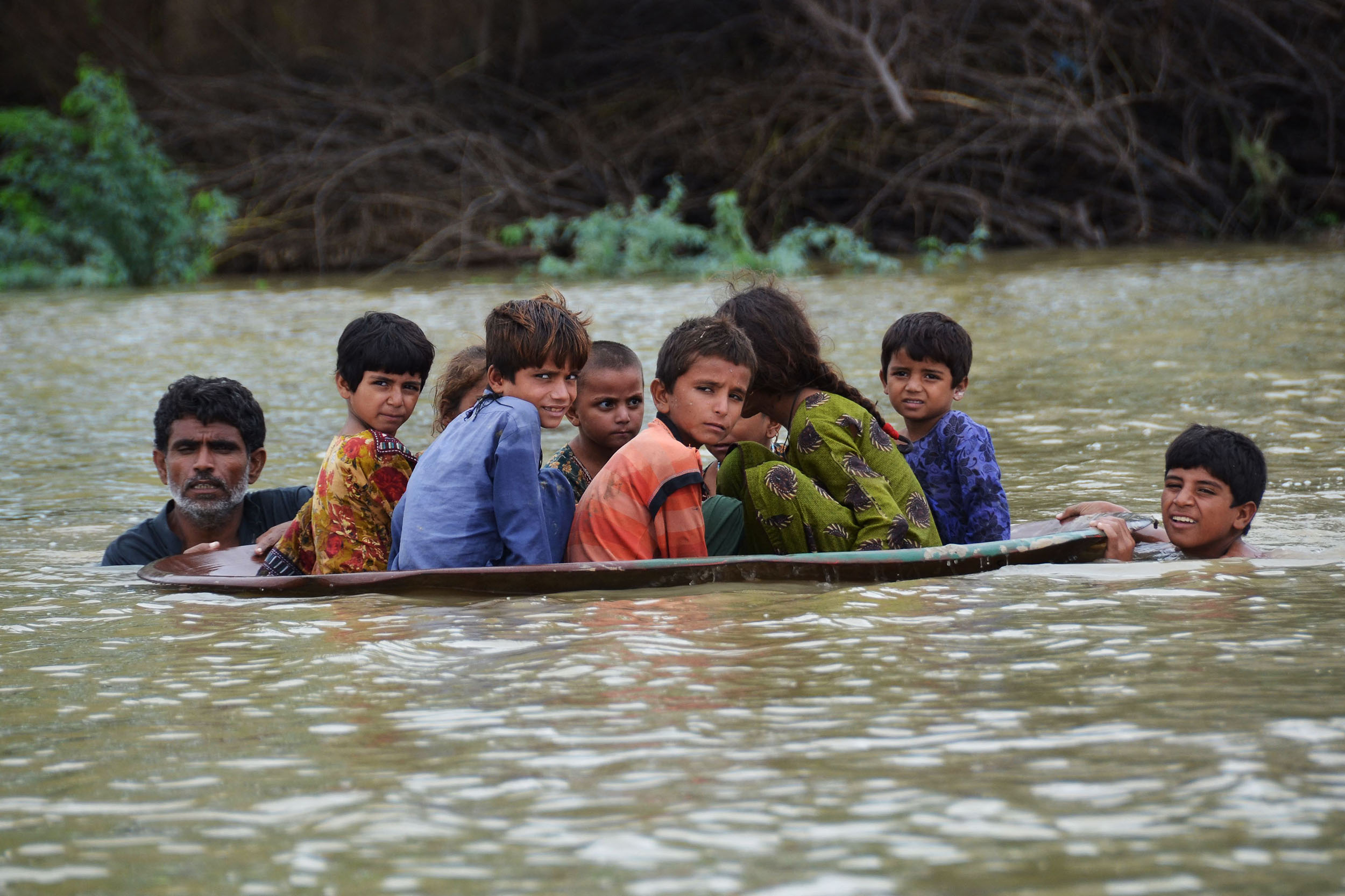
A
man and boy use a satellite dish to move children across a flooded
area.
Heavy monsoon rains pounded parts of Pakistan in August,
After eight weeks of non-stop rain, severe flooding has devastated
Pakistan. Over 1000 people are dead and millions have lost their homes.
Flash flooding and destroyed river banks are two reasons for the high
death toll. This monsoon has caused an enormous human disaster.
Pakistan is vulnerable to climate change.
Its location means it can experience heatwaves and drought, and intense
rains. Pakistan is also home to the most glaciers (huge ice sheets) in
the world outside of the north and south pole, which can melt as the
world gets hotter. Although Pakistan does get monsoon rains, the amount of rain this year was above average. Heavy rainfall and burst river banks made this year’s flooding extreme.
So is climate change to blame for this “monster monsoon”? Scientists say it’s likely. A rapid study suggests that rainfall may have been more intense due to global warming – a “monsoon on steroids”. This echoes analysis of Pakistan’s 2010 ‘superflood’ that “was made more likely by global heating, which drove fiercer rains.”
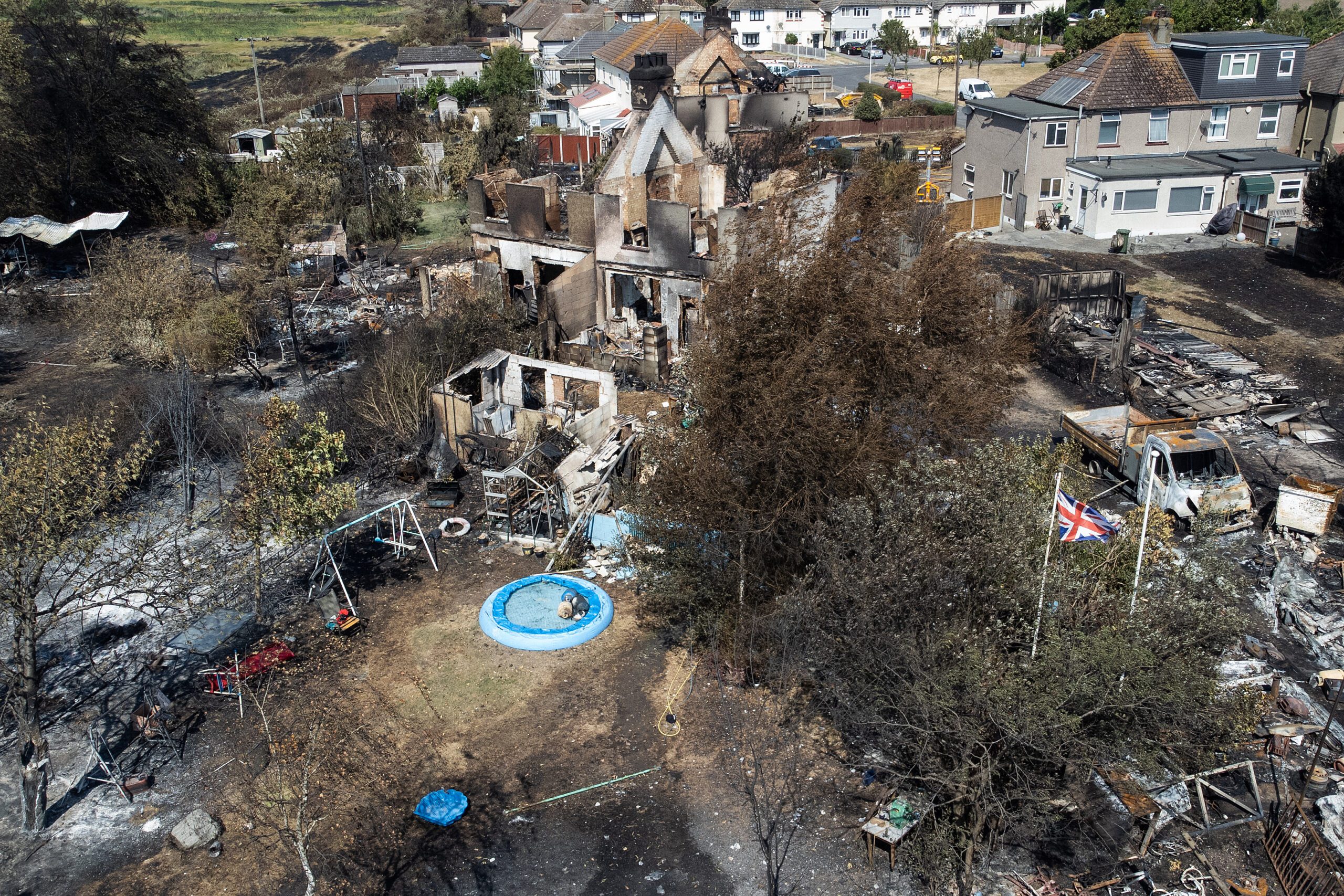
Rubble
and destruction of a UK housing estate after a large blaze.
Fires broke
out as the UK experienced a record-breaking heatwave.
The UK had two heatwaves this summer. It experienced its hottest temperature yet, hitting a new record-high of 40.3ºC. For some, it’ll have felt like a sunny holiday from the grey drizzle Britain is famed for. But for others, the sweltering levels of heat were difficult at best and life-threatening at worst.
As well as extreme heat, the UK has had 745 wildfires so far – more than the whole of 2021. UK wildfires may not be as extreme as places like Australia or North America, but they’re still tricky for firefighters to deal with.
How much of the UK’s heatwave was down to climate change? Well, recent analysis found climate change made the heatwave at least 10 times more likely and 4ºC hotter – and that’s a conservative estimate.
Extreme heat isn’t just happening in the UK. Earlier this year, India
and Pakistan suffered intense and record-breaking temperatures.
Scientists say these were 30 times more likely thanks to climate change. Their 2010 heatwave was made 100 times more likely by the climate crisis. Did you get that? 100 times! Likewise, scientists found the extreme heat in Canada and the US in 2021 was also “virtually impossible” without climate change.
Droughts causing food and water shortages worldwide
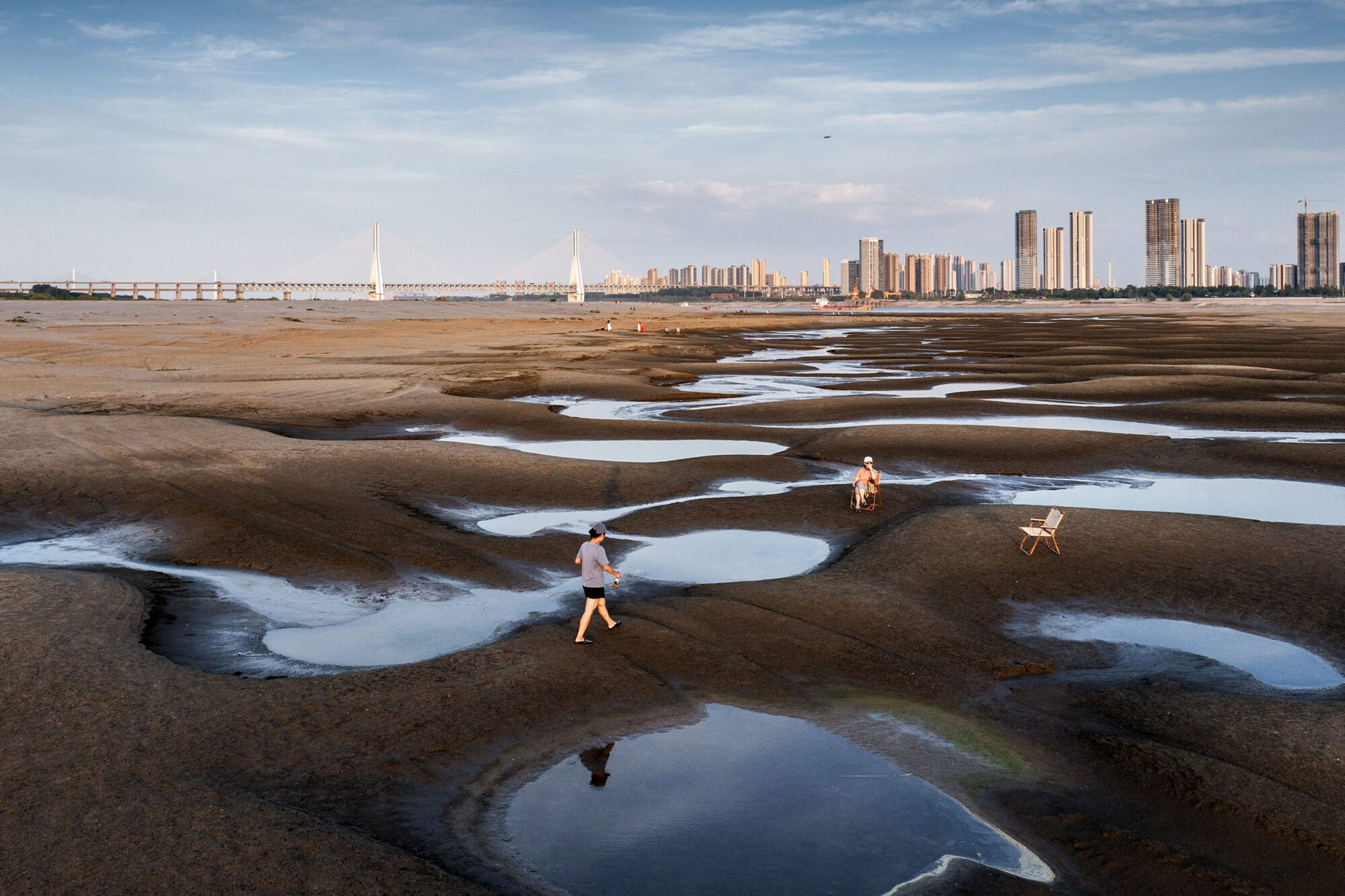
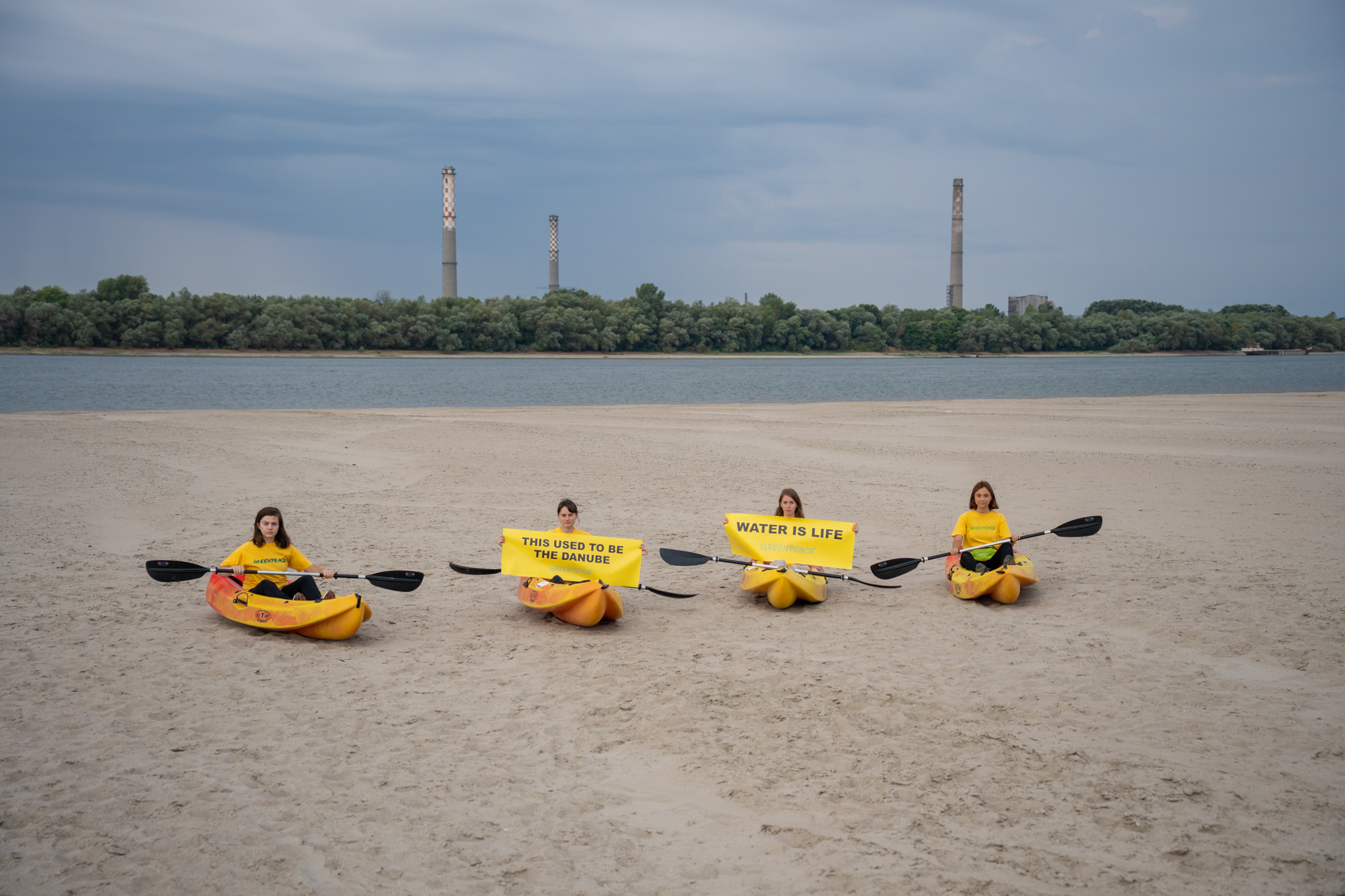
Europe is facing its worst drought for 500 years. A very dry winter and spring combined with record-shattering summer heat means there hasn’t been enough rain. With little rainfall, rivers are drying up and the soil is cracking, causing fish to die and crops to fail. And revealed by the drought, ‘hunger stones’ reading “If you see me then weep” chillingly warn of what may come.
It feels unsettling because it’s so close to home. But drought is affecting many countries beyond Europe too. Places like Somalia and Ethiopia are facing hunger and famine due to drought-caused food and water shortages. China saw the most severe heatwave ever recorded, causing parts of the country and its main river to dry up. It’s affecting water supplies, food and energy production, and may affect the rest of the world too. Parts of the US are also in a drought, as is Iraq. It’s happening all over the world, so how much is down to climate change?
Droughts don’t necessarily have one cause. They tend to build up over a period of time, rather than from a one-off weather event. But some scientific studies have found links between drought patterns and human-caused climate change.
With human influence seen in how intense drought and extreme rain
patterns are, and changes to tropical rain zones. More recent analysis
also shows the link between climate change and extreme weather events, like droughts.
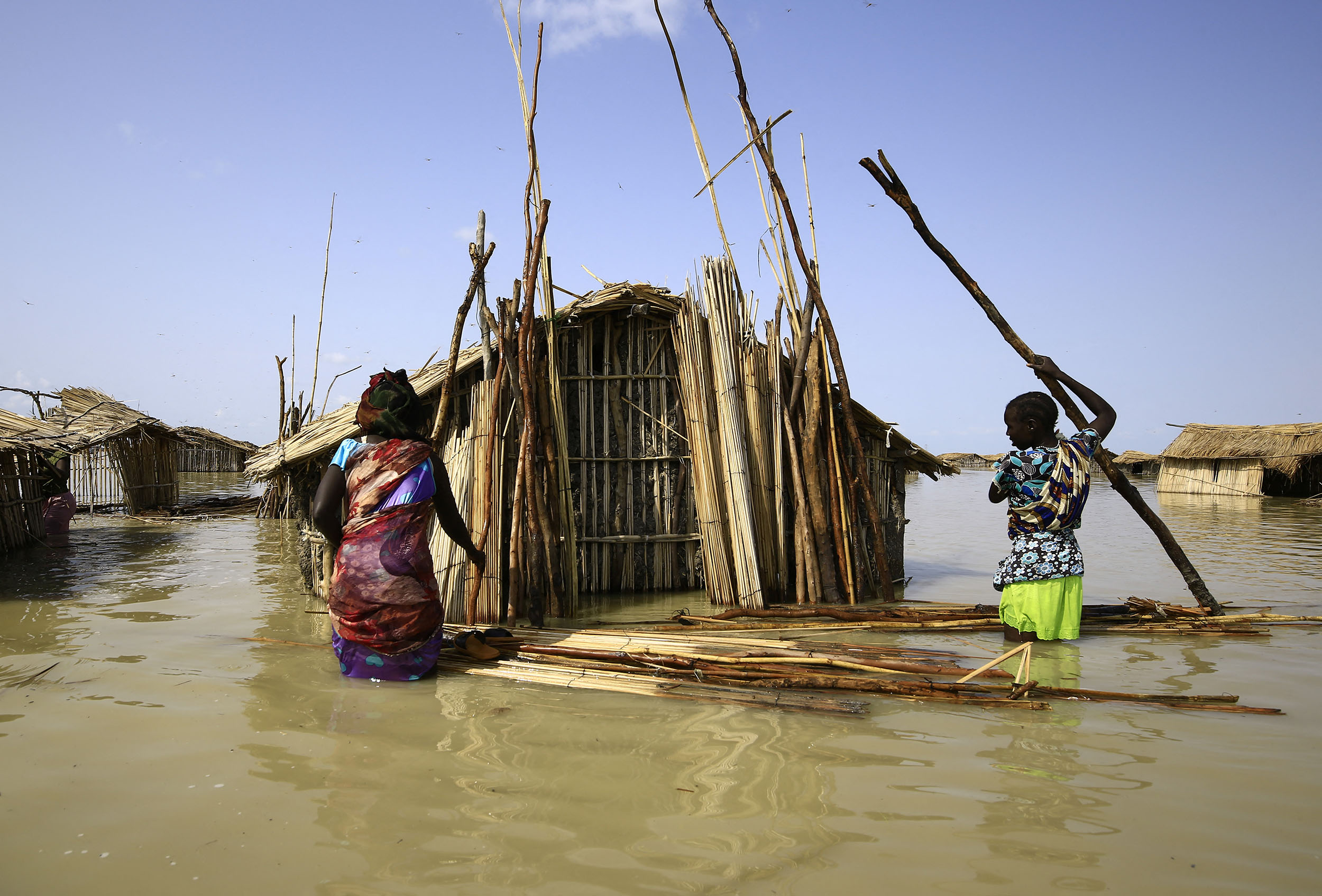
South
Sudanese refugees stand in flooded waters to repair their hut.
Heavy
rain submerged nearly 50 villages in South Sudan in 2021,
People lose homes after flooding in Sudan and South Sudan
Sudan saw one of its worst rainy seasons ever this summer. People
were forced to abandon their homes as the water flooded in and destroyed
everything. By the end of August, about 258,000 people were affected and more than 100 people died in Sudan. It’s another human crisis, which Sudan and South Sudan have seen before.
Extreme weather is becoming a pattern in the region. 2021 brought heavy rain and floods to South Sudan, which killed more than 80 people and swamped thousands of homes. In 2020, Sudan was declared a natural disaster area as floods killed about 100 people and destroyed homes and farmland. In 2019, flooding affected millions in South Sudan and several thousands in Sudan. Year on year of severe flooding means people are displaced over and over, with little time to rebuild between.
Sudan and South Sudan are among the most vulnerable to climate
change. As the planet warms, the region is expected to experience rain
that’s unpredictable. Rain may also be heavier, which increases risk of floods and waterborne diseases. As well as irregular and heavy rains, hotter temperatures mean droughts may happen more often. This affects farming, as water sources dry up and the land turns to desert. It puts enormous pressure on the people who live there. And is especially unfair as places like Sudan and South Sudan contribute the least to climate change, yet suffer the most.
The
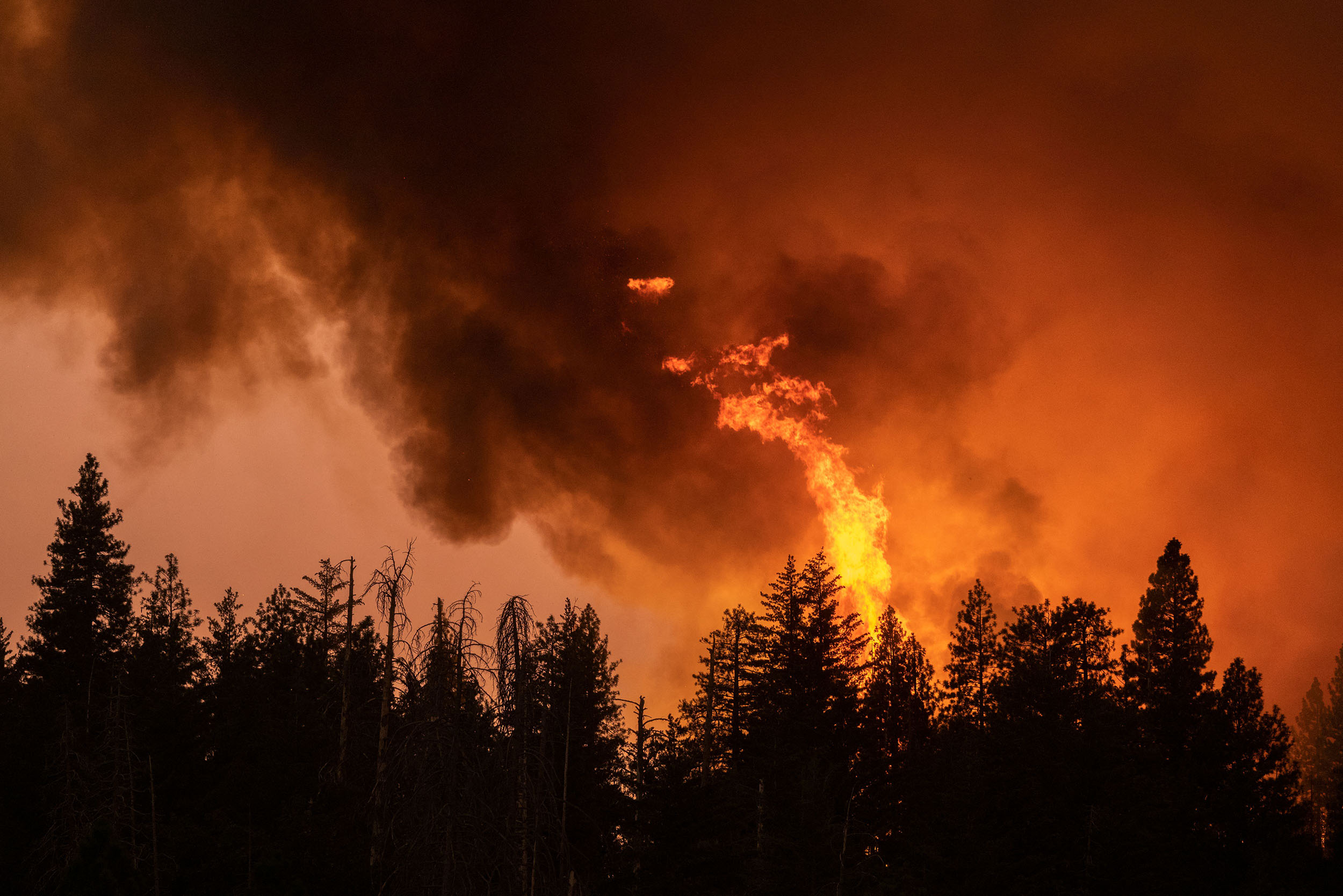
Oak Fire incinerates a forest in California.
The wildfire ripped
through thousands of acres in July following
Wildfires that are too fast to escape in California
Behind names like Creek, Dixie and Monument
are some of the many wildfires that California has faced in recent
years. This summer is no different as several wildfires erupted across
the region. McKinney is the largest; it burned about 60,000 acres of land, destroyed 87 homes and killed 4 people. Other fires have begun since then and reports say they’re becoming too fast to escape.
Of course, it’s not only the US that faces wildfires. Australia’s
‘Black Summer’ bushfires in 2019-20 were colossal. WWF declared them “one of the worst wildlife disasters in modern history”. And three years on, people who survived the fires are still waiting for homes. Fires also raze the Amazon, parts of Asia and even the Arctic. Though most wildfires happen in Africa.
As far as climate change goes, studies suggest that rising
temperatures create perfect conditions for fire. California’s wildfires
could turn into megafires, as hot, dry and windy days increase. Climate change is also making fire seasons last longer – Australia’s bushfire season is almost a month longer than 40 years ago.
While climate change affects wildfire risk differently for each region,
what we know is this: if the world keeps getting hotter, the risk of wildfires goes up and wildfire season gets longer.
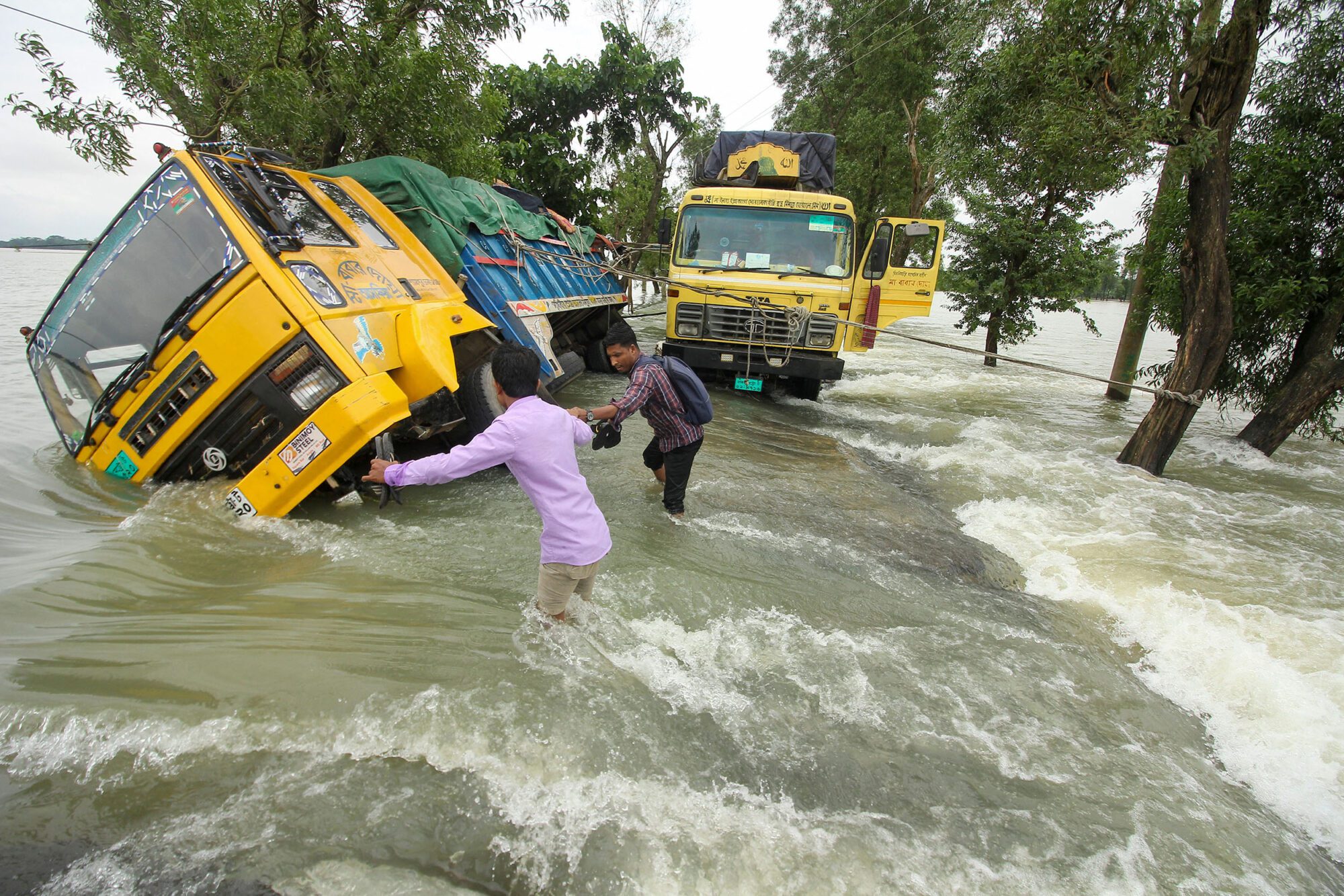
In June, the worst floods for a century hit north-east Bangladesh and parts of India. The flooding killed over 100 people and stranded more than 9.5 million people across both countries, with the most affected in Bangladesh. And it happened as people were still recovering from flooding in May this year.
Monsoon rains are part of the rainy season that rages across south Asia in summer. But this year, the rain acted differently:
rains were heavier and began earlier than usual. People were unprepared
for intense rainfall and the region became engulfed by severe flooding.
How much was this change in rain behaviour down to climate change?
In general, it’s hard to fully predict how climate change will affect rainfall worldwide.
But scientists agree that south Asia is likely to get wetter. Like its
neighbours India and Pakistan, Bangladesh could experience both extreme
heat and extreme rain. Some experts warn that as temperatures rise, the risk of flooding goes up
in Bangladesh. Basically: dry days increase and rainy days may become
unpredictable and more intense. So it’ll rain less often, but when it
happens, it’ll pour hard.
Greenpeace
Romania activists protest in the middle of the dried up
Danube
riverbed, halfway between Romania and Bulgaria.
Extreme weather may get worse – we need to act now
If 2022 shows us anything, it’s that extreme weather is here. Heatwaves, drought and floods are happening more often, and more intensely all across the world.
Records are getting broken each year, for a grave human and
environmental cost. We’re already feeling the impact. And extreme
weather events are set to become worse and happen more as the climate
crisis continues. So if you thought this year was bad for the climate,
the years coming could be worse.
Instead of sitting to wait for catastrophe, we need to act. We need
to pressure governments and corporations to act. We must wind down
fossil fuel use and cut emissions to avoid making the climate crisis
worse. Governments and corporations must do as much as possible, as
quickly as possible, to make this happen.
But we must also face up to what’s happening already. Doing nothing
makes it more expensive and harder to solve these problems in future. As
well as reducing emissions, we need to ramp up efforts to adapt to hotter, drier, wetter, fierier and stormier conditions worldwide. For the UK that means the government should invest in things like: insulating our homes
which should generally help keep them cool in summer, improving water
storage capacity so we can withstand drought, and improving
infrastructure like railways to cope with extreme weather.
This summer shows us we’re living with environmental extremes
already. Bringing these stories together shows us the scale of what’s
happening in the weather right now. So the question is, how will we act?
Take action
People like me have been screaming for something to be done for years,now the crisis is upon us please let something happen.
So far this year food prices have gone up, and supplies down, nearly everyone I know has cut down on their spending.
The blog song for today is: " Break on through (to the other side)" by the Doors.
Oil
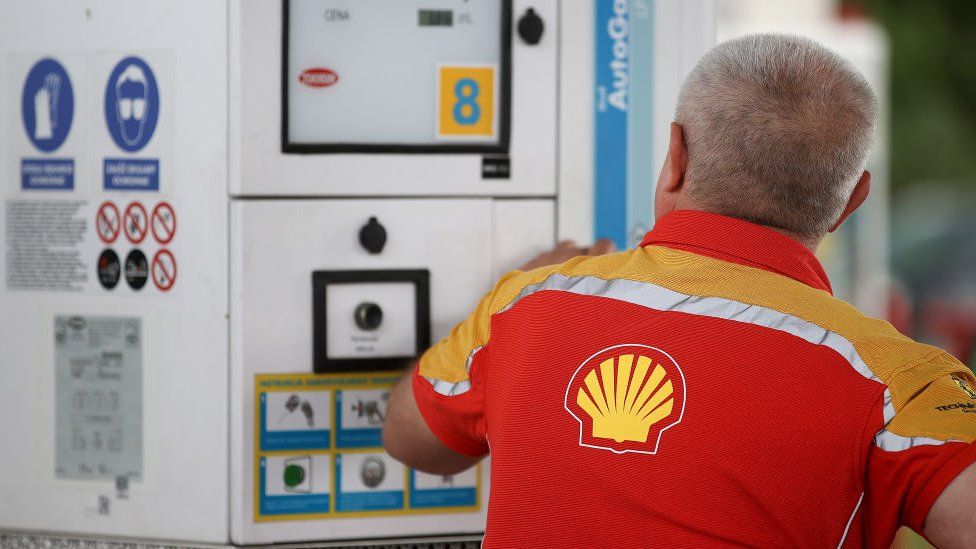
and gas giant Shell has reported record annual profits after energy
prices surged last year following Russia's invasion of Ukraine.
Profits hit $39.9bn (£32.2bn) in 2022, double last year's total and the highest in its 115-year history.
Energy firms have seen record earnings since oil and gas prices jumped following the invasion of Ukraine.
It has heaped pressure on firms to pay more tax as households struggle with rising bills.
Opposition
parties said Shell's profits were "outrageous" and the government was
letting energy firms "off the hook". They also called for the planned
increase in the energy price cap due in April to be scrapped.
Energy
prices had begun to climb after the end of Covid lockdowns but rose
sharply in March last year after the events in Ukraine led to worries
over supplies.
The
price of Brent crude oil reached nearly $128 a barrel following the
invasion, but has since fallen back to about $83. Gas prices also spiked
but have come down from their highs.
How much windfall tax are oil giants paying?
BP profit jump sparks calls for bigger windfall tax
White House calls Exxon record profit 'outrageous'
It has led to bumper profits for energy companies, but also fuelled a rise in energy bills for households and businesses.
Last year, the UK government introduced a windfall tax - called the Energy Profits Levy - on the "extraordinary" earnings of firms to help fund its scheme to lower gas and electricity bills.
Despite
the move, Shell had said it did not expect to pay any UK tax this year
as it is allowed to offset decommissioning costs and investments in UK
projects against any UK profits.
However, on Thursday it said was due to pay $134m in UK windfall tax for 2022, and expected to pay more than $500m in 2023.
Image source, Getty Images
Image caption,
Gas prices spiked after Russia's invasion of Ukraine
This
may look small compared to its profits but Shell only derives around 5%
of its revenue from the UK - the rest is made and taxed in other
jurisdictions.
However,
critics point out that Shell is a UK-headquartered company and has been
paying more to its shareholders than it spends on renewable
investments.
The announcement has increased pressure on Rishi Sunak and Jeremy Hunt to raise more money from oil and gas profits.
A
Downing Street official said they "absolutely" understand anger at the
"extraordinary" profits but indicated there are no plans to increase the
windfall tax.
The prime minister's spokesman said questions about potential changes were "for the chancellor" when pressed by reporters.
The
government "is ready to take action" if falling wholesale energy costs
aren't reflected in lower prices at the petrol pump, the official added
without detailing specific measures.
The government is currently limiting gas and electricity bills so a household using a typical amount of energy will pay £2,500 a year.
However,
that is still more than twice what it was before Russia's invasion, and
the threshold is due to rise to £3,000 in April.
The
government's windfall tax only applies to profits made from extracting
UK oil and gas. The rate was originally set at 25%, but has now been
increased to 35%.
Oil
and gas firms also pay 30% corporation tax on their profits as well as a
supplementary 10% rate. Along with the new windfall tax, that takes
their total tax rate to 75%.
However,
companies are able to reduce the amount of tax they pay by factoring in
losses or spending on things like decommissioning North Sea oil
platforms. It has meant that in recent years, energy giants such as BP
and Shell have paid little or no tax in the UK.
'Fair share'
The
annual profit figure far surpassed Shell's previous record set in 2008.
The company also said it had paid out $6.3bn to its shareholders in the
final three months of 2022, and that it planned another $4bn share
buyback.
Shell
chief executive Wael Sawan said that these are "incredibly difficult
times - we are seeing inflation rampant around the world" but that Shell
was playing its part by investing in renewable technologies.
Its
chief financial officer Sinead Gorman added that Shell had paid $13bn
in taxes globally in 2022. It had also accounted for 11% of liquified
natural gas shipments into the EU, easing pressure on supplies caused by
sanctions on Russia.
Labour's
shadow climate change secretary Ed Miliband said: "As the British
people face an energy price hike of 40% in April, the government is
letting the fossil fuel companies making bumper profits off the hook
with their refusal to implement a proper windfall tax.
"Labour
would stop the energy price cap going up in April, because it is only
right that the companies making unexpected windfall profits from the
proceeds of war pay their fair share."
Liberal
Democrat leader Ed Davey said: "No company should be making these kind
of outrageous profits out of Putin's illegal invasion of Ukraine.
"They must tax the oil and gas companies properly and at the very least ensure that energy bills don't rise yet again in April."
TUC general secretary Paul Nowak called for ministers to impose a larger windfall tax, adding: "The time for excuses is over."
He
continued: "Instead of holding down the pay of paramedics, teachers,
firefighters and millions of other hard-pressed public servants,
ministers should be making big oil and gas pay their fair share."
This is so very wrong, how can governments keep on denying there is anything amiss? Maybe because as we are all finding out half of the MP's are shareholders in these companies.
The blog song for today is: "Anarchy in the UK" by the Sex Pistols
Jan 24, 2023broken-cfl, Lighting, Pollution, Well-Being
Compact fluorescent light bulbs (CFLs) use 75% less energy than traditional incandescent bulbs and last about six times longer, but it’s no secret that CFLs contain a small amount of mercury (about 4 milligrams per bulb on average).
Like any glass product, CFLs tend to break occasionally, causing many homeowners to worry about potential mercury exposure and adverse health effects. So, just how dangerous is a broken CFL? Should you dig out the gas mask and Hazmat suit?
Earth911 sat down with John Rogers, a senior energy analyst for the Union of Concerned Scientists who specializes in clean energy, to get to the bottom of these pressing questions about CFL safety, cleanup, and disposal.
Oops … I Broke a CFL!
When CFLs first came out, there was a lot of news coverage about mercury in CFLs,
so an initial freak-out moment after breaking a bulb is understandable.
But clean energy expert John Rogers helped ease our minds. “This is a
manageable problem,” he assured us. “Most of the time they don’t break.
If they do break, there are procedures we follow.”
Any level of mercury exposure carries potential health concerns, but
due to the small amount of mercury and short duration of exposure, a
broken CFL is not likely to present a significant risk to you or your
family, Rogers told Earth911.
CFLs
save loads of energy when compared to incandescent light bulbs, but
they contain small amounts of mercury. Photo courtesy of Emilian Robert Vicol
“You’re talking under 5 milligrams of mercury,” he said. “That figure
won’t mean much to people, so to put it in perspective: if you think
about the mercury thermometers that I grew up with, it’s less than 1% of
the amount of mercury that was in one of those thermometers.”
Make note of the following cleanup steps in case you ever break a CFL bulb. Find the EPA’s detailed instructions here.
1. Before Cleanup
Have people and pets leave the room.
Air out the room for five to 10 minutes by opening a window or door.
Shut off the forced-air heating and cooling system, if you have one.
Collect the following materials to clean up the broken bulb: Stiff
paper or cardboard, sticky tape, damp paper towels or disposable wet
wipes (for hard surfaces), and an airtight container, such as a glass
jar with a metal lid or a resealable plastic bag.
2. During Cleanup
Do not vacuum. Vacuuming is not recommended unless
broken glass remains after all other cleanup steps have been taken, as
doing so may spread mercury-containing powder or mercury vapor.
Thoroughly scoop up glass fragments and powder using stiff paper or
cardboard. Use sticky tape, such as duct tape, to pick up any remaining
small glass fragments and powder.
Place the used tape in the glass jar or plastic bag. See detailed cleanup instructions from the EPA for more information, and for differences in cleaning up hard surfaces versus carpeting or rugs.
Place cleanup materials in a sealable container.
3. After Cleanup
Promptly place all bulb debris and cleanup materials, including any
vacuum cleaner bags used, outdoors in a trash container or protected
area until materials can be disposed of. Avoid leaving any bulb
fragments or cleanup materials indoors.
Use Earth911 to track down a recycling solution near you. CFLs are household hazardous waste and should not be disposed of with your regular garbage.
If weather and other conditions allow, continue to air out the room
where the bulb was broken and leave the heating and air conditioning
system shut off for several hours (a study conducted by the journal Science of The Total Environment found that the critical exposure period passes after four hours).
The Importance of CFL Recycling
Due to mercury content, it’s very important to dispose of CFLs properly. Whether they’re broken or not, they are hazardous waste and shouldn’t go in your regular waste bin. Some states actually ban the disposal of CFLs and other mercury-containing light bulbs in landfills. Luckily, CFL recycling
is readily available in most communities through retailer take-back
programs and local household hazardous waste (HHW) collection.
Use Earth911 Recycling Search to find a recycling solution in your ZIP code, and use caution when removing and recycling a burnt-out CFL.
The best solution is that we use [CFLs] until the end of
their life and then dispose of them in ways to capture that mercury,”
John Rogers said. “Part of what we need to do is educate people better
about the importance of recycling. That’s an easy thing we can do to
keep the mercury down to, essentially, zero.”
When it’s time to replace your old CFLs, increase your energy savings and reduce your environmental impact by choosing energy-efficient LED bulbs.
Originally published on January 11, 2013, this article was updated in January 2023.
Pin this for later!
Like all of their reports very interesting and informative. There is always a way to dispose of things properly,it is just that if it is not easy to do then I'm sorry to say that some people just cannot be bothered to take a little bit of time to do it.
The blog song for today is: "Strange Days" by the Doors
Ocean Robbins·Published November 25, 2022
· 8min read
Summary
There’s a new environmental trend in the food industry,
with a funny name: upcycling. Basically, it means taking ingredients
that would otherwise have been thrown out, and turning them into or
using them in new food products. But are upcycled foods safe? Are they
healthy? Can you actually make good food out of those scraps and
byproducts? And can it really help save the planet?
Have you ever made bread crumbs out of stale bread, and used them for
stuffing? If so, congratulations: You’re an upcycler! Ditto if you’ve
turned overripe bananas into banana bread, or vegetable scraps into soup
stock.
Your stuffing, banana bread, and soup may have been delicious, but
did you also pat yourself on the back for being environmentally
conscious and helping fight climate change? By keeping those items in your food supply, you didn’t have to buy more, and you kept them out of landfills.
While many environmental organizations focus on transportation and
energy consumption as the main contributors to climate change, the US food system is actually one of the most significant drivers of greenhouse gas emissions. So anything you can do to reduce the carbon footprint of your diet (like eating less or no meat) is a win for the planet.
Upcycling can be simple if you’re doing it in your own kitchen, but
it’s also happening at scale, in more and more industrial food settings.
Many companies are releasing upcycled food products carrying environmental claims
to address growing consumer concerns about planetary health. But
upcycling is a fairly new term when applied to food, first gaining
popularity in 2021, in the wake of increased concern for the planet that accompanied the COVID-19 pandemic.
So if you see an upcycled certification on a food item, does that
mean you should buy it? Is upcycled food good for you or the planet, or
just corporate greenwashing? And what are some ways to increase upcycling within your own home economics?
What Does Upcycled Food Mean?
Let’s start by defining the term. Upcycling basically means finding new, higher-value uses for items that would otherwise go to waste. It is distinct from recycling,
which is when something is broken down into base materials and then
turned into new products (like aluminum cans that are melted and go on
to become new aluminum cans, or plastic bottles that become fleece
fabric).
Examples
of ingredients that can be upcycled include sub-grade produce (i.e.,
bruised apples, carrots that look like horror movie monsters, and
misshapen tomatoes); scraps from food preparation (like onion skins and
potato peels); and byproducts from food processing.
The first two categories are pretty straightforward. A tomato that’s
too ugly to sell in a grocery store can still taste delicious in a sauce
or on a frozen pizza. The Ugly Company turns misshapen fruit into “Hello, I’m Ugly” dried fruit snacks.
And discarded scraps can be used as-is in formulations for soup and
sauces. But what about byproducts? What do they consist of?
Think of food products that contain ingredients that come from plants
— but aren’t the whole plant. For example, fruit juice comes from fruit
but leaves behind fiber. Tofu is made from soybeans but consists of
just curds. If you’ve ever made tofu at home, you’ve had to deal with
(toss or repurpose) the remaining fiber-rich pulp, also known as okara.
So what happens to the parts of those raw ingredients that don’t make
it into the product that ends up on the supermarket shelf? At worst,
they become garbage in a landfill. At best, until recently, maybe they
became compost for farms, ingredients for industrial processes, or feed for livestock.
But these remnants of food production can also live again as
ingredients in upcycled foods. The pulp that remains when juice is
pressed can add fiber to other foods. The okara left over from making
tofu can be turned into veggie patties and other types of faux meat.
Upcycling these byproducts can be a way to reduce food waste and help fight climate change by keeping food out of landfills.
What Does the Upcycled Certified Label Mean?
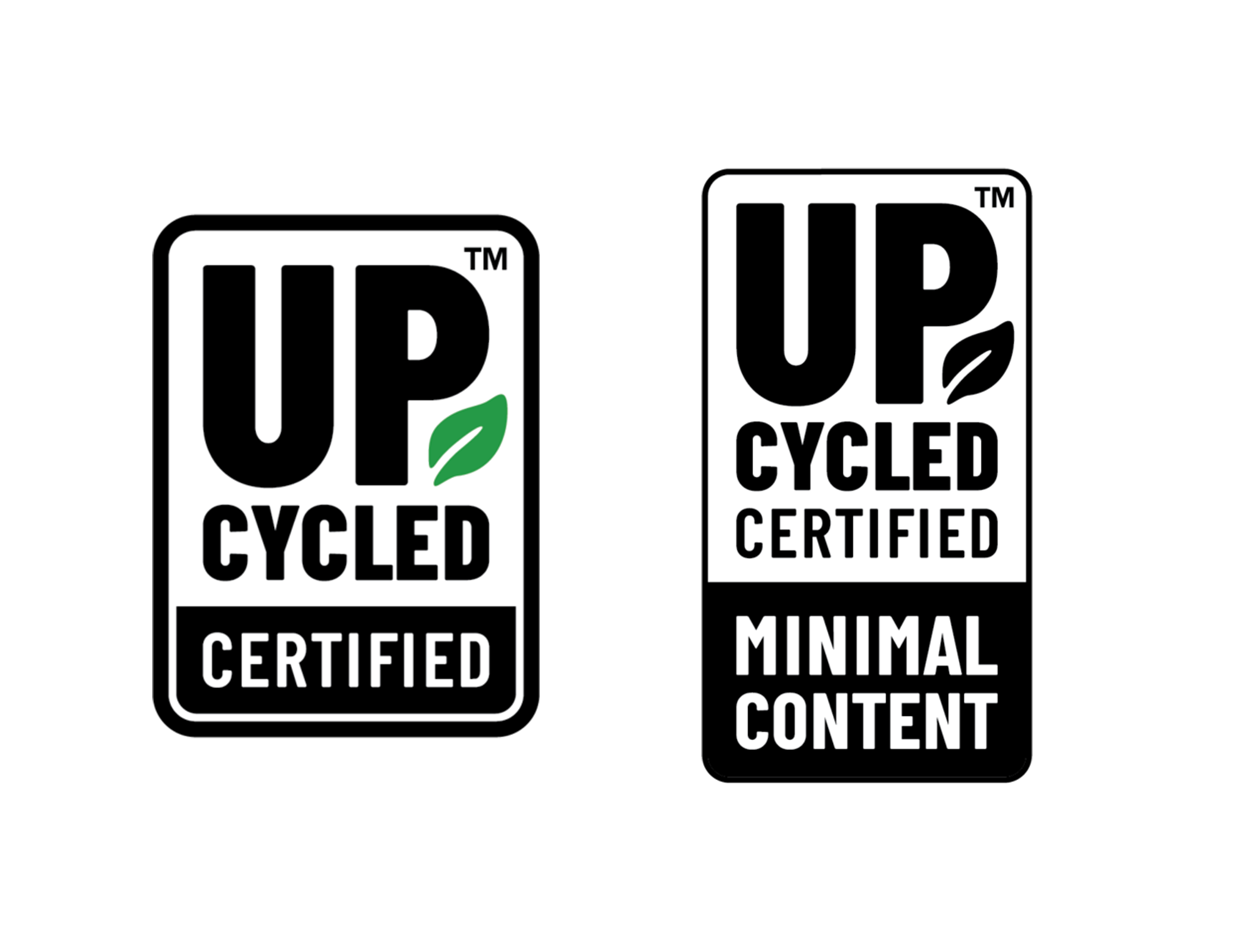
Upcycled Certified Labels from Upcycled Food Association
Driving this movement is the Upcycled Food Association
and their Upcycled Food Certified label. They award this certification
to food, beverage, and even personal care products that are made with
upcycled food ingredients. As the label gains public awareness and
acceptance, it’s hoped that consumers will embrace upcycled products by
choosing them instead of non-upcycled competitors.
Currently, there are three Upcycled Certified types: Ingredient, Product, and Minimal Content.
The “Upcycled Ingredients” label is reserved for ingredients that would
otherwise not have gone to human use or consumption, and consist of at
least 95% upcycled inputs. You probably won’t see this certification on a
consumer product; rather, companies sell these certified ingredients to
other companies to use in new products.
An example of a certified upcycled ingredient is FruitSmart,
which consists of upcycled fruit juices, purees, concentrates,
essences, fibers, seeds, seed oils, and seed powders. Another is SunOpta
(these companies apparently like sticking capital letters in the middle
of their names), which makes a powered oat protein ingredient called
OatGold from byproducts of oat milk production.
Once a product hits the market, it may be eligible for one of the
other two upcycled certified labels: Product and Minimal Content. Foods,
menu items, beverages, supplements, and pet foods, as well as cosmetic,
personal care, and household cleaning products can wear the Upcycled Certified Product label if at least 10% of their ingredients are upcycled.
You can tell which ingredients have been upcycled because they will
either be asterisked as upcycled (Bananas*) or described as such
(“upcycled bananas”) in the ingredients list.
Upcycled food examples include Chia Smash,
a jam made with superfoods and upcycled fruits, and snack foods like
Organic Banana Nubbins and Unsweetened Dried Mango sold by Imperfect Foods, using produce that would otherwise have gone to waste.
The third certification type, Minimal Content, indicates products with upcycled ingredient content of less than 10%.
Is Upcycled Food Sustainable?
So that all sounds great in theory — but does it work? Is upcycled
food truly sustainable? Well, of course, it matters to look at the
company it keeps. If a product was, say, 10% upcycled broccoli sprouts,
45% high fructose corn syrup, and 45% hydrogenated lard, and it was
shipped in a big styrofoam cooler, then with all due respect to broccoli
sprouts, you’d still have a hard time convincing me that the result was
either sustainable or healthy. But, in general, there are several
reasons to think that upcycling might be a big improvement over the
system as it currently operates.
First, organic matter in landfills releases potent greenhouse gasses,
including methane. Keeping these food ingredients out of landfills
means that we’re recycling the carbon they contain, which can help
mitigate climate chaos. In the US, at least eight states have laws requiring some reprocessing of food waste.
Second, food that’s upcycled replaces new food that would have to be grown, shipped, and processed. Decreasing food waste
decreases resource waste, including inefficient use of land and water,
and reduces carbon emissions from growing, transporting, and disposing
of food. Upcycling can allow our food system to get “more” out
of “less” by creating two or more products out of resources that
formerly produced just one.
Third, those thrown-away foods are often full of nutrients. Upcycling can harness the nutritional value of by-products that would otherwise have gone to waste.
The upcycled food certification process is still in its infancy, so
it’s hard to say what the true impact is on cutting emissions or
reducing food waste. However, the Food and Agriculture Organization of
the United Nations concluded that if food waste were its own country
(can you imagine how hard it would be for their tourist industry to
attract visitors?), it would be the third-largest emitter of greenhouse gasses.
While buying upcycled products can contribute to reducing food waste
or combating climate chaos, it’s certainly not the only way, or even the
most impactful, to make a positive difference in the world. In fact,
the single biggest step you can take toward that goal is to adopt a more plant-based diet. That’s a powerful way to free up more food for a hungry world and reduce greenhouse gas emissions.
Is Upcycled Food Safe — or Healthy?
iStock.com/zoranm
Whether upcycled food is good for the planet is separate from another
issue that might be on your mind — is it safe to eat? Since upcycled
food isn’t necessarily food that would have gone to human consumption,
it’s natural to wonder if it’s safe. And if it’s technically safe, is it
healthy?
In terms of safety, upcycled certified foods should be fine. The Upcycled Certified label has premarket approval
by the Food Safety and Inspection Service (FSIS) of the US Department
of Agriculture. The FSIS provides labeling ingredients guidance and
inspection methods to protect consumers from misbranding and unsafe
food.
The FSIS also requires a third-party supply chain audit to ensure
that foods come from a verified source. In this case, verification is
performed by Where Food Comes From, which also certifies products for the Non-GMO Project, among others.
So safety, check.
But what about health? The upcycled label has nothing to say about that. It doesn’t indicate that ingredients are organic, non-GMO, or pesticide-free
(although it doesn’t preclude those attributes either). Many upcycled
foods are also processed foods with unhealthy ingredients like refined
sugar, natural flavors, and so on. Some upcycled foods may use upcycled
animal products, like Blue Circle, which makes fish-shaped fish sticks
out of upcycled salmon.
While a certified upcycled label may be an indicator of
sustainability, it’s still important to read the Nutrition Facts and
ingredient labels before purchasing these (or any other) foods.
How to Upcycle Food at Home
As we saw at the beginning of this article, whether you choose to
purchase Upcycled Certified foods or not, you can take inspiration from
the movement by upcycling your own food at home. Here’s our article on tips and tricks for utilizing food scraps.
And, here are some recipes that will make efficient and delicious use
of some of the cooking byproducts you might have been wondering what to
do with.
Upcycled Food Recipes
Have you ever been curious about what to do with leftover veggie
pulp? What about peels, stems, and various plant scraps? We have an
eco-friendly and nourishing solution — become an upcycled food master
and harness every last bit of plant power with these simple and tasty
no-waste recipes!
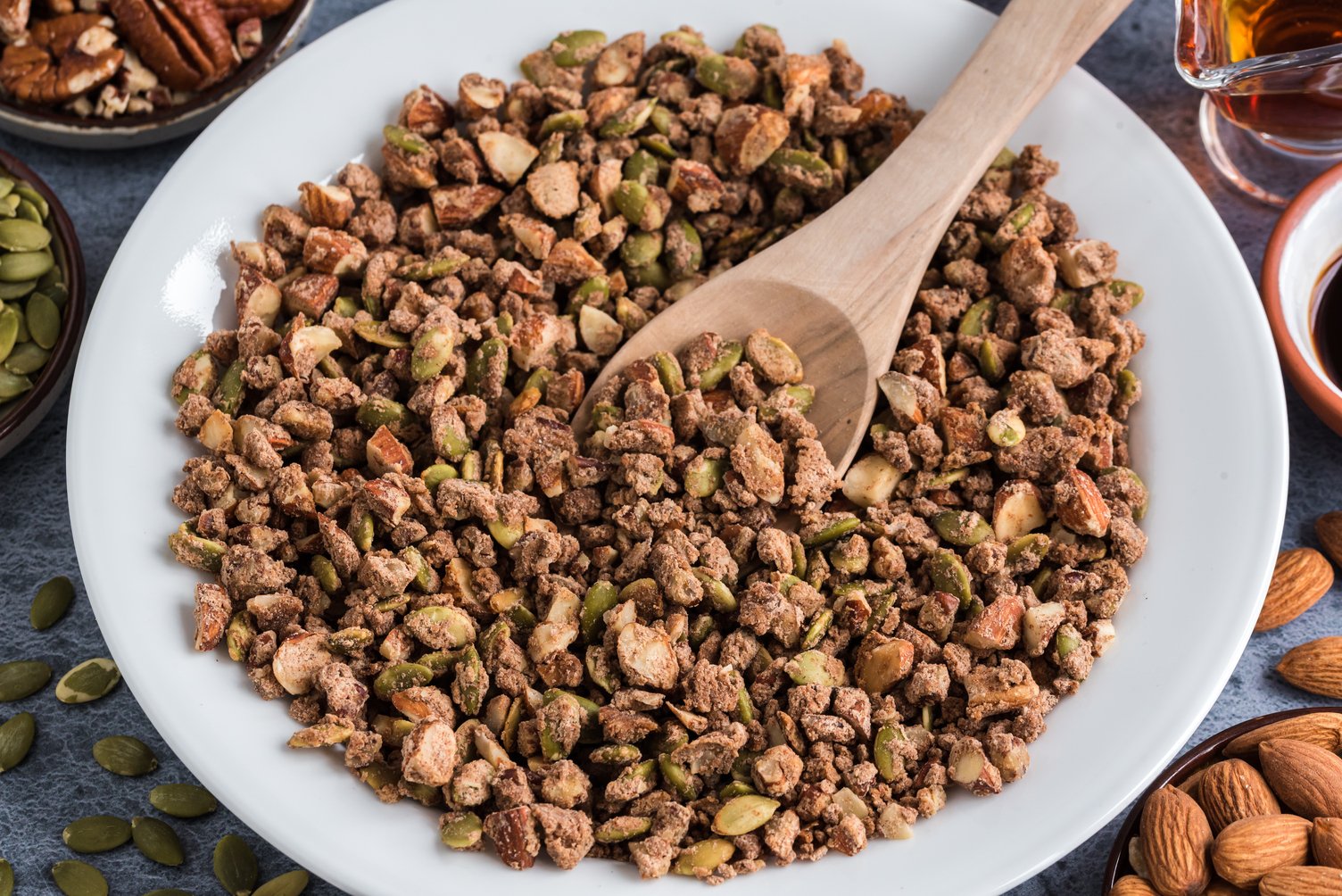
1. Nut Milk Pulp Granola
Nut Milk Pulp Granola is plenty crunchy, naturally sweet, and spiced
with fragrant cinnamon that creates an enticingly nutty aroma (and
flavor) while it bakes in the oven. This no-waste recipe is a tasty and
nutritious way to use up leftover pulp from homemade almond or other nut
milks. And not only is it no-waste, but there are lots of ways to
customize it (check the Chef’s Notes!).
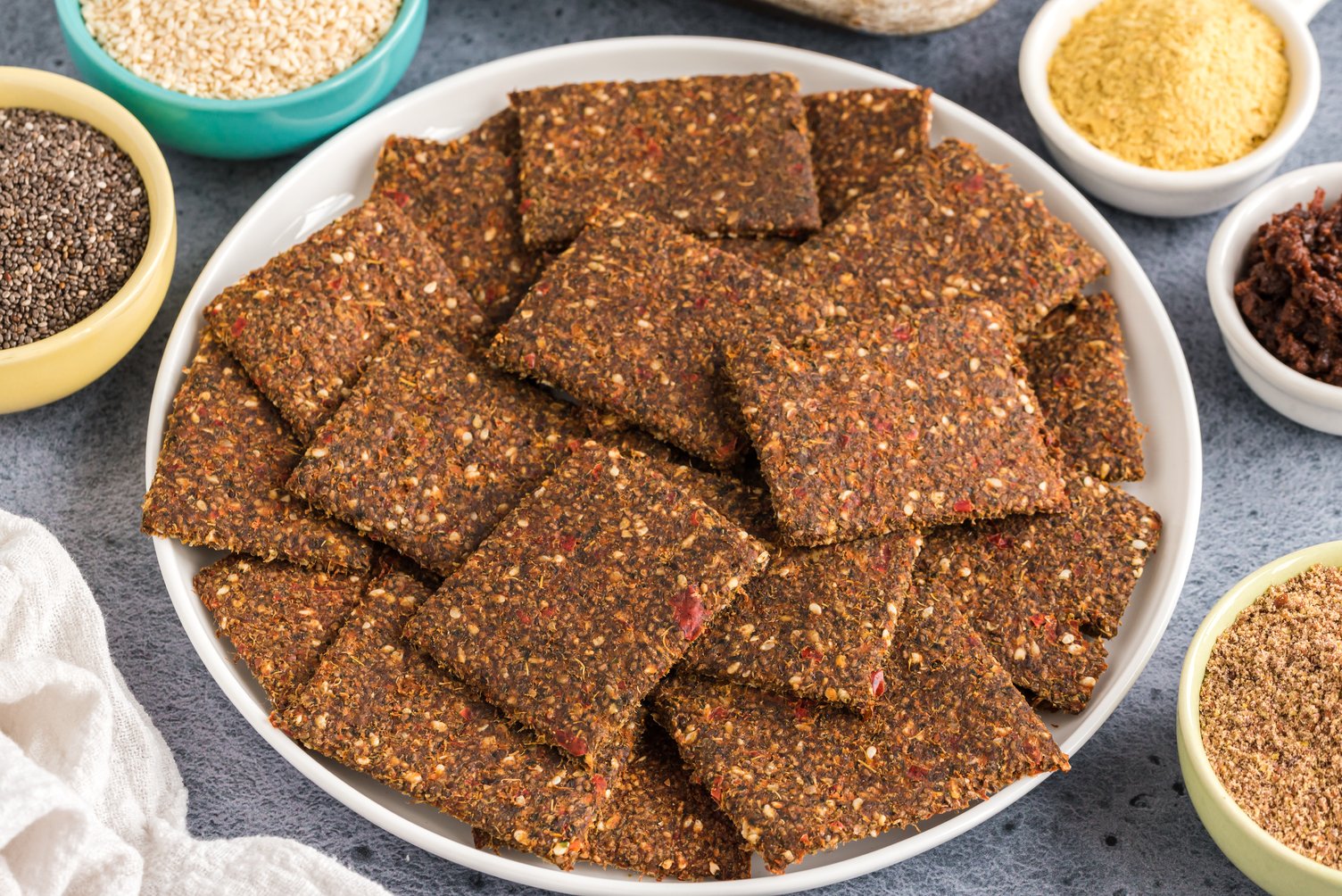
2. Dehydrated Juice Pulp Crackers
Curious what to do with all that leftover veggie pulp after making a
big, delicious batch of fresh veggie juice? Our suggestion — make
crunchy and tasty Dehydrated Juice Pulp Crackers! Complete with
wholesome plant-based nutrition, lots of fiber, and a savory umami
flavor, these crackers are a perfect solution to your food scrap
conundrum. Plus, they make a fun (and nourishing) vehicle to scoop up a
variety of scrumptious plant-based dips!
3. Veggie Scrap Bouillon
Turn veggie peelings, ends, and pieces into something amazing with
this nutrient- and fiber-rich Veggie Scrap Bouillon. This easy-to-make
recipe requires just a handful of ingredients and a food processor to
transform vegetable scraps into a whole-food veggie paste that is ideal
for adding concentrated and robust veggie flavor (plus plenty of fiber!)
to any dish where you’d use vegetable broth.
Upcycling Food Is a Positive!
Upcycled food is an emerging trend in the food industry — and a step
towards being more environmentally responsible. The upcycled
certification label is a way for consumers to identify brands that are
committed to reducing food waste and helping to mitigate climate chaos.
But Upcycled Certified foods don’t necessarily equal healthy foods. And
buying processed foods with upcycled ingredients isn’t the only way to
put a dent in food waste. You can also take inspiration from the
movement and upcycle your own food at home with minimal processing. And
if you want to walk lighter on the Earth, one of the simplest steps you
can take is to base your diet around whole plant foods. Whether they’re
upcycled or not, that can be a great way to reduce your environmental footprint, and be part of the solution.
I would rather upcyle my own food than buy anything from the shops, but it was a really interesting article, which gave me some new ideas!
The blog song for today is: "Where do I begin?" by Shirley Bassey
If you wish your garden used
zero water, a xeriscape might be right for you. Xēros is the Greek word
for “dry.” So a xeriscape is a dry landscape. For a lot of people, the
word xeriscape evokes a harsh, barren image. But a dry landscape doesn’t
have to look dry. Even a true desert landscape can be much
softer and greener than just a scattering of cacti spiking out of a
swath of gravel or lava rock. In fact, a good xeriscape won’t always
look much different from any other garden to a casual observer. But it
will use a lot less water.
This article contains affiliate links. If you purchase an item
through one of these links, we receive a small commission that helps
fund our Recycling Directory.
Xeriscape
Xeriscaping is not an aesthetic style. Rather, it’s a water-wise
approach to maintaining a healthy garden with a minimum of supplemental
water. Ideally, a xeriscape would only require watering to help
establish new plants, during droughts, or during unusually hot and dry
weather. Whether you live in a perpetually dry climate or one with a
defined wet/dry seasonal pattern, occasional deep watering in rain-free
months will expand the available plant palette and allow for a much
lusher garden. Regardless of climate, xeriscaping relies on careful
planning and smart plant selection, supported by waterwise landscape
maintenance practices.
Complement Your Climate
The most important principle of xeriscaping is to understand your
local climate and work with, rather than against it. If you live in a
desert, most of the plants used in a traditional cottage garden will
struggle to survive even with lots of supplemental water. Instead of
fighting to grow moisture-loving plants in the desert or to keep
tropical plants alive in a dry summer climate, look for plants that match the conditions where you live.
Natives are the obvious choice, but nativars
can expand your palette. You can even look for exotics from areas with
similar climates. For example, the coastal Pacific Northwest’s rainy
winters and dry summers echo growing conditions in the Mediterranean and
New Zealand. If you truly love a particular garden style, you can still
utilize some of its design principles with locally appropriate species,
for example, planting native perennials in loosely pruned drifts to
evoke a cottage garden.
Smart Design
The principles of xeriscaping
go beyond plant selection to include design, soil care, irrigation, and
maintenance. Although your plant selection is site-specific, smart
design strategies will work in a variety of situations. Place plants
with similar requirements together so that any supplemental watering can
be concentrated in fewer areas. Hardscaping can be used to direct stormwater
to planted areas as well. Careful placement of rocks and decorative
features, as well as some plant combinations, can create windbreaks and
shading to develop microclimates that support plant growth with less
water. In most cases, it is not possible to maintain a lawn without
supplemental water. So no matter what climate you live in, xeriscaping
requires you to eliminate lawn. However, it is not always necessary to replace your entire landscape – incremental change can be the best choice.
Soil Solutions
Similar to dry gardening
and any other sustainable approach to gardening, soil health is
critical to xeriscaping. Healthy soil is capable of storing large
amounts of water for an extended period of time, eliminating the need
for supplemental irrigation. Although it’s very hard to change soil’s
texture with amendments, they can help clay or sandy soil hold water. No
matter what kind of soil you have, mulching is one of the best things you can do for your soil’s health. It also helps keep prevent evaporation from the soil.
Waterwise Maintenance
If you can’t give up your entire lawn, at least allow it to go gold
during the dry season – it will come back with the rains. If you do
need to water, do so rarely, but deeply. Saturate the soil to a depth of
inches, rather than simply wetting the surface. To water most efficiently, use soaker hoses rather than sprinklers or simply spraying from the hose.
To learn more about xeriscaping, books like the Xeriscape Handbook and Xeriscape Gardening for Starters are helpful resources. You can also check your local municipality’s website and county extension office for the specific plants and techniques that work best where you live.
This sounds really cool, I will try to give it a go! Although my hubby is better at gardening stuff than me!
The blog song for today is: " A whiter shade of pale" by Procol Harum
Dec 29, 2022bamboo, bamboo-based plastic, plant-based plastic, tableware
We’ve all heard reports about
how billions and billions of pieces of plastic are choking the world’s
oceans. If you’re worried, you’re not alone; surveys show that oceanic plastic pollution is a top consumer concern. In recent years, there has been a rise in the use of bamboo and other plant-based additives in plastics. Can these products help protect oceans and marine life?
It may seem like bamboo and other plant-based additives in plastics
are a good idea. However, research shows that they can be unsafe in
materials that come into contact with food. Using unapproved ingredients
in tableware for sale in the European Union is illegal. So now, the
European Commission and the EU Food Fraud Network are joining forces to stop the illicit import, trade, and advertising of these products.
Why are bamboo and other unapproved plant-based plastic additives banned in Europe?
Most plant-based additives, including bamboo, have not been
adequately assessed for safety in tableware. The concern is that these
additives can cause accelerated degradation of certain plastics. As a
result, substances used in the manufacture of plastic can migrate into
food. Bamboo plastic products have reportedly released large amounts of melamine and formaldehyde in some tests, exceeding what is considered safe levels.
Melamine can be toxic to the kidneys, and formaldehyde is carcinogenic. Leaching is more likely when the product comes into contact with heat or slightly acidic liquids including soda.
Although the European Commission has approved more than 900 substances
as monomers, additives, and polymer production aids in food contact
materials, plastics are being sold that contain bamboo and other
unapproved plant-based additives. Most of these products come from
China, and producers, distributors, and importers must remove these
products from the European market immediately. To date, the U.S. has
implemented no regulation of bamboo plastics, but research does expose
potential safety risks when such composite plastics are used in items intended for food contact.
Leaching of harmful chemicals is more likely when the bamboo-fiber plastic comes into contact with heat.
Are producers misleading consumers with greenwashing?
Greenwashing
involves making unsubstantiated claims that a product is more
environmentally friendly than it is. For example, there are cases where
the labels on plastic tableware containing bamboo additives indicate it
is “biodegradable,” “eco-friendly,” and “organic,” or misrepresent it as
“100% bamboo.” These claims can trick environmentally motivated
consumers into making uninformed purchases. Just because a plastic
product contains bamboo fillers doesn’t mean it is biodegradable or organic.
Although some bamboo products are inherently more sustainable, not
all products containing bamboo are green. While bamboo is fast-growing
and durable, manufacturers sometimes process it with harmful chemicals
or solvents. These products can leach into food or off-gas into the air,
creating health concerns for factory workers and consumers.
What can shoppers do to protect themselves?
Avoid plastic with bamboo and other unapproved plant-based additives
that may come into contact with food or beverages until they are
certified as safe for food or beverage use. Beware of greenwashing
when products that make claims such as “eco-friendly” or “plant-based”
yet aren’t verified as safe by a reliable third-party certification. For
example, if you want to purchase bamboo products from
sustainably-managed forests, look for Forest Stewardship Council-certified bamboo.
To reduce plastic pollution in oceans, avoid consuming single-use plastics whenever possible. When you do dispose of plastics, recycle them whenever possible. Also, participate in beach cleanup efforts, support legislation that reduces plastic production and waste, and avoid products that contain plastic microbeads.
So on the face of it (if you don't look too deeply) these other options seem great. However, I'm going to stick to"the plan" and buy less and less products that are in plastic. I am still amazed at the amount of plastic that our family has cut down on simply by a few lifestyle changes. I think that all these new alternatives, in the long run will have more disadvantages than good, and maybe we will also discover that the producers behind it are the same culprits resposible for the monster that plastic has turned out to be. We as consumers have more power than we realise. It is time to start using it.
By the way, the latest greenwashing by Coca cola is really something else, the lids to the plastic bottles are now attached with a piece of plastic to the bottle, so that the whole thing can now be disposed of responsibly. Now all they have to do is get the people to recycle it. Good luck with that, because most of us have been trying to get people to do it for years.
My advice, if you are going to change the packaging when you go shopping, stick to glass, tins and paper. The newest options have not been tried and remember what everyone thought about plastic when it appeared on the supermarket shelves (does anyone remember when that actually happened?) and look at the mess we are in now.
The blog song for today is: "Lucky You" by The Lightning Seeds
Errores: montes sucios, incendios se apagan en invierno, etc
Los montes
están sucios, los incendios se apagan en invierno o los bosques no hay
que tocarlos: respuesta de Greenpeace a algunos errores en el debate
sobre incendios.
La situación tan dramática de
incendios que estamos viviendo son resultado de muchos factores.
Nuestros montes sufren temperaturas extremas, olas de calor y del
agravamiento de los períodos de sequía fruto del cambio climático, que
tienen como resultado la sequedad de la vegetación. Aumenta la
inflamabilidad, es decir: arden más fácilmente. Estamos ante
un territorio más caliente, más seco, más inflamable y más abandonado
que sufre incendios más frecuentes y devastadores. Por tanto, es urgente
que se invierta en nuestros montes y en las actividades rurales para
conseguir paisajes más resilientes. Porque si no se gestionan lo
gestionarán las llamas de forma dramática y lo que perdemos es incalculable. Y más en un país con ¾ partes de su territorio en riesgo de desertificación (que no desierto, importante).
En estos días, se habla mucho de la importancia de limpiar
nuestros montes, de cómo ciertas posturas ecologistas no dejan tocar los
bosques y de que los incendios se apagan en invierno o de que somos
contrarios a las quemas. En este post me gustaría aclarar algunos de estos puntos:
“Hay que limpiar nuestros montes”
Se ha popularizado mucho esta
expresión pero recordemos que los bosques no son parques ni jardines y,
por lo tanto, no “están sucios”. Los ecosistemas forestales no solo
están formados por árboles sino que son ecosistemas complejos donde
también habitan especies herbáceas, matorral, arbustos, árboles muertos
en pié y ramas y troncos caídos en el suelo. Cuanta mayor es
esta diversidad biológica y estructural, más biodiversidad alberga,
mejor es el estado de conservación y mayor es su resiliencia.
Pero mientras que algunos bosques y
espacios protegidos deben ser gestionados para mantener esta complejidad
y diversidad, gran parte de nuestro paisaje forestal es producto de
muchas intervenciones humanas cuando no de su abandono. El resultado son
masas forestales poco naturales, muy alejadas de la madurez y muy
vulnerables ante plagas e incendios. Por eso, y ante el riesgo de
grandes incendios forestales, es importante establecer estrategias de
reducción de la densidad del arbolado, el matorral o el pasto en
determinados lugares para evitar el exceso y la continuidad del
combustible, de esta manera el incendio puede frenar porque no dispone
de alimento. Por eso, cuando se habla de “limpiezas”, en realidad se
habla de gestión e iniciativas como franjas de seguridad en
urbanizaciones y espacios habitados, de cortafuegos, iniciativas para
fomento de ganadería extensiva y pastoreo para reducir la carga de
combustible, del aprovechamiento de la biomasa con fines energéticos, de
la posibilidad de realizar quemas prescritas (controladas) que imiten
los incendios de baja intensidad, etc.
Greenpeace y una gran parte del
movimiento ecologista entiende la necesaria gestión forestal de gran
parte de nuestros ecosistemas forestales.
Sobre el uso del fuego
Una parte considerable de los
incendios forestales que se han declarado durante las últimas semanas
han tenido un origen natural, el rayo. Nuestros ecosistemas forestales
conocen el paso del fuego y están adaptados a un determinado régimen de
incendios naturales. Así, las especies vegetales mediterráneas han
evolucionado adoptando estrategias rebrotadoras o de germinación
post-incendio. El fuego es, pues, un modelador de nuestros paisajes. Y las comunidades rurales han
utilizado durante milenios el fuego como herramienta de gestión. Pero
hay que buscar alternativas al uso del fuego porque no se puede quemar
como se quemaba antes, ahora hay más peligro, por eso se autorizan menos
quemas.
También, el uso del fuego con
carácter preventivo (quemas prescritas) o durante el incendio (fuego
técnico), son herramientas y técnicas para reducir la biomasa y evitar
un comportamiento más virulento del fuego. En este sentido, esta técnica
solo puede ser ejecutada por personal experto formado para reducir
carga combustible generando estructuras de vegetación y poder predecir
el comportamiento de los incendios forestales (modelos de combustible
forestal). También se usa el fuego para extinguir el incendio
(contrafuego).
“Los incendios se apagan en invierno”
“Los incendios se apagan en invierno”
es una expresión que se ha utilizado para incidir en que no basta solo
los esfuerzos en la extinción de incendios, sino que hay que abundar en
políticas de prevención de incendios durante todo el año y la necesidad
de tener profesionales trabajando durante todo el año en los montes. Si
quisiéramos hablar de ausencia de prevención, sería más apropiado decir
que la falta gestión del monte español es un problema estructural que se
ha producido tras el abandono del medio rural durante la mitad del
siglo XX.
Los incendios se apagan cuando se producen, es decir, durante todo el año.
Cada vez más, los incendios forestales son un problema que afecta
durante gran parte del año y en todos los territorios. No solo en
verano, hay incendios en otoño, invierno y primavera;
en invierno y primavera en la montaña cantábrica y zona noroeste,
aunque no son tan mediáticos; y hay incendios en verano en gran parte
del territorio ibérico, incendios que debido a las condiciones
ambientales y meteorológicas adversas suelen derivar en grandes
incendios forestales que producen mucha mayor alarma social e interés
mediático.
“La única solución es repoblar”
Nuestro paisaje ha sufrido con los
cambios demográficos: el abandono del medio rural, de cultivos, falta
del aprovechamiento de recursos forestales, falta de gestión forestal,
etc que ha supuesto un aumento de la superficie forestal en España en casi 4 millones de hectáreas (1962 a 2019).
Estas hectáreas no suman como bosque sino que contribuyen a una masa
vulnerable, continuada, no gestionada, más inflamable que favorece la
propagación de grandes incendios forestales.
Como resultado, España es el tercer país de la UE en superficie forestal después de Suecia y Finlandia).
A pesar de que es cierto que los
bosques y los árboles son un elemento necesario para combatir el cambio
climático y mitigar sus peores impactos, la solución no es plantar
árboles ni sembrar semillas de manera masiva sin criterios claros (como
muchas iniciativas que surgen y que así justifican actividades muy
contaminantes) . Es necesario focalizar nuestras actuaciones en la
importancia de una gestión forestal de masas existentes, una
planificación de actuaciones, criterios definidos de selección de
especie (climáticos, edafológicos, orientación, etc.), de otra manera
contribuirán más al problema al sumar combustible para el fuego.
Entonces, ¿cuáles son las medidas urgentes cuando se extingue el incendio?
Tras el drama de un incendio forestal, nos surge la necesidad de restablecer la masa forestal lo antes posible, con muchas peticiones de replantar la zona quemada, sin embargo no es la primera medida que tenemos que tomar. Las primeras actuaciones de emergencia serán frenar los procesos erosivos actuales,
controlar las posibles avenidas y favorecer la regeneración natural de
la cubierta vegetal. También realizar construcciones provisionales en
arroyos, ríos, lagunas para evitar que los sedimentos. Otra actuación de
emergencia es la saca de la madera quemada
para evitar riesgo de propagación de plagas y enfermedades en
plantaciones forestales, teniendo en cuenta que la extracción no sea por
arrastre de troncos para evitar erosionar el suelo yno dañar la
regeneración natural. Posteriormente, se observará la capacidad
regeneradora de la zona afectada y se establecerán las actuaciones
precisas para recuperar la masa forestal (repoblación, siembras,
seguimiento de la regeneración natural, acotado de ganado). Recordemos
que el fuego es un elemento natural que forma parte de los fenómenos que
modelan el paisaje, especialmente en el área mediterránea. Por ello,
gran parte de las especies vegetales del área mediterránea tienen algún
tipo de adaptación al fuego Conociendo las adaptaciones de la vegetación
es importante esperar a repoblar para ver cómo evoluciona la superficie
quemada. Dar tiempo para ver cómo se abre paso la regeneración natural
de las especies con las estrategias que comentábamos antes.
Por otro lado, importante, si no se pide voluntariado tras un
incendio, no promover ni apoyar la salida de voluntariado a zonas
recientemente quemadas, porque se interferirá en las medidas urgentes de
protección de suelo y en las investigaciones en terreno sobre las
causas del incendio.
Entonces, ¿Qué propone Greenpeace?
Sí, el cambio climático agrava los
incendios forestales y es urgente reducir las emisiones para no superar
1,5 ºC, ya estamos viendo sus impactos. Impactos que sufren nuestros
bosques por lo que hay que gestionarlos de forma prioritaria.
En el escenario donde transcurre el
fuego, no podemos cambiar topografía, ni meteorología pero sí hacer
actuaciones en el paisaje para evitar estos días dramáticos. Incendios
va a ver pero no pueden llegar a este nivel. Por tanto, los incendios forestales se previenen y apagan cuando se negocian los presupuestos,
momento en el que se ve el interés real por implantar políticas de
gestión forestal y dinamización del medio rural que vayan más allá de
las políticas de extinción del fuego. Urge priorizar recursos
económicos para incentivar la economía rural de los pueblos, fomentando
actividades que generen paisajes fragmentados (mosaico) que ayuden a reducir el riesgo de propagación de grandes incendios forestales.
Los mundos rurales, nuestros pueblos y su actividad productiva
sostenible, son clave para nuestra supervivencia y la de nuestros
bosques. Apoyar los productos
rurales sostenibles de cercanía se traduce en el fortalecimiento del
medio rural, la fijación de población y, por tanto, en la mitigación de
la emergencia climática y la pérdida de biodiversidad que estos días
asolan nuestros bosques.
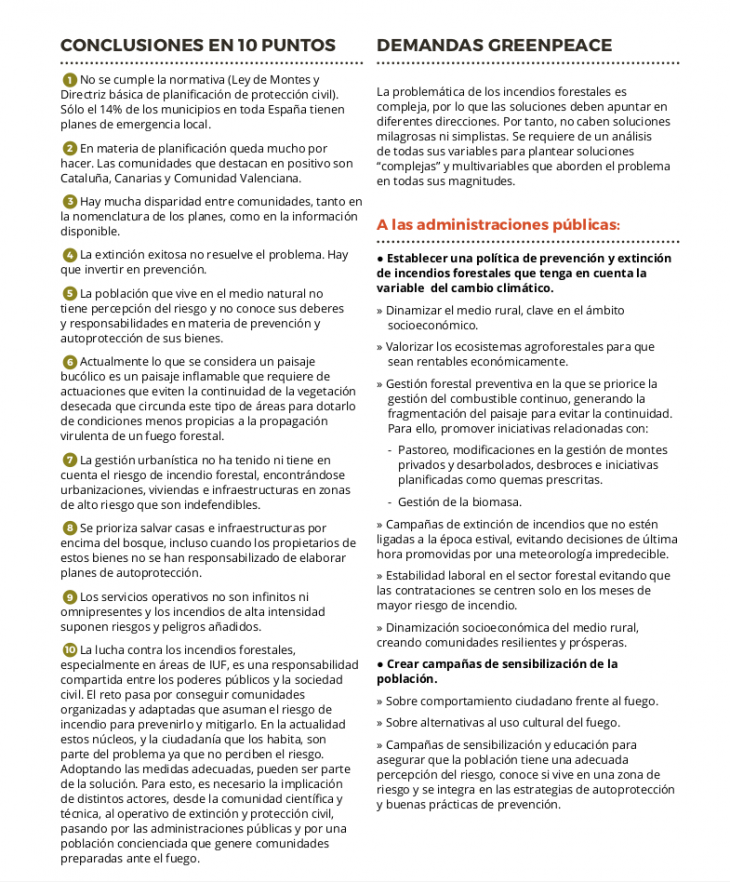
En este informe Informe Proteger el medio rural es protegernos del fuego. Hacia paisajes y población resilientes frente a la crisis climática» puedes ver las demandas.
Relativo a la España vaciada (despoblación rural)
Relacionadas con el sector primario
Relacionadas con la prevención de incendios forestales.
Relacionadas con el fomento del consumo de productos rurales.
Ingeniera
Técnica Forestal por la Universidad de Valladolid. Máster en Gestión de
Residuos (Instituto de Investigaciones Ecológicas). Diploma
universitario como Experta en Igualdad por la UNED. Responsable de
campañas del Área de Biodiversidad de Greenpeace España Twitter:
@MonicaParrill
Muy bueno este info.
El cancion de hoy este: " Have a cigar" de Pink Floyd