Translate

Friday, 12 February 2021

The world's plastic pollution crisis explained


Much of the planet is swimming in discarded plastic, which is harming animal and possibly human health. Can it be cleaned up?


Plastic pollution has become one of the most pressing environmental issues, as rapidly increasing production of disposable plastic products overwhelms the world’s ability to deal with them. Plastic pollution is most visible in developing Asian and African nations, where garbage collection systems are often inefficient or nonexistent. But the developed world, especially in countries with low recycling rates, also has trouble properly collecting discarded plastics. Plastic trash has become so ubiquitous it has prompted efforts to write a global treaty negotiated by the United Nations.   

How did this happen?


Plastics made from fossil fuels are just over a century old. Production and development of thousands of new plastic products accelerated after World War II, so transforming the modern age that life without plastics would be unrecognizable today. Plastics revolutionized medicine with life-saving devices, made space travel possible, lightened cars and jets—saving fuel and pollution—and saved lives with helmets, incubators, and equipment for clean drinking water.
 
The conveniences plastics offer, however, led to a throw-away culture that reveals the material’s darkside: today, single-use plastics account for 40 percent of the plastic produced every year. Many of these products, such as plastic bags and food wrappers, have a lifespan of mere minutes to hours, yet they may persist in the environment for hundreds of years.

Plastics by the numbers.


Some key facts:

Half of all plastics ever manufactured have been made in the last 15 years.

Production increased exponentially, from 2.3 million tons in 1950 to 448 million tons by 2015. Production is expected to double by 2050.

Every year, about 8 million tons of plastic waste escapes into the oceans from coastal nations. That’s the equivalent of setting five garbage bags full of trash on every foot of coastline around the world.

Plastics often contain additives making them stronger, more flexible, and durable. But many of these additives can extend the life of products if they become litter, with some estimates ranging to at least 400 years to break down.

How plastics move around the world.


Most of the plastic trash in the oceans, Earth’s last sink, flows from land. Trash is also carried to sea by major rivers, which act as conveyor belts, picking up more and more trash as they move downstream. Once at sea, much of the plastic trash remains in coastal waters. But once caught up in ocean currents, it can be transported around the world.
On Henderson Island, an uninhabited atoll in the Pitcairn Group isolated halfway between Chile and New Zealand, scientists found plastic items from Russia, the United States, Europe, South America,Japan, and China. They were carried to the South Pacific by the South Pacific gyre, a circular ocean current.

Microplastics.


Once at sea, sunlight, wind, and wave action break down plastic waste into small particles, often less than one-fifth of an inch across. These so-called microplastics are spread throughout the water column and have been found in every corner of the globe, from Mount Everest, the highest peak, to the Mariana Trench, the deepest trough. Microplastics are breaking down further into smaller and  smaller pieces. Plasticmicrofibers,meanwhile, have been found in municipal drinking water systems and drifting through the air.

Harm to wildlife.


Millions of animals are killed by plastics every year, from birds to fish to other marine organisms. Nearly 700 species, including endangered ones, are known to have been affected by plastics. Nearly every species of seabird eats plastics.
Most of the deaths to animals are caused by entanglement or starvation. Seals, whales, turtles, and other animals are strangled by abandoned fishing gear or discarded six-pack rings. Microplastics have been found in more than 100 aquatic species, including fish, shrimp, and mussels destined for our dinner plates. In many cases, these tiny bits pass through the digestive system and are expelled without consequence. But plastics have also been found to have blocked digestive tracts or pierced organs, causing death. Stomachs so packed with plastics reduce the urge to eat, causing starvation.

Plastics have been consumed by land-based animals, including elephants, hyenas, zebras, tigers, camels, cattle, and other large mammals, in some cases causing death.
Tests have also confirmed liver and cell damage and disruptions to reproductive systems, prompting    some species, such as oysters, to produce fewer eggs. New research shows that larval fish are eating    nanofibers in the first days of life, raising new questions about the effects of plastics on fish                  populations.

Stemming the plastic tide.


Once in the ocean, it is difficult—if not impossible—to retrieve plastic waste. Mechanical systems,        such as Mr. Trash Wheel, a litter interceptor in Maryland’s Baltimore Harbor, can be effective at             picking up large pieces of plastic, such as foam cups and food containers, from inland waters. 
But once plastics break down into microplastics and drift throughout the water column in the open     ocean, they are virtually impossible to recover.

The solution is to prevent plastic waste from entering rivers and seas in the first place, many                  scientists and conservationists—including the National Geographic Society—say. This could be             accomplished with improved waste management systems and recycling, better product design that        takes into account the short life of disposable packaging, and reduction in manufacturing of                 unnecessary single-use plastics.

The numbers are truly horrifying aren´t they! It can get really depressing to read about all of this bad stuff that is going on but as I keep saying I am trying to spread the word about using less single use plastics, changing to glass and cans where possible and making a lot of products at home!

There is a group of people that is ever increasing and it´s great that our younger generation is very active on this subject, maybe they can persuade their parents to adapt a little, take a few minutes more to think about what they buy and the impact it will have on the environment for their grandkids! It is the responsibility of the governments of all countries around the globe to initiate the tide of  change and educate their people about how precious are planet is and what we SHOULD ALL BE  DOING to at least put a brake on the decline.  

Yes, the big companies will continue to produce plastic, but they should be MADE to at least make a plastic that can be recycled, not broken down and made into something else or incinerated.

The blog song for today is " Hold on tight to your dream" by Electric Light Orchestra

 TTFN


Tuesday, 9 February 2021

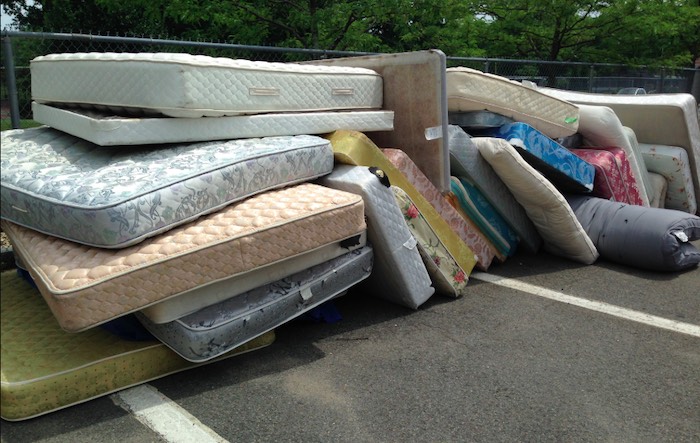
What happens to old bed mattresses?

 what really happens to my old mattress                                                                       

After you buy a new mattress, have you ever wondered what happens to your old one once it’s hauled away for disposal? If you’ve ever asked yourself, “what really happens to my old mattress once the council picks it up”, then you’re in the right place.

can my old mattress be recycled 

Can My Old Mattress Be Recycled?

While some junk removal companies (and some mattress removal companies) have a genuine commitment to being eco-friendly, many of these companies say they recycle when they really just haul it straight to the landfill. A lot of junk can be recycled or donated and most items, especially mattresses, fall into the recycling category. So the answer to can mattresses be recycled, is yes!

Old mattresses are often recycled by removing certain useful materials like the fibre filling or metal springs and combining that material with other recycled mattress components to manufacture a new one. Mattress toppers can also be recycled, but the process is a bit different than recycling a mattress with springs.

How Does Mattress Recycling Work?

So, how exactly does this mattress recycling magic happen? And where do mattresses go when you recycle them? Once your unwanted mattress is picked up it is dropped off at a recycling facility where it spends some time hanging out with its discarded mattress siblings.

Later, the mattresses are all inspected for bed bugs. Since they are considered hazardous, any bed bug mattresses and box springs are taken somewhere else to be destroyed in order to prevent spreading the infestations.

The remaining mattresses are sorted, and those that are wet from rain or snow are placed in a separate room to dry. Once the mattresses have been received and sorted, any fabric is taken off and the batting fiber inside is removed, which is used to manufacture new products.

All of the mattress materials are sorted into different components once it has all been removed. Innerspring mattresses and old box springs contain thick steel wire which is stripped away and baled using special machinery.

These steel bales are sent to a metal recycling plant where they are melted down and cast back into new steel. This recycled steel is used to produce new metal products.

Many of the mattresses we see today are made either partially or entirely of foam. When foam mattresses are recycled, most of the foam is shipped to factories to be cleaned and turned into new products such as foam padding for carpeting.

The UK threw away more than 7m mattresses in 2017, the vast majority of which went straight to landfill. Zero Waste Scotland has estimated that if the 600,000 mattresses Scotland throws away every year were stacked on top of each other, the pile would be more than 100 times taller than Ben Nevis. Flytipping is another huge area of concern: English councils spend £58m a year on clear-up, with mattresses among the most commonly illegally dumped items. According to the National Bed Federation (NBF), only about 19% of mattresses are recycled. The reason? They are a nightmare to recycle – it’s the springs. “They’re a machine killer.

And it’s not just a British problem. Mattresses are a global environmental nightmare. The US throws away 18.2m mattresses a year, but there are only 56 facilities available to recycle them. 

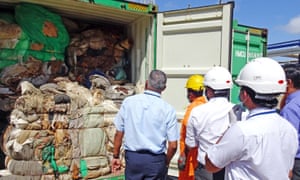
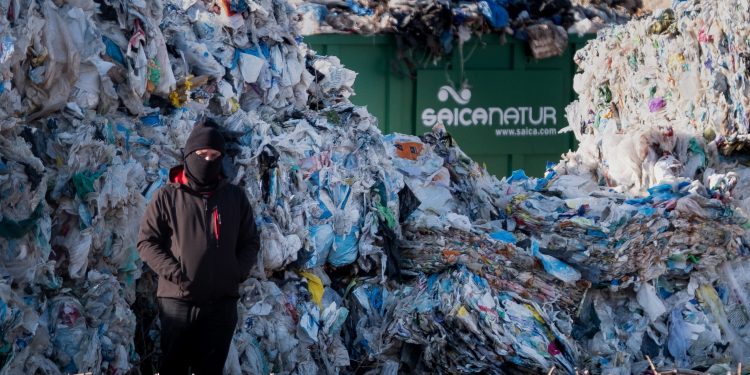
Our ever-growing used mattress problem is also being exported. In July 2019, 100 containers of British waste were found in the port of Colombo, Sri Lanka. They had been illegally sent there, under the guise of metal recycling.

Sri Lankan customs customs officials inspect a container full of mattresses

Without action from regulators, the industry is trying to self-regulate. The National Bed Federation has a code of practice and accreditation system for genuine mattress recyclers: it audits facilities to check firms are compliant with the law and there’s no exploitation of their workforce. The organisation also aims to divert 75% of new mattresses sold from landfill by 2028, and is encouraging manufacturers to consider eco-friendly designs, such as reusable mattresses that would be leased to consumers for a period of time, before being sent back, stripped and refreshed.

There are quite a few companies in Spain that deal with old mattresses and have the facilities in place to carry out all the various different ways to dispose of them in a way beneficial to the environment. I believe here on Menorca they are sent to the mainland where they are distributed to the various specialist companies.

Here on Menorca in Spring you will often see old mattresses dumped by the side of the green bins and there is a very popular fly tipping zone near the mateus roundabout near Cala Blanca.  All sorts of rubbish is dumped there from old fridges, settees, display units and very nice it looks too.  It is particularly pretty when people can´t even be bothered to get out of their vehicle to put bags of normal rubbish in the green bin and just leave it by the bins for the seagulls to come and peck at. I wouldn´t mind but there is a telephone number of the council which when called they will arrange for the item to be collected free of charge on a certain day from the home!  

The best time apparantly to renew your mattress is between 8-10 years, and when buying a new one try to think of how it can be desposed of safely in the future. I have read that a lot of mattress companies are offering a tryout deal on a new one, this is not good,because if the mattress is returned it is disposed of and there is a lot of doubt as to if this is done in an environmentally friendly way.

The  blog song for today is: "All I have to do is dream" by Buddy Holly

TTFN


Sunday, 7 February 2021

Glass versus Can and Tetrapak, prices, advantages and disavantages

Glass Jars:  Number 1 choice for me!

Can be recycled, even the lid. You can also see the contents! The price is usually a little bit more expensive as the can or tetrapak, if you go for the same quantity.

The only thing you have to look out for is the lid, which contains the dreaded BPA or BPS.  Leave whatever is stuck to the lid on it!  Wash it away.

The good thing about the jars is that you can re-use them!  My father in law used to have a great use for themTheir cans are lined with baked-on oleoresinous c-enamel…in other words, their cans don’t have any traces of BPS, vinyl, acrylic, polyester, or any other icky stuff. in his garden shed.  He attached the lid of the jar to the underside of the shelf and screwed the jar onto the lid, he used to keep all his nuts, bolts and little items in those jars, pretty well organised!

Cans:

It all depends on what you wish to buy, because the problem with most cans are that they are lined with BPS, vinyl, acrylic, polyester, or any other icky stuff. Look for cans that are lined with baked-on oleoresinous c-enamel.

The inside lining of these cans can seep into whatever is inside and because cans have a really long shelf life, it gives a long time for that to happen.  I will be looking for the produced date on the can (if there is one) and buy the ones that are near to the actual date I buy. From 2018 the European Union introduced new measures to reduce the amount of BPA in cans, but many consumer agencies said that it wasn´t enough.

The plastic liner looks plastic'y in all cases, it's very hard to tell. Epoxy is harder than other plastics, but there are epoxies that are BPA free anyway

Aluminium cans are more likely have a epoxy liner that will give off a trace of BPA.

Many steel cans do not use epoxy or other BPA plastics. 

The unfortunate thing is that you can only tell if it is plastic lined after the can is opened, but then if it is then change the product.

Cans are recyclable and easily done so.

TetraPaks:

These are lined with plastic, are not fully recyclable, if you have the time you can break them down into the different products, plastic, paper and aluminium.

The food does taste different from these containers and the one of the few things these days that I  buy in tetrapak is Milk, I like to buy milk from Menorca and I have only seen it available in Tetrapak or plastic bottles, which there is small availability.

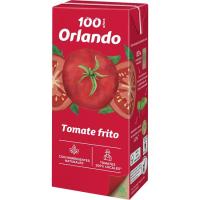
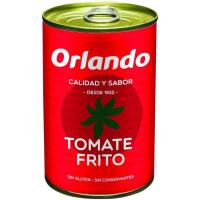
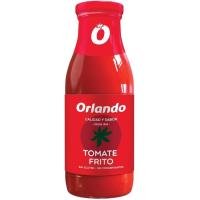
Below is a price comparison of tomato Frito: I used brand names not the stores own.

Tomate frito ORLANDO, brik 350 g350ml 0,66c (1,89 a kilo)


Tomate frito ORLANDO, lata 400 g400g 0,74c (1,85 a kilo)


Tomate frito ORLANDO, frasco 500 g500g 1,09 (2,18 a kilo)

In comparison the bottle does come out more expensive (0,30c per Kilo more) but not that much more than the Tetrapak which you would have thought would be much cheaper.

This is a good brand to buy, mid range. Gallina Blanca and Solis are also very nice. I have also found that Dia Supermarkets make a nice one too in a jar!

I totally understand that it is really difficult to buy the more expensive products when you are on a tight budget, so it is not always possible to do it.  Even once in a while is great! Bit by bit we can change things and maybe for the manufacturers to use glass again!

The blog song for today is: "Us and Them" by Pink Floyd.

TTFN


Saturday, 6 February 2021

The big disappointment with Ecoembes - Recycling company in Spain

 ecoembes                                                              

Greenpeace yesterday presented the report "Ecoembes lies: Dismantling the deceptions of the management of household packaging waste", in which it denounces the malfunction of a management system that fails to end the problem of plastic. 

We explain the main situations that the organization reports. Before entering the subject, it is convenient to know a key concept. When a company markets a domestic container, whether it is plastic, aluminum, metal or paper-cardboard, it prints a green dot for it. This means that a percentage is paid for Ecoembes to recover that container and recycle it. 

The problem that Greenpeace denounces is that only 25% of the plastic packaging that is consumed is recovered and recycled, while the rest ends up in the environment. Ecoembes As defined by Greenpeace, Ecoembes is a monopoly formed by the main plastic polluting brands (Coca-Cola, Nestlé, P & G ...) that, through this screen entity, “clean” their image but without cutting the pace of production, nor generate cleaner systems such as returnable and reusable packaging. 

Greenpeace denounces, firstly, that Ecoembes is not an environmental organization and continues to show that it is not a non-profit organization, since in recent years its profits have increased fivefold. The organization points out that, in 2018 alone, these reached 578 million euros. Mario Rodríguez Vargas Executive Director of Greenpeace Spain, points out: “Ecoembes and its companies have long blocked alternatives to their inefficient packaging management, such as having a return and return system for packaging. We are talking about two decades lost in the fight against plastic pollution. For this reason, we ask the Vice President for the Ecological Transition and the Demographic Challenge, that, due to the imminent processing of the new Waste Law, promote real measures based on the circular economy, with the elimination of single-use containers and the commitment to the reuse and return of packaging ”.

 
What does Greenpeace denounce? 

 The organization first denounces the situation of landfills, where 44% of Spanish plastics end up, although most of them could be recycled. Greenpeace also mentions the fires. From 2012 to September 2020, 342 fires have been recorded in recycling plants and, at least, until 2019, 35 of them appear in the lists of recuperators and recyclers approved by Ecoembes. 

Another situation that the organization puts on the table is the pollution of the oceans, in which up to 12 million tons of garbage are concentrated each year. Specifically, between 21% and 54% of the microplastic particles in the world are in the Mediterranean basin. 

Finally, Greenpeace denounces the export of plastic waste to other countries with less management capacity and the fact that Ecoembes calls the process of burning plastics, in which large amounts of toxic substances are emitted, a circular economy. On the other hand, in economic terms, Greenpeace points out that the mismanagement of Ecoembes generates an economic extra cost both to the producing companies, because many of the containers for which they have paid the green dot are not recycled, as to the citizens, since Ecoembes frequently calculates down what the garbage collection will cost to municipalities.

For all these reasons, the organization demands from Ecoembes that the rate obtained by the green dot is aimed at fully covering management costs and ceasing to promote "false solutions". For the organization, the money collected by the green dot should not be managed by Ecoembes, but by the administrations. In the same way, they ask the Government to introduce legislation that encourages the reuse of a comprehensive waste management system and to promote initiatives to reduce single-use plastic. Source: Greenpeace.

This report was in addition to one that was issued last year which showed an illegal landfill on Mallorca.

Felanitx Mayor Jaume Monserrat & Councilor Catalina Soler at the landfill.

 Hundreds of plastic bottles, glass and containers have been piling up on a farm near the Can Alou quarry, in Felanitx for years, according to a Greenpeace report on the setback in the fight against single-use plastic.

In 'Ecoembes lies: Dismantling the deceptions of the management of household packaging waste' the environmental organisation denounces the illegal landfill on the property saying 40% of the packaging that's sent to the Son Reus selection plant is burned and the rest ends up getting dumped in places like Felanitx.

"We don’t know who started this illegal dumping but it is an aberration," blasts Julio Barea, Head of the Greenpeace Waste Campaign.

Greenpeace Volunteer, Javier Soto says it’s important to raise public awareness about the price of raw materials and stressed the urgent need for a comprehensive waste management system.

Felanitx Town Hall admitted that the landfill has been there for years and has promised to do something about it.

"We are aware of the Greenpeace complaint and the police have made a report,” said Felanitx Mayor Jaume Monserrat. “It is a large area and we plan to study the situation to find a way to reverse this disaster.”

Medi Ambient launched an immediate investigation after it received the Greenpeace complaint.

As a keen recycler for many years these types of reports are very disappointing and disheartening, making me question why the heck have I and others been bothering for all these years?  This is why I keep on encouraging my family and all my friends to buy less plastic, maybe using the shops that refill your containers for you,such as the three I have mentioned before in my previous blogs.

As you know I am also in the process of making my own cleaning products, some are working better than others but it is all trial and error and fun too.  The latest one being soapnuts!  The way I see it is that the base product is packed in plastic, but weighs 1 Kilo, this can be made into many litres of the cleaning liquid or you can use the nuts as they are!  They come with a special cotton bag to put the nuts in for use in the washing machine, you only need 5 and they can be reused up to five times before throwing them away.  

Please if you can, buy less plastic because as it is becoming painfully clear, we are being misled and lied to!  Once again it all comes down to money.  

The blog song for today is : "Watching the detectives" by Elvis Costello

TTFN


Wednesday, 3 February 2021

Home made cleaning products - Clothes washing liquid

 I have been reading about a different way of washing clothes, there is a natural product called "SoapNuts" which I have come across and have decided to give it a go.

Soapnuts FAQ - Stay at Home Mum                                     

First you buy some "SoapNuts", I bought mine from Amazon.  They come with a little bag for you to put the nuts in so if you want you can just pop them straight in the washing machine and use them as you normally would detergent.  Apparantly there is no need for fabric conditioner as they leave the clothese really soft.

I have decided to do option B! I put 20 in a pan with 2 cups of water, brought it to the boil and let it simmer for one hour.

After an hour just let it cool down, overnight if you want to.  Strain the liquid into a suitable bottle and its ready to use. The shells are organic and can be used for compost or thrown in the ordinary rubbish bin.

All you have to do to use it is add some essential oils to make it smell nice, orange, lemon,rosemary,lavender, sage, basil and Tea tree are all good.  I will try one of them.  

For clothes washing use 2 tablespoons.

 For washing up use 1 tablespoon

To make an all purpose cleaner take, half a cup of soapnut liquid, 1 cup of tap water, 2 tablespoons of white vinegar and 4-6 drops of essential oil.

Mix the ingredients well and poiur into a spray bottle.

To make handsoap, half a cup of soap nut liquid, half a cup of castile soap, 2drops of essential oil.

Because it is a natural product it doesn´t have a long shelf life so I am not going to make too much of it.

I will let you know what the results are!

The blog song for today is courtesy of my hubby: "Messages from the Stars" by The Rah Band

TTFN

.

Tuesday, 2 February 2021

News from the Union for Ethical Biotrade and the RainForest Alliance about herbs and spices.


utz.jpg I think most of us recognise this logo! Below is a brief layout of the work the UEBT do and how they grew to be what they are today. 


UEBT is a non-profit association that promotes sourcing with respect. We work to regenerate nature and secure a better future for people through ethical sourcing of ingredients from biodiversity. We aim to contribute to a world in which all people and biodiversity thrive.

We set good practices for how companies and their suppliers source specialty ingredients for the food, cosmetics and natural pharmaceutical sectors. 

We are internationally recognised for our work advancing business contributions to sustainable development goals.

What is sourcing with respect?

The good practices we set act as a guidepost for how companies and their suppliers should harvest, collect or grow ingredients from biodiversity in a way that is respectful of the local environment and the people who call it home. We call this "sourcing with respect."  Companies, communities, civil society and other stakeholders are involved in developing these practices, collectively known as the UEBT standard.

Working with UEBT is a powerful way for businesses to demonstrate impact to consumers, governments and other supply chain actors, and UEBT certification allows all of us to choose brands, products and ingredients that are contributing to a world in which all people and biodiversity thrive.

2195020450_7ba67abf89_o.jpg

Our vision

A world in which all people and biodiversity thrive.

The history of UEBT:  

1992

Countries adopt the Convention on Biological Diversity to conserve and sustainably use biodiversity, and to ensure fair and equitable benefit sharing

1996

To support CBD objectives, the UN Conference on Trade and Development (UNCTAD) launches the BioTrade Initiative.

2007

UEBT is born, following an UNCTAD initiative to promote business engagement in the ethical sourcing of biodiversity.

2008

UEBT moves to independent offices and begins a formal partnership with the CBD Secretariat. 

2015

UEBT certification begins for natural ingredients and the joint UEBT/UTZ herbal tea certification program. 

2018

UEBT ethical sourcing system certification begins, with Weleda and Natura Cosmetics as launching partners.

The new initiative: 

UEBT and Rainforest Alliance Herbs & Spices Programme

Herbs & spices are used in a variety of foods, beverages, and flavourings and provide important income to farmers around the world.

UEBT and the Rainforest Alliance have developed a joint Herbs & Spices Programme. All ingredients certified under this new programme will be able to carry the Rainforest Alliance certification seal.

With this partnership, we build on the positive track record of the UEBT/UTZ cooperation in herbal tea, the decades-long experience of the Rainforest Alliance and UTZ in sustainable agriculture certification, and UEBT’s expert knowledge of ethical sourcing of ingredients from biodiversity, including those ingredients collected from the wild.

Programme scope and requirements

The new UEBT/Rainforest Alliance Herbs & Spices Programme brings together the current UEBT/UTZ Herbal Tea Program along with the UTZ and Rainforest Alliance certification programs for herbs, spices, rooibos, and vanilla. The new programme applies to:

  • all ingredients for herbal and fruit infusions, including rooibos

  • other herbs & spices, including vanilla, chili, or pepper

The certification for farm certificate holders in the programme is based primarily on the UEBT standard. This standard was designed for ingredients that are cultivated or collected from the wild.

The UEBT standard is complemented by selected requirements from the new Rainforest Alliance 2020 Sustainable Agriculture Standard. Together, these make up the UEBT/Rainforest Alliance requirements. For practical purposes, these requirements are described in a Field Checklist and a Certification Checklist, based on the Certification Protocol (to be published in March 2021).

Timeframe

For farm certificate holders getting audited against UEBT/Rainforest Alliance Herbs & Spices requirements

  • January 2021: The Field Checklist that compiles the UEBT/Rainforest Alliance requirements for farms has been published.

  • From January 2021: Farm certificate holders should begin to contact UEBT at herbsandspices@uebt.org to plan for their transition and/or future audits against the new UEBT/Rainforest Alliance Herbs & Spices requirements. 

  • March 2021: Publication of the Certification Protocol that compiles certification and auditing rules of the UEBT/Rainforest Alliance Herbs & Spices Programme. 

  • From July 2021: Farm audits can begin against the new UEBT/Rainforest Alliance requirements.

  • From January 2022: Auditing against the new UEBT/Rainforest Alliance requirements becomes mandatory for all farms that are in the scope of the Herbs & Spices Programme (read section above to see who this applies to).

That  looks like fantastic news to me, I like the labelling and certification that they use! I do already look for these logos!


The blog song for today is: "  Vienna" by Ultravox (Those sideburns were something else!)

TTFN

Saturday, 30 January 2021

Is this the cutest bat ever seen?

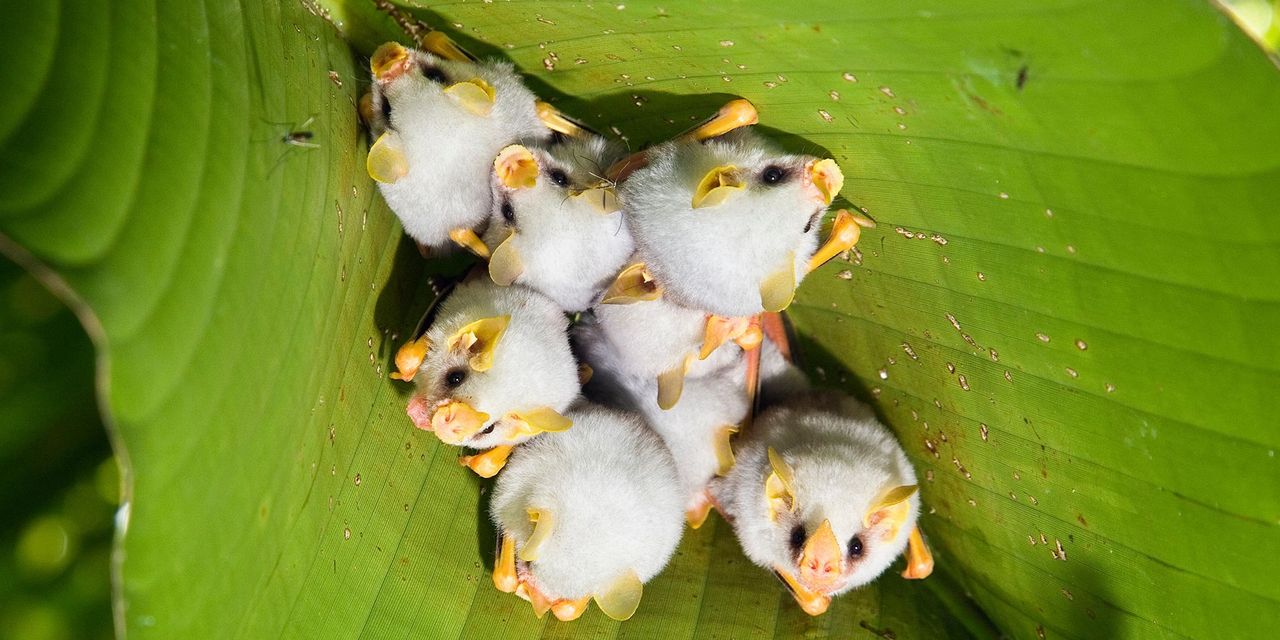
Tent-making bats defy negative stereotypes by living in harmony with each other (Credit: Credit: Minden Pictures/Alamy) 

I found this article on the BBC News website and wanted to share it! 

Described as "cute" even in formal scientific journals, Costa Rica's tent-making bats defy negative stereotypes by living in harmony with each other and inspiring conservation.

A report By Reena Shah 27 January 2021

I drove to Sarapiquí, a little-known region in Costa Rica, during a brief respite of dry weather between Hurricanes Eta and Iota in search of a miniature tropical bat. Here, conservation efforts big and small are fighting to preserve a lowland tropical rainforest with astonishing biodiversity, including one of the smallest and most adorable mammals: Ectophylla alba, also known as the Honduran white bat or Caribbean tent-making bat.

It was impossible not to coo

I'd been warned that these bats aren't always easy to find. They live in selected lowland rainforest habitats from Honduras to eastern Panama. In Costa Rica, I tried my luck at Tirimbina Rainforest Center, a 345-hectare private reserve. At first glance, the neighbourhood seemed an unlikely locale for a rainforest. Pineapple plantations dominated on all sides and spiky green shrubs stretched to the horizon. But tucked away behind an unassuming green gate was an ecological oasis that protects nearly 4,000 species of plants and animals.

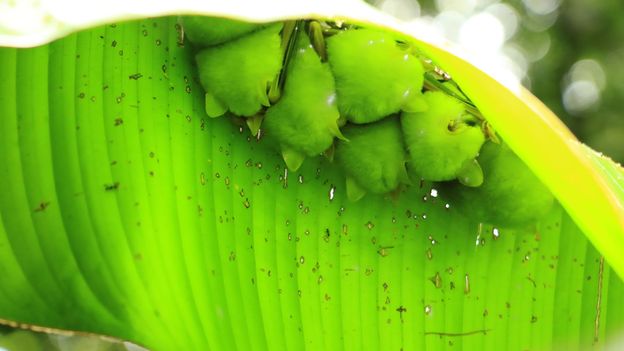
My guide, Emmanuel Rojas Valerio, led me across a 270m chain-linked suspension bridge over the roaring Sarapiquí River. In the middle of the river was the small island of "La Isla", once a biologist's heaven for studying the bats due to its abundance of heliconia plants. The tent-making bats chew a perforated ridge into heliconia leaves, similar in shape to banana leaves, to form tents where they roost during the day. The plants are easily shaken, which is one of the reasons they make suitable homes. The leaves become alarm bells as soon as predators, such as snakes, owls and opossums, touch them, giving the bats a chance to escape.    

In 2015, severe flooding wiped out La Isla. Though, by the look of it now, I wouldn't have known. Enormous cecropia and balsa trees had already grown taller than the bridge, and dense vegetation obscured the island floor. The tiny bats, however, haven't yet returned. Scientists speculate that the understory is too crowded with new growth, making it hard for them to easily leave their tents.

But we were lucky that day. Inside the reserve, just a few hundred meters after the bridge, Rojas Valerio pointed out fraying empty tents along our trail, then led me into marshy woods with mud up to our ankles. In the middle was a neatly folded leaf with a brown ridge on top. Underneath, the bats looked like a handful of fuzzy green seeds, a surprisingly effective form of camouflage. When Rojas Valerio turned on his torch, they transformed into white cotton balls with yellow-orange noses and ears. A shiver ran through the upside-down colony of five females, one male and a baby. One opened its eyes and stared at us, dewy black slits embedded in snowy fur.

It was impossible not to coo. One of the smallest fruit-eating bats in the world, the tent-making bat has an average wingspan of just 10cm and weighs roughly 6g – about a teaspoon-and-a-half of sugar. According to Bernal Rodriguez, bat biologist and professor at the University of Costa Rica, these diminutive creatures are the only known mammals with an accumulation of carotenoid pigment, the chemical that accounts for the bright yellow of their ears and nose. The carotenoid comes from peels of the bats' food: cranberry-like figs from a particular tree, Ficus columbrinae, that grow near rivers. Recent studies by Rodriguez and his team suggest that the colouring is a trait of sexual selection. Males that are larger and well fed have brighter colours, a feature that attracts females.

 The bats build tents from heliconia leaves where they roost during the day (Credit: Credit: Emmanuel Rojas Valerio)                                                                          

The bats build tents from heliconia leaves where they roost during the day (Credit: Emmanuel Rojas Valerio)

Rojas Valerio explained that the colony we found will leave their roost at sundown to travel nearly a kilometre to the riverbank for figs, and only figs. "They don't always come back to the same tent," he said. "They make many houses where they can stop along the way. But always in heliconia leaves."

It is nice to be able to bring a nice story once in a while!

The blog song for today is: "Happy" by Pharrell Williams 

TTFN

Thursday, 28 January 2021

Here's How Much Plastic Trash Is Littering the Earth

91 percent of all plastic ever manufactured is still unrecycled 


Beautiful mountain reservoir filled with plastic bottles and other waste 

The extent of plastic pollution has reached a level that is impossible to ignore; we have covered Earth in plastic — from the heights of Mount Everest to the depths of the Mariana Trench.

We produce around 335 million metric tons of plastic a year. And about half of that plastic is for single-use products, like water bottles. But it’s not just plastic water bottles and bags littering the landscape, though we have plenty of that. Every year, 8 million tons of plastic wash into our oceans, harming wildlife and natural ecosystems. And tiny pieces of plastics, or microplastics, are found in the oceans, soil, and even the rainwater. It’s no surprise that they are also contaminating our food and drinking water.

The following infographic from ClimaDoor explores the extent and impacts of the plastics with which humans have polluted the Earth. It also shows what kind of waste is showing up and some of the different species that it affects — from our rivers and mountains to our beaches and oceans.

Although the thought of cleaning up our plastic-covered Earth is daunting, we can stop adding to the existing mess. Replace single-use plastics with reusable items. Learn which plastics your local recycling provider accepts, and avoid purchasing plastic items that you can’t recycle. And let companies know that you expect their products and packaging to be sustainable.

Infographic: How Plastic Pollution Affects Our Planet


It looks pretty awful doesn´t it! This is why I am so against plastic and am trying to show others how serious this whole situation is.  Please try to use less plastic,change to glass containers when possible, make your own product, think about alternatives before buying and gradually we may be able to slow down the horrendous problem that we have all made.  Humans are the only living things on this earth that use plastic so we can only blame ourselves to the mess we find ourselves in.

Plastic is not our friend!

The blog song for today is: "We can be heroes" by David Bowie

TTFN

Wednesday, 27 January 2021

Daily use contact lenses - Don´t flush them away! Not a good idea!

I wear glasses for reading so do not wear contact lenses, I don´t fancy putting anything in my eye! but there are millions of people around the world who do wear them! I admit that it is real pain when my glasses fall off my nose when I bend down and in other pratical situations!  I came across this really interesting report about them.

contact lens on a man's finger                                                        

When you think of plastic pollution, you probably imagine discarded straws. And water bottles. And bags. Some people are also focusing on something smaller — teeny weeny items millions of us use everyday. Contact lenses, when improperly discarded, likely create contaminating microplastics.

To help prevent microplastic pollution, responsible disposal is important.

Don’t Flush Used Contacts

That’s the advice from a trio of scientists at Arizona State University. They teamed up to study the effect of contact lenses that are washed down the drain or flushed down the toilet.

The study reveals that:

  • Fifteen to 20 percent of contact lens wearers dispose of the lenses down the sink or toilet.
  • With an estimated 140 million people in the  world are wearing contacts, about 10.2 billion  lenses are flushed per year.
  • At wastewater plants, contacts likely are too small to be filtered out and removed.

“The study showed that wastewater plants fragment them into microplastics, which accumulate in sewage sludge. For about every two pounds of wastewater sludge, a pair of contact lenses typically can be found,” according to an article about the project on Arizona State University’s website.

Tossing used lenses in regular trash is preferable to flushing, explains Charles Rolsky, a Ph.D. candidate who worked on the research project. Even better, recycle.

There are recycling services available in the US and the UK, but as of yet not here in Spain.  

In the UK there are two, below is one of them:


DROP-OFF LOCATIONS ONLY

The ACUVUE® Contact Lens Recycle Programme

Thumbnail for The ACUVUE® Contact Lens Recycle Programme                                                                                       

So until we have the choice of taking them to a place to safely dispose of them, they have to be thrown in with the ordinary rubbish into the green bins.  Maybe any of you that wear them could speak to the optician who you  buy them from and see if they can maybe get something up and running, unless this is already happening in Ciutadella and because I don´t use them I don´t know of it!

 The blog song for today is: " Chain Reaction" by Diana Ross


TTFN

Tuesday, 26 January 2021

Home Made cleaning Stuff - Washing up liquid! First attempt- The Castile Soap Method

Cleaning Your Wood Floors with Dish Soap and Water ...         


This was a lot of fun to make and I didn´t make too much mess! I had a recipe which I found and all the necessary ingredients so I thought I would give it a go! 

Ingredients:
6 Tablespoons of Castile Soap
450ML warm water   
2 Teaspoons of Vegetable Glycerine (I used Agar Agar)
2 Tablespoons of White Vinegar
10 drops of essential Oil (Any)
 
Method:
Put the soap in the bottle you will be using to store the washing up liquid (I,m calling mine Pixie) and the warm water and stir to mix.   Add the glycerine and mix well.  Add the vinegar and mix until smooth then finally add the essential oil.  Put on the lid and shake to mix.
 
The only thing I found was that because I was used to ordinary shop bought liquids which produce bubbles, this one didn´t produce hardly any at all.  However, it did clean nicely and left my hands feeling nice and soft.  
 
I will report back after I have been using it a while to update!
 
The blog song for today is: "Friends will be Friends" by Queen
 
TTFN                           

"Precyclying" - a short explanation from the gang at earth911.com

A report by: Taylor Ratcliffe, he is Earth911's customer support and database manager. He is a graduate of the University of Washington....