Translate

Thursday, 4 March 2021

Chickens, they are smarter than you think!

Chickens have a reputation for being profoundly dumb, but in fact they are remarkably intelligent and may even be empathic.

Reputation: Chickens are dumber than your average bird – little more than walking meat factories with a talent for laying tasty eggs

Reality: The world's most common bird is actually intelligent, and perhaps even sensitive to the welfare of its peers – which might raise some uncomfortable ethical questions for the farming industry.
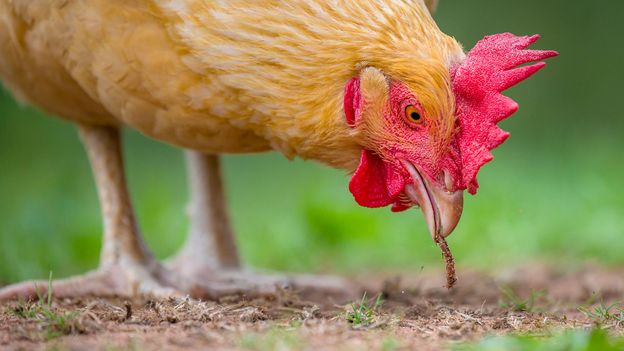
How much brain does pecking at seeds even take? (Credit: Klein & Hubert/naturepl.com)  

How much brain does pecking at seeds even take? (Credit: Klein & Hubert/naturepl.com)

There is something odd about chickens. Globally they number more than 19 billion, making them one of the most abundant vertebrate species on the planet. Yet many people have little or no contact with the birds – at least, not while they are alive.

Chickens can count, show some level of self-awareness, and even manipulate one another.

That has led to some strange assumptions about chickens. According to some studies, people can struggle even to see them as typical birds. They are, in fact, reasonably representative of the galliformes, a bird group that also includes turkeys, partridges and pheasants.

It is also common for people to view chickens as unintelligent animals that lack the complex psychological characteristics of "higher" animals like monkeys and apes. This is a view reinforced by some depictions of chickens in popular culture, and one that might help people feel better about eating eggs or chicken meat produced by intensive farming practices.

But chickens are, in fact, anything but dumb.

They can count, show some level of self-awareness, and even manipulate one another by Machiavellian means. In fact, chickens are so smart that even a limited amount of exposure to the living birds can crush longstanding preconceptions.

I never thought that chickens would be intelligent enough and learn quite so quickly.

For a study published in 2015, Lisel O'Dwyer and Susan Hazel ran a class for undergraduates at the University of Adelaide, Australia. As a way to learn about psychology and cognition, the students performed experiments that involved training chickens.

Before the class began, the students completed a questionnaire. Most said they had previously spent little time with chickens. They viewed them as simple creatures, unlikely to feel boredom, frustration or happiness.

After just two hours training the birds, the students were far more likely to appreciate that chickens can feel all three of these emotional states.

"Chickens are a lot smarter than I originally thought," commented one student on a follow-up questionnaire. Another said: "I never thought that chickens would be intelligent enough and learn quite so quickly."
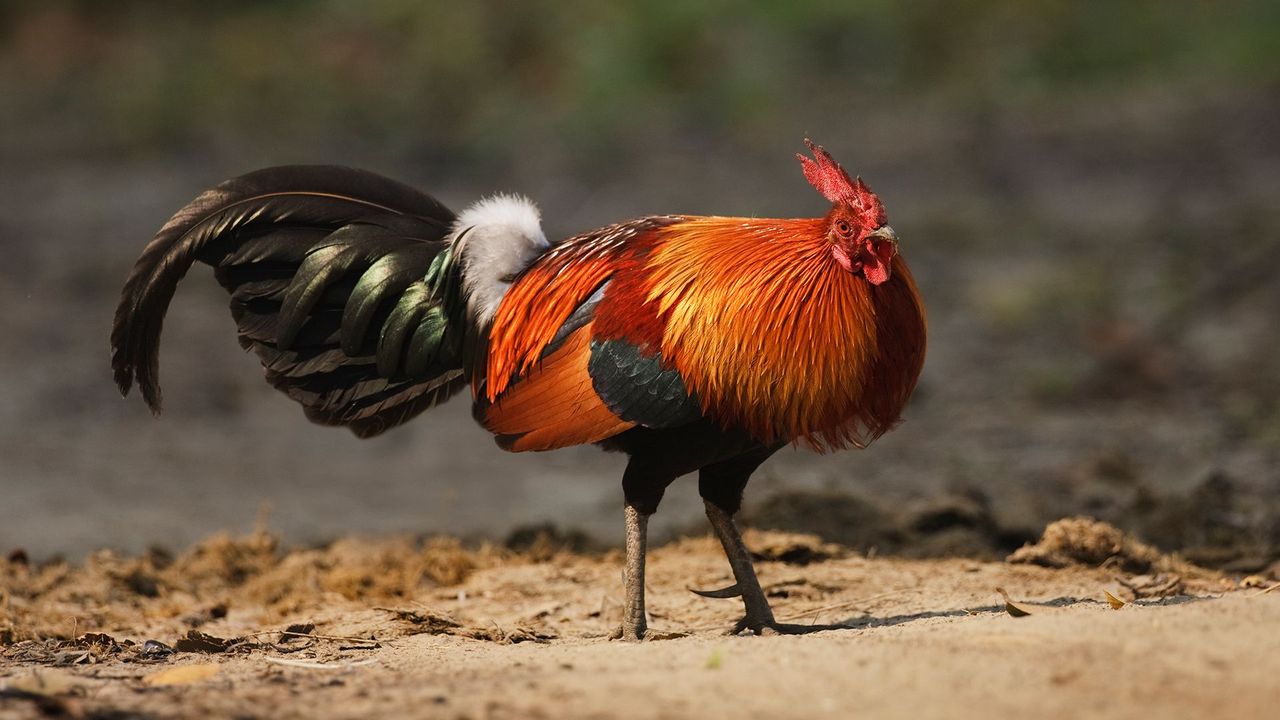
A male junglefowl, chickens's closest wild relative (Credit: Tony Heald/naturepl.com)

A male junglefowl (Gallus gallus), domestic chickens's closest wild relative (Credit: Tony Heald/naturepl.com)

In as-yet-unpublished research, O'Dwyer has replicated this study with workers in the poultry industry, and found the same results. "Basically we had two quite different social groups and found the same [initial] attitudes and the same attitude change in both," she says.

The researchers have shown that chickens can count and perform basic arithmetic.

She now plans to study whether these experiences have any impact on people's eating habits – for instance, whether they shift to eating chicken reared in ways that they believe to be more ethically acceptable.

O'Dwyer's study is just one of many picked out by Lori Marino of the Kimmela Center for Animal Advocacy in Kanab, Utah, as part of a scientific review of chicken cognition published in January 2017.

"The paper is part of a joint venture between Farm Sanctuary and The Kimmela Center, called The Someone Project," says Marino. "The aim of the Project is to educate the public about who farmed animals are from the scientific data."

Marino says the scientific evidence shows clearly that chickens are not as unaware and unintelligent as many people assume.
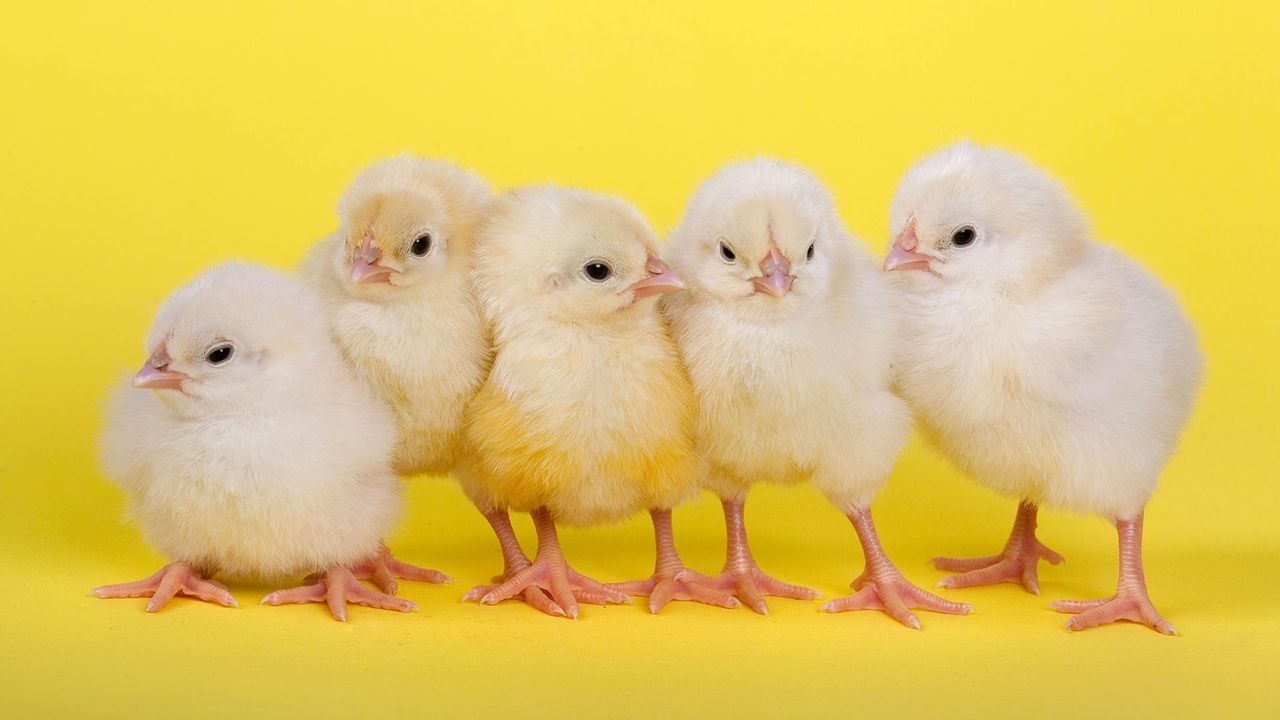
Newly-hatched chicks have remarkable skills (Credit: Ernie Janes/naturepl.com)

Newly-hatched chicks have remarkable skills (Credit: Ernie Janes/naturepl.com)

Take, for instance, a suite of papers published over the last decade by Rosa Rugani at the University of Padova, Italy, and her colleagues. Working with newly-hatched chicks, the researchers have shown that chickens can count and perform basic arithmetic.

Chickens may also have some ability to perform "mental time travel"

The chicks were raised from hatching with five objects – the plastic containers from Kinder Surprise eggs. After a few days, the scientists took the five objects and, in full view of the chicks, hid three behind one screen and two behind a second screen. The chicks were more likely to approach the screen hiding more of the objects.

A follow-up experiment tested the chicks' memory and ability to add and subtract. After the objects had been hidden behind the two screens, the scientists began transferring objects between the two screens, in view of the chicks. The chicks seemed to keep track of how many objects were behind each screen, and were still more likely to approach the screen that hid the larger number of objects.

Chickens have a strong grasp of numerical tasks from a young age, even if they have limited experience, says Rugani.
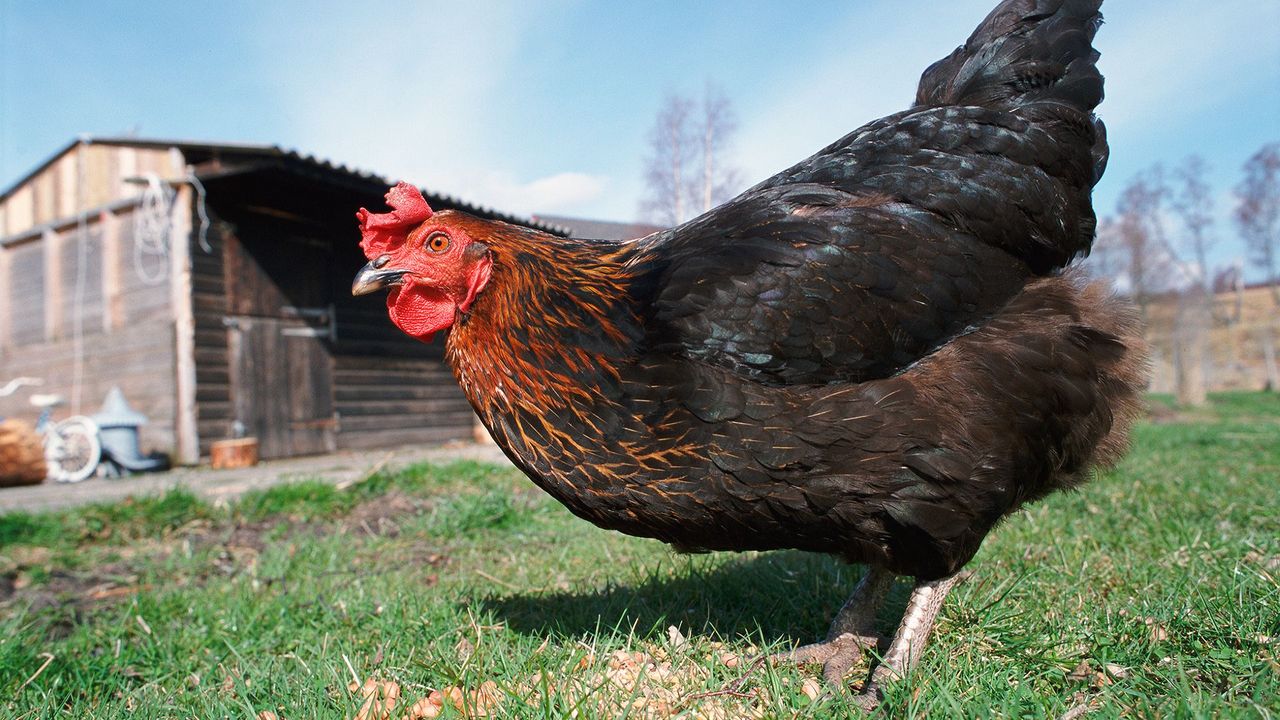
This chicken has a first-rate mind (Credit: Pete Cairns/naturepl.com)

This chicken has a first-rate mind (Credit: Pete Cairns/naturepl.com)

She thinks that might be true of higher animals in general, rather than chickens in particular. "These abilities would help animals in their natural environment, for example to reach a larger amount of food, or to find a larger group for social companionship," she says.

If a male chicken foraging for food finds a particularly tasty morsel, he will often try to impress nearby females by performing a dance.

Chickens may also have some ability to perform "mental time travel" – that is, to imagine what will happen in the future – to secure a larger amount of food, according to a 2005 study led by Siobhan Abeyesinghe, then at the University of Bristol, UK.

Abeyesinghe gave chickens the option of pecking one key, which would give brief access to food after a two-second delay, or pecking a second key that gave prolonged access to food after a six-second delay.

The birds were significantly more likely to peck at the second key, which offered a greater food reward but after a longer delay time. In other words, they showed self-control – a trait that some biologists think hints at a degree of self-awareness.

Chickens are also socially complex.
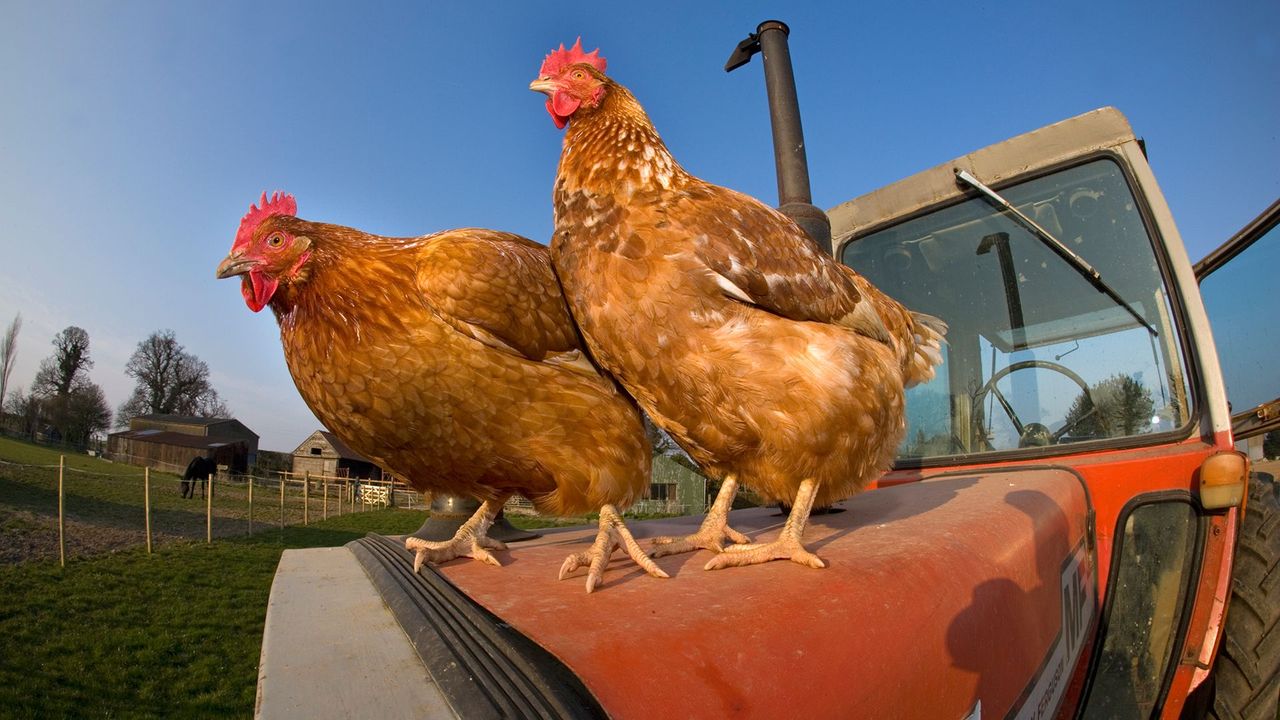
Chickens have intricate social lives (Credit: Ernie Janes/naturepl.com)

Chickens have intricate social lives (Credit: Ernie Janes/naturepl.com)

Some studies suggest the birds can appreciate how the world must appear to their peers, and that they can use this information for personal advantage.

Females quickly wise up to males who perform this sort of deception too often

If a male chicken foraging for food finds a particularly tasty morsel, he will often try to impress nearby females by performing a dance while making a characteristic food call.

However, subordinate males that perform this song-and-dance routine risk being noticed and attacked by the dominant male. So if the dominant male is nearby, the subordinate often performs his special dance in silence, in a bid to impress females without the dominant male noticing.

Meanwhile, some males may try to trick females into approaching by making the characteristic food calls even when they have not found anything worth crowing about. Unsurprisingly, females quickly wise up to males who perform this sort of deception too often.

There are even some hints that chickens may show a rudimentary form of empathy for each other.
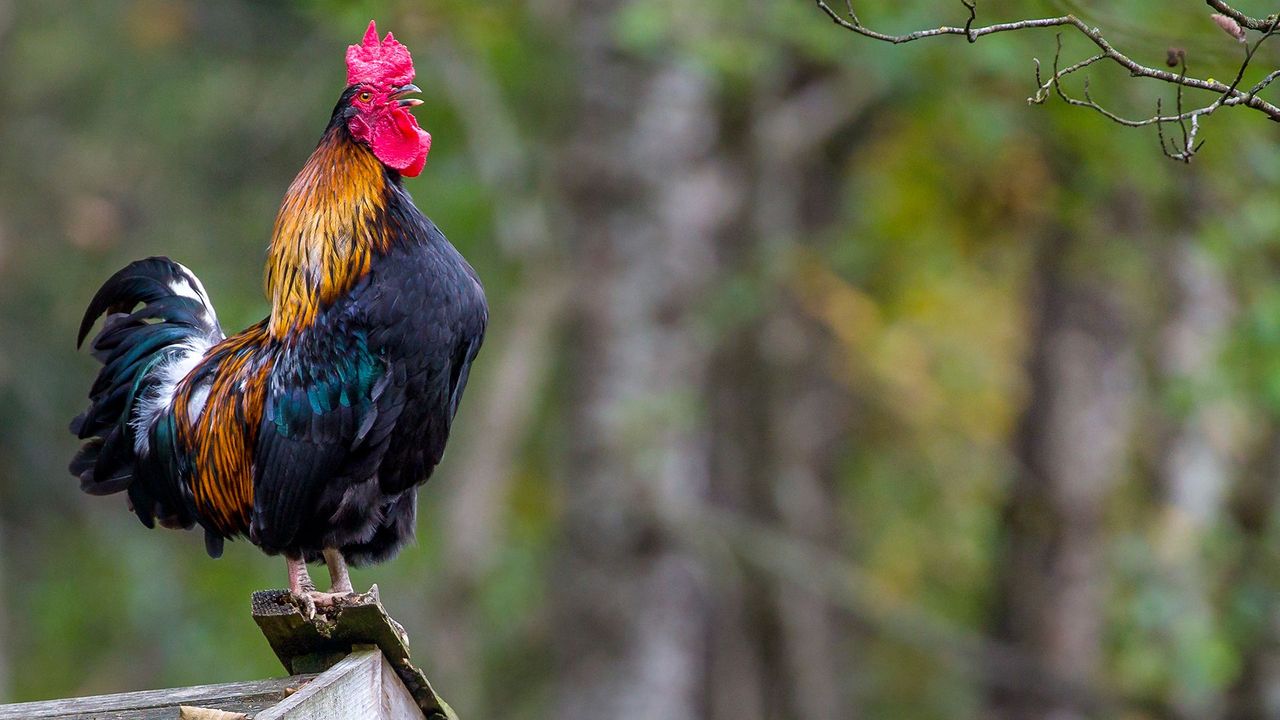
Chickens can be very communicative (Credit: Klein & Hubert/naturepl.com)

Chickens can be very communicative (Credit: Klein & Hubert/naturepl.com)

In a series of studies over the last six years, Joanne Edgar at the University of Bristol, UK and her colleagues have studied how hens react when they see their chicks having air puffed at them – something the hens have learned, from personal experience, is mildly unpleasant.

Hens can respond to their personal knowledge of the potential for chick discomfort

When the chicks were puffed, the hens' hearts began to race and they called more frequently to the chicks. However, they did not do so if the air was puffed near the chicks without actually disturbing them.

In a study published in 2013, the hens learned to associate one coloured box with the uncomfortable air puff and a second coloured box with safety – no air puff. The hens again showed signs of concern when chicks were placed in the "dangerous" box, even if the chicks never actually experienced an air puff and remained oblivious to the peril.

This suggests that hens can respond to their personal knowledge of the potential for chick discomfort, rather than simply reacting to signs of distress in the youngsters.
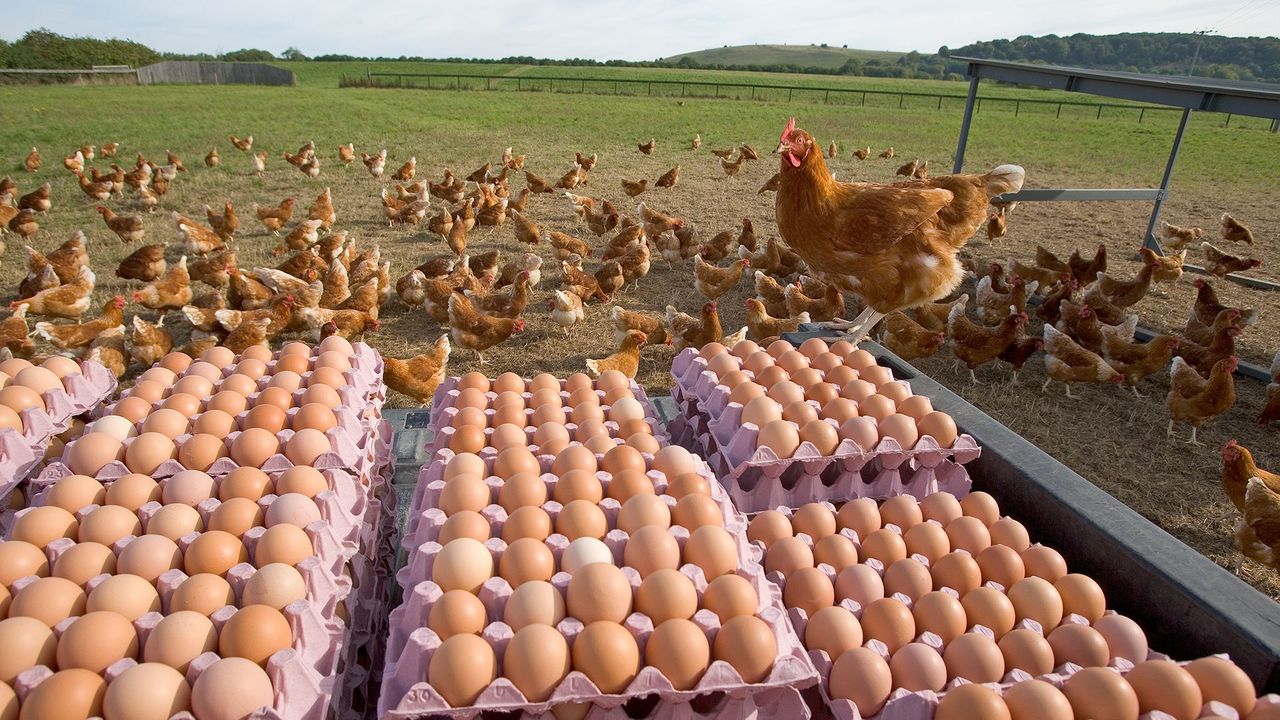
Chickens are farmed in many countries (Credit: Ernie Janes/naturepl.com)

Chickens are farmed in many countries (Credit: Ernie Janes/naturepl.com)

The research is ongoing, says Edgar. "We have not yet established whether the behavioural and physiological responses in hens observing their chicks in mild distress are indicative of an emotional response, or are simply akin to arousal or interest."

When the chicks were puffed, the hens' hearts began to race and they called more frequently to the chicks

If it does turn out that chickens can show empathy when other birds are in distress, that could raise serious questions about the way farmed chickens are reared.

"There are numerous situations where all farm animals are exposed to the sights, sounds and smells of other individuals showing signs of pain and distress," says Edgar. "It is important to determine whether their welfare might be reduced at these times."

Marino also thinks it may be time to discuss these questions. "The perception of chickens [as unaware and unintelligent] is driven in part by the motivation to dismiss their intelligence and sensibilities because people eat them," she says.

The uncomfortable truth about chickens is that they are far more cognitively advanced than many people might appreciate. But it remains to be seen whether consumers who are armed with this knowledge change their shopping habits at the meat counter.

I must admit that I have changed my meat and poultry eating habits and do not eat as much as I used to,  I try to have a meat free day once a week! We are lucky here on Menorca to have easy access to free range chickens and eggs.

We do all need to try and eat less meat for the good of the planet and many people are doing this. There are a lot more meatless products available and some of them are really good.   

The blog song for today is:" Rock the Casbah" by The Clash.

TTFN

Tuesday, 2 March 2021

Compost bins and the 7 Unexpected Things You Can Compost!!

Another great and informative site: www.gardenersworld.com

How to choose the best compost bin

When choosing the best garden compost bin for you, there are a number of factors to consider. These include the size of your plot, the design of your garden and the amount of compost you are hoping to produce.

Firstly, how much space do you have available? Compost bins come in a variety of sizes and with a range of capacities. You will therefore also need to consider how much compost you would like to make and how quickly. If you are not prepared to wait a year for your first batch, there are compost bins which can speed up the process, as we explain in more detail below.

The type of ground you are setting your bin on is also important, as some types will ideally need to be placed on grass or earth while others can sit on hard ground.

Types of compost bins

Compost bins come in a variety of shapes and sizes, and are made using different materials. Here, we explain the different types of compost bins along with the conditions and tasks they would each be suitable for.

Make your own compost bin

Homemade compost bin
A compost bin made of corrugated iron and pallet wood.

You can make your own compost bin using wooden pallets or corrugated iron. Enclosing the sides will retain heat, speeding up the rotting process. The larger the pile, the more heat. The ideal minimum size is 1m x 1m and, ideally, make more than one – it makes the compost easier to turn.

See our guide on how to build a compost bin.

Plastic compost bin

Buy the best compost bin for your garden – there are a range of plastic compost bins
Turning compost from plastic compost bins

A plastic compost bin is ideal for a small space. The plastic sides and lid retain moisture and heat to encourage rapid decomposition. They also block out light to stop weeds regrowing. The bin should ideally be placed on grass or earth.

Hot composting bin

Hot compost bin
Adding green garden waste to a hot compost bin.

Insulated with a close-fitting lid, hot composting bins are designed to allow decomposition at a much higher temperature and a higher speed (30-90 days, compared to around six months for ordinary compost) and result in a finer compost. They are roughly the size of a wheelie bin and can stand on a hard surface.

Wormery compost bin

Kitchen waste being added to compost heap
Adding veg peelings to a wormery compost bin.

Wormeries are designed for the small-scale composting of kitchen waste. Worms mix and break down the compost quickly and produce a nutrient-rich liquid for use as a fertiliser. Compost worms can also be added to larger bins. Not all waste can be composted, so you’ll still need a compost bin too.

Here is an interesting article on composting that I found on one of my favourite sites - Earth 911. They recommend that if you are new to composting that you buy a proper composting bin.

Composting is the best way to get rid of your kitchen scraps without sending them to the landfill. And if you’ve been composting for a while, you may have already started experimenting with composting other items you don’t usually see in a list of materials you can compost. If you’re new to composting, you may be surprised by some of the items we suggest in this list things to compost.

While there are plenty of rules for successful composting, every rule does not apply to every compost bin. Compost acts differently in different climates and in different structures, such as in a bin in contact with the ground versus a rolling bin versus a true pile that animals feed on, as well. Your compost may not get as hot or as much air as your neighbor’s bin.

So, we suggest you experiment with the unexpected items in this list to see if they decompose in your compost pile before adding great quantities of them.

1. Price Tags on Clothing

As long as the tag on your new clothes is paper, paperboard, or cardstock with no plasticization, feel free to send your tags to the compost. These tiny papers are too small to be recycled curbside. In a compost pile, they will act just like shredded paper (see below) and are a nice, brown (carbon-based) addition.

2. Tea, Paper Wrappers, Tag, & Probably the Bag

Teabags have a lot of different little pieces and parts. Tea itself is very compostable as are paper wrappers that don’t have any sort of lining. There are some inconsistencies around the compostable-ness of the bag itself, staples, and the string connecting the tea bag to the paper tag. If your tea bag is made of cloth (cotton) or filter paper, you’re good to go (and compost).

However, if the bag is nylon, it’s unlikely to break down. The same goes for your teabag string. Do your research to find out what your specific teabag and string are made of. Most teabags I use do not have a staple to hold the string to the tag; they are just heat-sealed or sewn on. However, if your bags have that staple, you’ll need to experiment. Mine seem to rust away in my compost pile.

3. Bamboo Skewers, Wooden Chopsticks, Toothpicks, & Matchsticks

These small, disposable, single-use wooden kitchen tools can all be composted. Do break chopsticks in half to lower their surface area and I break off the match head as I never trust that phosphorous sulfide will break down or is a good addition to soil.

4. Tissue Paper

Beause it’s a very low-quality paper whose fibers can’t be reused again, it shouldn´t be placed in the recycling bin. She did suggest that I try to add only white tissue paper (without sparkles or glitter) to my compost bin and see what happens. In my bin, tissue paper has disappeared!

5. Kitchen Single-Use Paper Products

You’re not going to find many articles on Earth911 encouraging you to use single-use paper products but if you’re in a pinch, they can be composted. Paper napkins and paper towels, when unfolded and ripped up a bit, will easily compost. The same goes for uncoated paper plates and cups. Do make sure that your plates and cups have no coating whatsoever and are also ripped up.

6. Spent Potting Soil

If you are changing the soil in your houseplants or outdoor flowerpots, add the soil to your compost bin to add nutrients back to it.

7. Shredded Paper

Shredded paper probably does not belong in your curbside bin as it can tangle up in the machinery at your local material recovery facility. Many communities have shred days where they specifically collect shredded paper for recycling but I never want to wait that long.

Shredded paper can also be recycled in charity recycling dumpsters but I’ve personally seen shredded paper blowing around outside the bins, becoming litter. Instead of recycling shredded paper, I compost it. Talk about secure disposal!

If you’re just getting started with composting, check out our composting cheat sheet for the basics.

This article was originally published on October 16, 2020.


Monday, 1 March 2021

RECICLOS- Latest update - not a success


I have to say I am a bit disappointed with the whole thing. It has been quite some time since the service was introduced and there have been no improvements to the app or how you access it.

They give you the address to get the "App" but from day one it has not been an actual App, but a link from their website which unless you keep it constantly open ( I found this to be the best way) on your phone is a nuisance to keep finding and logging in..I keep the window open on safari so that it is always available.

The second problem I have constantly come across is that some things cannot be counted as recycled.  I found it a little strange that a 5Ltr bottle of Viladrau (Nestle)was not part of the program but Aquabona (CocaCola) was. I did write to customer service in November 2020 and they informed me that " at the moment it is only possible to scan drink bottles up to 3ltr, they hope to be able to include 5ltrs in the program.  This is when I did the experiment with the different brands of water.

In the beginning there were more possibilities to use the points redeemed, but now there is one cause to contribute them too and 2 competitions. They don´t seem to have updated the app since the very  beginning.

Thirdly, when you actually get to the bin in which you wish to place the stuff it is not too easy to do it, the qr code doesn´t always work, and the app has frozen quite a few times.

I can understand why not a lot of people have joined this program, and why the people that have joined it have given up using it.

It is such a shame that it didn´t take off, because it could have been brilliant.

I do keep using it but I wonder how much longer it will go on for.

With so much contradictory information going around about what you can and cannot place in the recycling containers and what actually happens to them at the plant that I am not surprised that people are losing interest.

A prime example is yoghurt containers(the smaller ones aimed at kids) according to sources in the UK and the USA these cannot be recycled but here in Spain we are being told to put them in the yellow plastic containers and they will be used to make other plastic products.

Crisp packets (the foil lined ones) are not often recycled or accepted because of the way they are made which makes it difficult to separate out the plastic from the aluminium, this is the general consensus in the UK and USA but not here in Spain.

The best that I can do is to carry on avoiding these products, try to buy more glass and canned goods and keep trying to get the message out!

The blog song for today is: " Should I stay or should I go" by The Clash


TTFN


Sunday, 28 February 2021

Updates from PETA - Great news for animals!


Terrific progress for animals in France!

Champagne corks are popping on both sides of the English Channel in celebration of a pair of hard-won victories for animals.

Following a decade-long PETA UK campaign, high-end department store Fortnum & Mason has finally rejected “torture in a tin” and announced it will stop selling foie gras.

To make foie gras, workers crudely grab ducks and geese by the neck and shove metal pipes down their throats before repeatedly pumping massive amounts of food into their stomachs and then killing them to collect their diseased livers.

From board meetings to “force-feedings”, PETA UK’s activities encouraging Fortnum & Mason to ban foie gras ran the gamut – involving tens of thousands of letters from caring people, ads in the London Underground, and, of course, many colourful protests, including a giant “goose” crashing a Fortnum & Mason street party and a “crime scene” set up around the perimeter of the shop. The late Sir Roger Moore and more than a dozen other celebrities also added their star power to the PETA UK push.

The sky’s the limit when we work together to stop speciesism, and a big announcement from France is further proof. The country’s landmark animal welfare bill, which we first cheered last September successfully passed through the National Assembly! The bill will make a world of difference for animals in the entertainment industry, as it bans live pony merry-go-rounds, bars wild-animal circuses from operating in France – bringing Europe one step closer to banishing these cruel exhibitions altogether – ends the breeding and captivity of orcas and other dolphins, and prevents wild animals from being used in events and television shoots. It’ll also virtually shut down France’s fur industry and ramp up protections for companion animals

NSW Passes Monumental Regulations Protecting Dolphins!

Posted on by PETA Australia

After a government inquiry and a long public consultation – in which many PETA supporters took part – new regulations have been introduced in New South Wales to prevent the breeding of captive dolphins in the state!

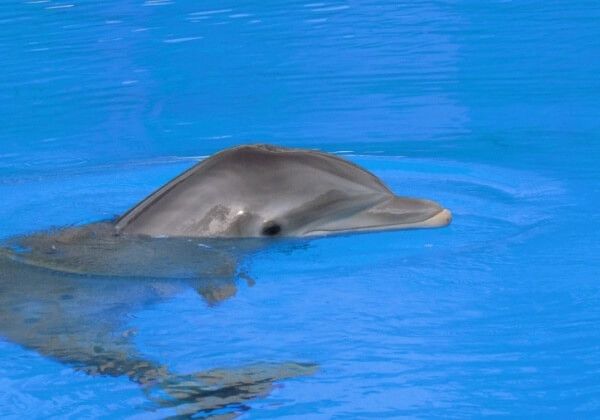
dolphin 

This is fantastic progress for these individuals, who are wild animals and not entertainers.

In nature, dolphins swim up to 100 kilometres a day with their family pods, diving and riding the waves. They are acoustically oriented – using clicks, whistles, and echolocation to perceive their surroundings. They’re unsuited to life in captivity, where they can only swim a few metres and the reverberations from their sonar bounce off the walls of enclosures, confusing and disorientating them.

While NSW-based Dolphin Marine Conservation Park continues to explore the idea of establishing a seaside sanctuaryf or its existing residents – Zippy, Bella, and Jet – this new rule means that no new dolphinariums can set up business in the area. These three dolphins will be the last to have to perform for noisy crowds in the state.

NSW joins the ranks of various countries that have stood up against dolphin captivity – including Brazil, Canada, France, India, Mexico, Norway, and Switzerland.

Now, everybody’s eyes are on Queensland, where just over the border, Sea World continues to breed dolphins, parade them about in daily shows, and launch trainers off their sensitive rostrums out of the water.

Will you please join us in urging the Queensland government to follow NSW’s lead?

 A photo of a dolphin in captivity.  

https://secure.peta.org.au/page/74213/action/1

Copy and paste into the search engine and it will take you straight there.

Great news for bulls: the San Fermín festival and the infamous Running of the Bulls event have been cancelled for 2021.

 Why Ban the Running of the Bulls?

The Running of the Bulls is part of a barbaric bloodbath that takes place every summer during the San Fermín festival in Pamplona.

The tourists – including many Australians– who visit the city during the festival often don’t realise that the same bulls who slip and slide down the cobbled streets during the bull runs are later tortured to death in the bullring. Throughout the week-long festival, at least 48 bulls are violently stabbed to death.

What Spanish People Think About Bullfighting

More than 80% of Spanish people oppose the blood sport, and approximately 56% fewer official bullfights took place in 2018 than in 2007, but these sick displays are able to continue in large part because of tourist money. Thrill-seekers fail to realise that running with the bulls means participating in a festival in which animals are tormented and killed.

PETA's protest at Pamplona 2018.

PETA and the San Fermín Festival

PETA UK has been teaming up with Spanish animal rights groups every year since 2002 to organise eye-catching protests in Pamplona in which hundreds of activists, including Australians, have taken a stand to draw attention to the cruelty of the bull runs and bullfights.

We’ve been calling for an end to this cruel spectacle for years, and now, under rather unique circumstances, the event has been called off – but it shouldn’t take a global pandemic for this to happen. It’s time for authorities to recognise that the ritualistic torture of bulls has no place in a compassionate society and cancel the event for good.

What You Can Do 

Please join us in urging the mayor of Pamplona to ban the Running of the Bulls and subsequent bullfights permanently.

https://secure.peta.org.au/page/44927/action/1

The blog song for today is: " Cool for Cats" by Squeeze

TTFN


Saturday, 27 February 2021

Beach Cleanup on Sunday 21st February -60 Kilos and Plastics Exhibition at El Roser, Starts Tuesday 2nd March

 Here are some photos of the beach cleanup that Per La Mar Viva carried out last Sunday 21st February at the Zone of Faro Nati.

Considering there were only 6 people, I think they did a really fantastic job!


I wonder if those wheels are from a motorcyle and if it is the same one that we found bits for on the beach at La Vall!!


There is also an exhibition starting from Tuesday 2 March at El Roser, in Ciutadella, running until 7th April. The timetable is:Monday to Saturday 10.30 to 13.00 then 17.30 to 20.00.

 : 971 383 563

Come along and see what a great job this organisation is doing for us here on Menorca, and subsequently our wonderful home called Earth.

Despite having our green bin outside our house filled to the brim with someone´s old tat that they can´t be bothered to take to the proper place, I still think there are more people who care for our little Island and our world.  Sometimes it is hard to believe it.  I wouldn´t mind but you can see they were on the poligono because they went to the woodyard and bought some wood, it would have been so easy to drop off their stuff to the recycling place, it is literally around the corner. I suppose their reasoning is that they pay 70euros a year for the rubbish collection, it´s not their job to do it.  

The next moan today is the big pile of dog poo which was left on the pavement, in front of an apartment block, on a busy street corner and near a cafe!  Two weeks and one day it was there, nobody bothered to clean it up, despite someone obviously treading on it (there was a nice footprint).  You would think that if the street cleaners didn´t clean it up then maybe one of the residents of the apartment block would have thought to themselves "I know it´s not my job but it´s been there over a week now and it looks like it will be there longer, I will get rid of it because it is a health hazard and I am proud of where I live and want it to look nice".  No way, not one person. No wonder the planet is in such a mess, many people have this attitude, if only they could see that it just makes things worse.

The blog song for today is " Don´t look back in anger" by Oasis.

TTFN


Thursday, 25 February 2021

Escaping from an aquarium is child's play when you are as smart as an octopus

I found this article on the BBC Earth Webpage and wanted to share it!

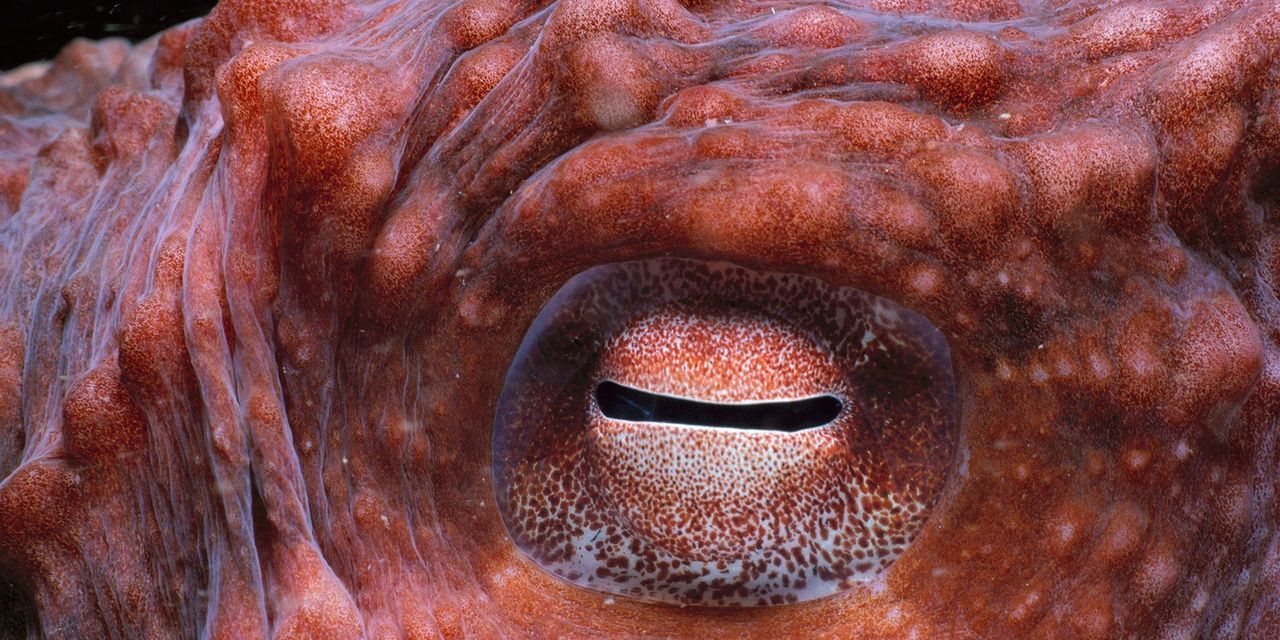
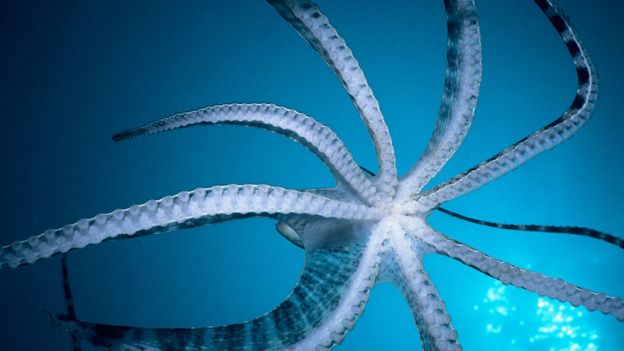
 A giant Pacific octopus (Enteroctopus dofleini) (Credit: Jeff Rotman/naturepl.com)    

Here are eight reasons why octopuses are the geniuses of the ocean.

By Nic Fleming 30 May 2016

In 2007 I was snorkelling in Dahab, Egypt, when I came face-to-face with a common octopus.

It was an intense experience. I felt it was sizing me up, and there was an ill-defined but somehow profound communication. Our meeting only lasted a few seconds, but I was left with an enduring impression of having encountered a great intelligence.

The experience may help explain the loud cheer I let out in April 2016, when I heard the news of Inky the octopus's great escape from the National Aquarium of New Zealand. The lid of Inky's tank was left ajar at night, and he took advantage of this by climbing out, walking across a room to a drain opening, and squeezing down a 160ft (50m) pipe to the open ocean.

His successful bid for freedom was one more piece of evidence that octopuses are some of the most intelligent creatures on Earth. Here are eight of our favourite octopus behaviours that illustrate just how smart these cephalopods really are.

Intelligent design

Jennifer Mather is a comparative psychologist at the University of Lethbridge in Canada. She has been studying octopuses since 1972. One encounter, during field work in Bermuda in 1984, suggested to her that they were more intelligent than they were being given credit for.

Here was an animal with a mental image of what it wanted

Mather had watched a common octopus catch some crabs and take them back to its shelter to eat. Then it suddenly darted towards a rock about 7ft (2m) away, put it under its tentacles and took it back to its den. The octopus did this three more times, creating a wall in front of its home. As if confident in the extra security measure, it then fell asleep behind the barrier.

Mather argues that this and other examples are evidence that octopuses are capable of foresight and sequencing of actions.

"This demonstrated to me that here was an animal with a mental image of what it wanted and one that was capable of planning," says Mather. "It was very far removed from the automatic stimulus-response that we were used to thinking about with animals."

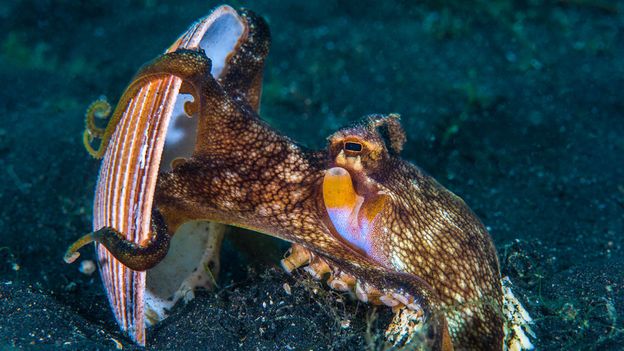
Veined octopus (Amphioctopus marginatus), with shell (Credit: Alex Mustard/naturepl.com)  

A veined octopus (Amphioctopus marginatus) lifting a shell (Credit: Alex Mustard/naturepl.com)

Tooled up

Mather and her colleagues have argued that using stones to build walls could count as tool use. However others disagree, arguing that the octopuses could be acting in an instinctive rather than a calculated manner.

Then along came the veined octopuses. In 2009, Julian Finn and colleagues at the Museum Victoria in Melbourne, Australia found hard evidence that they used tools.

Play has often been seen as the preserve of animals with higher cognitive abilities

The octopuses were digging up discarded coconut shells from the ocean floor, cleaning them with water jets, sometimes stacking them and carrying them up to 66ft (20m) to later reassemble as a shelter.

The octopuses were filmed arranging the half-shells with the pointed ends facing down, then extending their arms over them and walking in a comic fashion along the sea floor.

Finn pointed out that this was a slow, awkward and energy-inefficient form of movement, which made them more vulnerable to predators. He argues that the octopuses' willingness to accept these risks, in exchange for protection in the future, is conclusive evidence of genuine tool use.

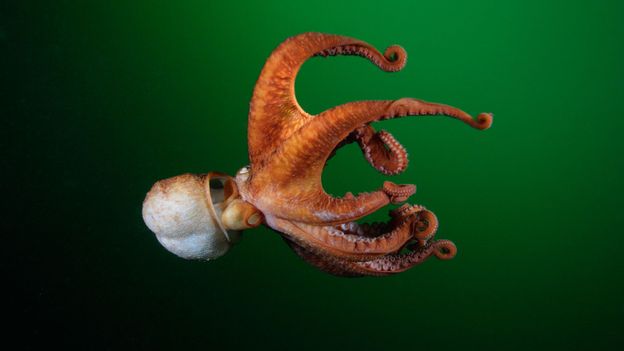
A giant Pacific octopus (Enteroctopus dofleini) (Credit: Brandon Cole/naturepl.com)  

A giant Pacific octopus (Enteroctopus dofleini) (Credit: Brandon Cole/naturepl.com)

Bend it like Inky

Play has often been seen as the preserve of animals with higher cognitive abilities. It is hard to precisely define it, but in broad terms play is activity that does not serve an immediately useful function other than enjoyment.

After learning about the work of Lethbridge University colleague Sergio Pellis on mammalian play, Mather wondered whether octopuses play. Working with Seattle Aquarium biologist Roland Anderson, who died in 2014, she devised an experiment.

Roland phoned me and said 'he's bouncing the ball'

They placed eight giant Pacific octopuses in bare tanks, and over 10 trials gave them floating plastic pill bottles to investigate. At first the octopuses all put the bottles to their mouths, apparently to see if they were edible, then discarded them.

However, after several trials, two of them began blowing jets of water at the bottles. The bottles were sent tumbling to the other side of their aquarium, in such a way that the existing current brought them back to the octopuses. The researchers, who published the study in 1999, argued that this was a form of exploratory play.

"Roland phoned me and said 'he's bouncing the ball'," says Mather.

She says the octopuses were playing with the bottles. This is similar to the way human children quickly start to play with unfamiliar objects, something psychologist Corinne Hutt highlighted several decades ago.

"If you have an octopus in any new situation, the first thing it does is it explores," says Mather. "I think it was Hutt who said children will go from 'what does this object do?' to 'what can I do with this object'. That's what these octopuses were doing."

Temperamentally tentacled

Mather and Anderson were happy to conclude that their octopuses were playing, even though only a couple of them did so. That was because they had previously shown that octopuses have personalities.

This means that individual octopuses behave in consistent ways, which differ from their fellows. This comes as no surprise to people who work with them. For example, octopuses kept in aquaria are often given names, which relate to how they respond to people.

Octopuses pass their personality traits onto their offspring

Mather and Anderson set out to measure these personality differences. They kept 44 East Pacific red octopuses in tanks. Every other day for two weeks, a researcher opened their tank lids and put their head close to the opening, touched the octopuses with a test tube brush, and offered them tasty crabs.

The researchers recorded 19 different responses. In a study published in 1993, they identified significant and consistent differences between individuals. For example, some of the octopuses would usually respond passively, while others tended to be inquisitive.

"People often talk about rainforests as complex environments, but the near-shore coral reef is much more so," says Mather. "The octopus has many potential predators and a huge array of potential food, and given their varied and varying environments it makes a great deal of sense that individuals do not fit precisely into the same niche."

In a follow-up study published in 2001, they found evidence that octopuses pass their personality traits onto their offspring. Given that they do not raise their young, this suggests their personalities are at least partly genetic.

Mather believes these variations in personality may underpin many of octopuses' advanced cognitive abilities, by allowing them to learn and adapt quickly.

It just shows that there are many other intelligent life forms that we share this planet with! 

The blog song for today is: " Octopus´s Garden" by The Beatles. (of course)!!!


TTFN

Master of disguise

The evolutionary arms race has led animals to develop many devious ways to fool each other. There are grass snakes that play dead to avoid being eaten, male fish that pretend to be female to boost their reproductive prospects, and birds that feign broken wings to lure predators away from vulnerable offspring.

When moving through open water, it mimics a lionfish

Yet of all of nature's charlatans, the mimic octopus must be a leading contender for the title of "master of disguise".

Other octopuses can change the colour and texture of their skin to give predators the slip. The mimic is the only octopus that has been observed impersonating other animals. It can change its shape, movement and behaviour to impersonate at least 15 different species.

When travelling across sand, it can flatten its arms against its body and undulate like a venomous banded sole. When moving through open water, it mimics a lionfish, which is also venomous. Another trick is to put six of its arms into a hole and use the remaining two to look like a banded sea krait, a type of sea snake that is, of course, venomous.

A problem solved

Octopuses can use trial and error to find the best way to get what they want.

They have different strategies to achieve the same ends

In work published in 2007, Mather and Anderson observed giant Pacific octopuses trying to get at the meat in different types of shellfish. They simply broke open fragile mussels, pulled apart stronger Manila clams, and used their tongue-like radulas to drill into very strong littleneck clams.

When given a choice of the three, the octopuses favoured the mussels, presumably because they required less effort to get a meal.

The researchers then tried to confuse their subjects by wiring Manila clams shut. However, the octopuses simply switched technique. Mather concluded that they could learn based on non-visual information.

"It told us that octopuses are problem-solvers," she says. "They have different strategies to achieve the same ends, and they will use whichever is easiest first."

Mazes for molluscs

During fieldwork in Bermuda, Mather observed octopuses returning to their dens after hunting trips without retracing their outgoing routes. They also visited different parts of their ranges one after another on subsequent hunts and days.

Most of the octopuses had learned to recognise which maze they were in.

In a study published in 1991, she concluded that octopuses have complex memory abilities. They can remember the values of known food locations, and information about places they have recently visited.

When animals use landmarks to help them navigate, they have to be understand the landmarks' relevance within their contexts. This ability, known as conditional discrimination, has traditionally been seen as a form of complex learning: something only backboned "vertebrates" can do.

In work published in 2007, Jean Boal of Millersville University in Pennsylvania placed California two-spot octopuses in two different mazes. In each case they had to travel from the middle of a brightly-lit tank to reach a dark den, an environment they preferred. To get there they had to avoid a false burrow, which was blocked by an upside-down glass jar.

After five trial runs, most of the octopuses had learned to recognise which maze they were in and immediately headed for the correct burrow. This, Boal concluded, meant octopuses do have conditional discrimination abilities.

A mimic octopus (Thaumoctopus mimicus) (Credit: Jeff Rotman/naturepl.com)  

A mimic octopus (Thaumoctopus mimicus) (Credit: Jeff Rotman/naturepl.com)

Similarly different

In many ways, octopuses' brains are rather like ours.

They have folded lobes, similar to those of vertebrate brains, which are thought to be a sign of complexity. What's more, the electrical patterns they generate are similar to those of mammals.

The last common ancestor of humans and octopuses lived a long time ago

Octopuses also have monocular vision, meaning they favour the vision from one eye over that from the other. This trait tends to arise in species where the two halves of the brain have different specialisations. It was originally considered uniquely human, and is associated with higher cognitive skills such as language.

Octopuses even store memories in a similar way to humans. They use a process called long-term potentiation, which strengthens the links between brain cells.

These similarities are startling. The last common ancestor of humans and octopuses lived a long time ago, probably quite early in the history of multicellular life, and was a simple animal. That means the similarities in brain structure have evolved independently.

Even more fascinating than the similarities, however, are the differences.

Octopus intelligence may be distributed over a network of neurons, a little bit like the internet

More than half of an octopus's 500 million nervous system cells are in their arms. That means the eight limbs can either act on their own or in coordination with each other.

Researchers who cut off an octopus's arm found that it recoiled when they pinched it, even after an hour detached from the rest of the octopus. Clearly, the arms can act independently to some extent.

While the human brain can be seen as a central controller, octopus intelligence may be distributed over a network of neurons, a little bit like the internet.

If this is true, the insights octopuses offer extend way beyond their advanced cognitive and escapology abilities. Inky and his relatives may force us to think in a new way about the nature of intelligence.


Tuesday, 23 February 2021

Mail Order goods and their packaging - mostly bad!

packing peanuts  

The problem: 

Companies and private sellers that deliver products through the mail often over-package, putting a pre-boxed item in a second box, and sometimes even a third one. This practice, which Dancy calls the “Russian doll” approach, is exceedingly wasteful.

Who does it?  

Sellers on the eCommerce network, including eBay.

What is the solution?

One option is to use sustainable packing materials, rather than the traditional styrofoam. There are numerous sustainable options, including packing materials made from corn starch or sorghum, which can be composted. And New York-based Ecovative design has developed fungus-based packing materials that are being used by Dell, Crate and Barrel and Puma, among others.

Ed Kastenbaum, general manager of San Francisco-based The Packaging Store, and vice president of the Retail Packaging Association, packs with recycled pulp instead of Styrofoam when selling to wine shippers. Kastenbaum says that the pulp wine shippers are widely available. The market change started more than 10 years ago & now the vast majority of wine is shipped in this manner by wineries, wine clubs, and wine retailers.

I have however noticed that Amazon have changed the way they package their delveries, more paper and cardboard packaging, which is fantastic! Those polystyrene chips are a right nuisance,they get everywhere and for me unneccessary.  

As I have said before I do try and buy here on Menorca but sometimes it is impossible to get it here, so I have to buy online.  

Some nice person had actually dumped three cardboard boxes full of those polystyrene chips next to the recycling bins the other week, I didn´t realise that those chips actually jumped in all by themselves. I have been assured by the entity responsible for recycling here on Menorca that they can be placed in the yellow bin.

The blog song for today is: "Hold me now" by The Thompson Twins

TTFN

Monday, 22 February 2021

Toothpaste tubes and toothbrushes - At last a tube that can be recycled!

El primer tubo de pasta de dientes reciclable


The problem: The small size, blended material and leftover toothpaste inside toothpaste tubes – and other tube-based containers – make recycling almost impossible. As for toothbrushes, their slender shape and blend of plastic and nylon bristles make them tough to disassemble and recycle.

Who does it? Toothpaste and toothbrush manufacturers, including consumer giant Colgate-Palmolive, manufacture these non-recyclable products.

What is the solution? Since being served with a shareholder resolution by As You Sow (AYS) a non-profit environmental protection group in 2012, Colgate-Palmolive has been working with AYS to create a recyclable toothpaste tube or package. 

And as you can see from the photo they have done it!  I have seen these for sale in our local Eroski Syp supermarket. When my current tube runs out I will be buying one!                                                                                           

It is a great step forward!  Maybe now more manufacturers will do the same!

Unfortunately the same cannot be said for toothbrushes! I don´t like to throw them away so after I have finished with them for teeth cleaning, they get used for all kinds of cleaning things, I have even cleaned the rims of my car with them! They are great for reaching those hard to get places!  But when they eventually run out of use, I have been keeping them in a pot along with dental flossing harps and other things and when I have filled up the pot I take them along to the recycling centre on the poligono.


I contacted  the Residus here in Menorca (that´s them above)  and asked them if they would consider placing a container along side all the others they have at the recycling centre to place these types of things in. They replied that at the moment there was not a service available for the old toothbrushes and other bits, however the tubes of toothpaste could be placed in the yellow container and sent off to the relevant place for treatment.

 The blog song for today is "Make me smile" by Steve Harley and Cockney Rebel

TTFN      


Sunday, 21 February 2021

Everybody loves Crisps, but what about the empty packet?

The problem

The typical snack crisp bag is made from up to seven layers of foil and plastic (known as metallised plastic). Companies like this because these bags are light, reduce shipping volume, don’t take up much space on a shelf, and are graphics friendly. The downside is that there’s currently no machinery to separate these layers, so they aren’t recyclable.

“It’s not cost effective and there would be no market for the separated material,” explains Lawrence Black, director of global business development at Waste Management, a US-based environmental solutions provider. “It is expensive to fix and it all comes back to is there a market for the material. If there’s not an ongoing market for the material it won’t get recycled.”

Who does it? Multi-layered packages are popular with consumer giants, particularly snack food manufacturers such as Frito-Lay and PepsiCo.

How can I tell what they are made of?

Do the scrunch test!

An easy way to find out if an item is foil or metallised plastic film, is to do the scrunch test. Simply scrunch the item in your hand - if it remains 'scrunched' it is foil and can be recycled easily if it springs back (like crisp packets) it is probably metallised plastic film.

Crisp packets made from metallised plastic film can’t be recycled at household waste and recycling centres. So at this time they have to be thrown in with general rubbish.

Crisp packets have become a thorny recycling issue of late. Around 6 billion packets of crisps are consumed each year in the UK, equating to more than 16 million of them being thrown away every day.

Of course this leaves the question of what to do with them once their contents have been polished off.

Contrary to popular belief, the technology is there to recycle crisp packets, but up until very recently it was considered too much of a tricky process to be cost effective. As a result, the vast majority of scrunched up packets have ended up in landfill. The plastic they are made from is so tough, it has been proven that crisp packets can last for over 30 years out at sea.

What Exactly Are Crisp Packets Made From?

Put simply, in most cases it’s plastic, its the metallised film which causes the problems.

Even the silvery lining on the inside of bags, which helps to extend the shelf life of the product, is made out of metallised plastic film, which is also what lots of wrapping paper is made from. Pringles tubes, while being made of materials which are recyclable on their own, are much more difficult to process in combination. The cardboard tube, inner foil, metal base and plastic cap makes separating the different components a “nightmare” according to The Recycling Association.

Walkers ( the largest crisp company in the UK) have pledged to make sure that all their crisp packaging is biodegradable by 2025, but there are plenty of consumers who want action now. In fact, some people have become so vexed by the situation that they started to post their empty packets back to manufacturers in the hope that they would do something about the completely unsustainable situation.

Pressure from the #PacketInWalkers social media campaign, and a petition which attracted more than 300,000 signatures, seems to have paid dividends. In December 2018 Walkers launched an initiative to recycle these single-use plastics.

Is there technology available to deal with Crisp Packets?

There is a new scheme, run by TerraCycle (unfortunately this is not available in Spain) which aims to turn all materials received into brand new resources.

As with most other forms of recycling, they are sorted and arranged into different groups, with the separated items being cleaned, shredded and made into fresh products. As their fibres are so small, crisp packets are most suitable for being extruded into plastic pellets, which can then be used in the creation of other useful commodities.

Are There Any Biodegradable Crisp Packets?

Yes, but not many.

The only ones currently in circulation in the UK are made by Two Farmers, a small company in Herefordshire, who say that their packets will completely vanish around six months after they have been disposed of, meaning that they are completely compostable.

What can I do with them?

Put a box or bag in your kitchen so that you can collect your used packets and aren’t tempted to chuck them in the bin.

Try making homemade crisps instead to avoid packaging altogether, you could even try with different veg.  

I have notice here in Spain that some of the crisps are in plain plastic bags so maybe these can be put in the yellow bin. 

I suppose the same can be said for the snacks like ´´Pipas´ and packets of peanuts and the like.  An option is to buy loose, which is good because you only buy what you want and not what comes in a prepared packet, but it is more expensive.  There are places that sell snacks in plastic containers, which can be recycled.  


The blog song for today is " You really got me" by the Kinks 


TTFN


"Precyclying" - a short explanation from the gang at earth911.com

A report by: Taylor Ratcliffe, he is Earth911's customer support and database manager. He is a graduate of the University of Washington....