Translate

Wednesday, 18 November 2020

PET (plastic with the number 1 in the triangle) recycling - the science

 Triangle Number 1 (PET)

PET (PolyEthylene Terephthalate) is represented with the number 1 logo, and is considered perfectly safe to drink from. PET is a thermoplastic polymer resin and doesn’t actually contain Polyethylene.  It ha a high melting point of 245°c, which leads to it being formed and recycled in alternative ways.

Uses of PET Plastic

  • Non-food bottles
  • Fibres for clothing
  • Sleeping bags
  • Transparent carbonated drinks bottles

How is PET recycled? 

1: Granules
Having been sorted, reduced in a plastic grinder, washed and dried, the PET flakes are sent to two homogenisation silos, where they are continually agitated as material is added. At the end of the line is an aerodynamic separator that separates materials according to their size/weight. At the exit from the separator, the final refining stage, the flakes are sorted by infra-red cameras and undesirable items are removed by blowing. The selected material is then sent to four quality-control silos where a representative sample is taken of the average quality in the silo. Depending on the result, the flakes will be stored in big-bags or in an intermediate silo to be fed into the extruder.


But before they are actually extruded, plastics to be recycled are first preheated in a dedicated machine, then taken by a second mechanical feed screw to two hoppers for hot-air-drying. Then the plastic is deposited at the entrance to the extruder machine's screw, which, by turning against the walls of a duct heated by electrical elements, softens it considerably. The PET dough continues its path along the screw, where any impurities are released (all of which are converted into gases) by pump systems attached to the extruder.


Then come the phases where the material is extruded and cut into plastic rods (or monofilaments) and water-cooled before being filtered and granulated using pre-calibrated grids to produce the size of product required. Once conditioned, it will be stored in an intermediate silo for quality control, carried out by laboratories that, using special small extrusion machines, are able to simulate on a small scale plastics manufacturing methods similar to those that will be used by the end-user of the recycled plastic materials. In this way, the goods are checked to ensure conformity (colour, grade, density, tensile modulus, degree of pollution, impact-resistance, etc.).


After they have spent a certain time in the reactor, the granules are evacuated and again sent to intermediate silos. Once the silos are full, the material is stored in big-bags. 

2: Powder
The micronisation of plastics consists in pulverising the flakes until an extremely fine powder is obtained. Of a quality lower than that found in regenerated products (since impurities have not been removed and the plastics have simply reduced to a minimum size) but still useful and costing less to produce, it is still greatly prized by the plastics industry and often mixed with top-quality materials to manufacture multi-layer products by plastic rotary moulding (a combination of pure material for the upper layers and micronised binders for the intermediate parts).
 
PVC and PET that are most often treated in this way. Mixtures of the ground material to be micronised are first loaded into silos to be homogenised before being conveyed pneumatically to micronisers. These two-plate machines (one fixed and the other moving) blow the flakes onto the walls by centrifugal force before a rotor smashes the edges off the material. Then, during the final powder micronisation stage, it is sieved down to the desired particle size (often less than 300 microns in diameter) and stored in tanks.
 
I will try to find out which system is used here on Menorca.

My brain hurts now after all this tecnical stuff!!

The blog song for today is "Heartbreaker" by Led Zep, get out your air guitar!!

TTFN

Tuesday, 17 November 2020

Polystyrene - Put in the yellow recycling bin or not?

I have news!  I sent an email to the Recycling department here in Menorca asking if polystyrene can be recycled here. I received an answer back and they said that trays made from polystyrene such as the ones used in the supermarkets can be placed in the yellow bin. I took it that they meant only this form of Polystyrene can be recycled at this present time here.

This is what they wrote to me

"These types of trays are recycled in the yellow container for containers and usually have a symbol like this on the bottom."

6-ps

I have looked into this further and have found some information about this,

"The food industry often employ polystyrene in food protection and service, due to it’s clean, light and ‘easily disposable’ nature. Psychologically, the lack of weight and strength makes disposal less objectionable to humans, and this is one reason polystyrene recycling rates are so low. As well as the lesser known uses of polystyrene mentioned early, it is also used for children’s car seats, life jackets, small boats and pizza trays.

It’s almost impossible to say how much polystyrene the earth generates and disposes of each day, and nobody tracks the data anyhow. What is known, is that due to its impressive size-to-weight ratio, polystyrene may take up to 30% of the space in a landfill, whilst only providing 0.1% of the weight. It’s often suggested that energy recovery from incineration is a better end-of-life for contaminated polystyrene than landfill, and we have to agree.

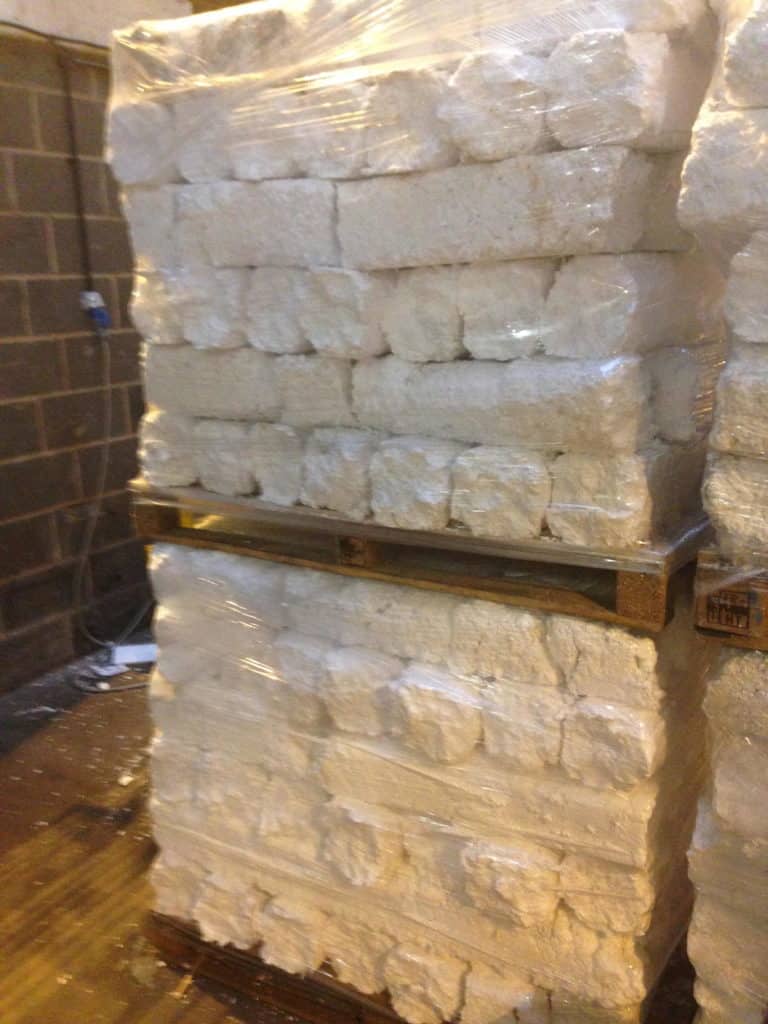
Although of course, polystyrene recycling is the optimal waste treatment, and it’s not as difficult as you’d think. In fact, you can take several chunks of polystyrene of all different shapes and sizes, and using a recycling machine which operates with steam and compression, you can mould it into briquettes. These briquettes are the perfect shape to be transported and sold to companies who need them. 

EPS (Expanded Polystyrene) processed through a briquette machine. This material has an EXCELLENT re-sale value. Polystyrene recycling at work."


eps-recycling polystyrene recycling palley 

So it would appear that on the face of it that it is easier to recycle polystyrene than other forms of plastic. However at the end of the day it is still part of the plastic family and I will still try to avoid buying anything in a tray when I go food shopping.

So here on Menorca we can recycle anything with the letters PET, HDPE and PS or those microscopic triangles containing the numbers 1,2 and 6. 

I now know a little more about plastic than I did before! I hope you do too!

The blog song of today is:  "Hotel California" by the Eagles, one of my all time favourites.

TTFN


Monday, 16 November 2020

Protection from the sun, but at what cost to our health?

Have you ever wondered why sometimes when you put on sun protection cream blotches appear and you get spots on your face?  Here on Menorca we are fortunate to have a really good climate, long sunny days, warm evenings and nights! so good sun protection is super important even if you´re not a beach goer. 

I became aware last year of the possible effects of sun protection cream on my health and in particular on my skin, this made me want to check the ingredients of any sun creams before I bought them.  I was recommended an app called YUKA , it works by scanning the bar code of the product and gives you details of the ingredients and if they are good or bad!  I am sure there are more apps like this but this one is good enough for me.

Another reason to try to avoid these ingredients is because of the damage they are doing to coral reefs and marine life.

A 2008 European study found that approximately 14,000 tons of sunscreen end up in oceans each year. The highest concentrations were found near coral reefs that are most popular with tourists. This means the sunscreen you put on before surfing, kayaking, or swimming in the ocean can wash off and remain in the ocean, causing serious damage to coral reefs and marine life. That study was 8 years ago imagine what the figures are now!

I have found some information that I hope is useful!

6 SUNSCREEN INGREDIENTS TO AVOID

Oxybenzone This penetration enhancer (i.e., chemical that helps other chemicals penetrate the skin) undergoes a chemical reaction when exposed to UV rays. When oxybenzone is absorbed by your skin, it can cause an eczema-like allergic reaction that can spread beyond the exposed area and last long after you're out of the sun. Experts also suspect that oxybenzone disrupts hormones (i.e., mimics, blocks, and alters hormone levels) which can throw off your endocrine system. According to the Centers for Disease Control and Prevention (CDC), 97 percent of Americans have this chemical circulating in our bodies, as it can accumulate more quickly than our bodies can get rid of it.

Octinoxate One of the most common ingredients found in sunscreens with SPF, octinoxate is readily absorbed by our skin and helps other ingredients to be absorbed more readily. While allergic reactions from octinoxate aren't common, hormone disruption is: the chemical's effects on estrogen can be harmful for humans and wildlife, too, should they come into contact with the chemical once it gets into water. Though SPF products are designed to protect skin from sun-induced aging, octinoxate may actually be a culprit for premature aging, as it produces menacing free radicals that can damage skin and cells.

Retinyl Palmitate (Vitamin A Palmitate - a derivitive of Palm Oil)  Just like the vitamin A we eat, retinyl palmitate is an antioxidant. As an ingredient in sunscreen, it's function is to improve the product's performance against the aging effects of UV exposure, However, certain forms of vitamin A found in sun protection products—namely retinyl palmitate, a combination of retinol (vitamin A) and palmitic acid, an ingredient found in tropical plants such as palm and coconut—can be cause for concern. When exposed to the sun's UV rays, retinol compounds break down and produce destructive free radicals that are toxic to cells, damage DNA, and may lead to cancer. In fact, FDA studies have shown that retinyl palimitate may speed the development of malignant cells and skin tumors when applied to skin before sun exposure, so steer clear of skin sun products that harbor the stuff. It is amazing how many products contain Palm Oil!

Homosalate This UV-absorbing sunscreen ingredient helps sunscreen to penetrate your skin. Once the ingredient has been absorbed, homosalate accumulates in our bodies faster than we can get rid of it, becomes toxic and disrupts our hormones.

Octocrylene When this chemical is exposed to UV light, it absorbs the rays and produces oxygen radicals that can damage cells and cause mutations. It is readily absorbed by your skin and may accumulate within your body in measurable amounts. Plus, it can be toxic to the environment.

Paraben Preservatives Associated with both acute and chronic side effects, parabens (butyl-, ethyl-, methyl-, and propyl-) can induce allergic reactions, hormone disruption, developmental and reproductive toxicity. While butylparaben was reported to be non-carcinogenic in rats and mice, but it has been previously suspected that parabens and other chemicals in underarm cosmetics may contribute to the rising incidence of breast cancer.

IMPORTANT THINGS TO CONSIDER

Active Ingredients: Mineral sunscreens will list zinc and/or titanium dioxide only. Be wary of the term “mineral-based,” which often means zinc and/or titanium dioxide has been mixed with chemical sunscreens.

Water-Resistance: A sunscreen can claim to be water-resistant only if it has undergone a forty- or eighty-minute test. If water-resistance is not stated clearly on the label, most likely the sunscreen will wash or sweat off.

Broad-Spectrum: This is important, as it means that the sunscreen blocks both UVA and UVB rays.

Even if the active ingredients are mineral, make sure that the formula is not otherwise loaded with toxic ingredients. Red flags include anything ending in -paraben, pthalates, sodium laureth sulfate, and fragrance. 

If you haven´t already tried the YUKA app, you are in for some fun! 

My blog song for today is "All over the world" by Electric Light Orchestra (ELO)

TTFN


Saturday, 14 November 2020

Recycling for rewards with Reciclos, what is all that about then?

There is a recent initiative here in Menorca (maybe elsewhere I´m not sure) which rewards you for recycling plastic.  I did try and register some months ago without any luck.Yesterday I was successful and have started to scan and recycle.  At this moment I have only had success scanning tins of coca cola, bottles of  fruit juice and 1.5ltr bottles of water.  

After creating my account, I opened the app, used the scanning facility to pass my phone camera over the bar code of the item to be recycled.  If it is accepted a number will appear next to the bottle/can icon on the right hand side of the screen.  When you have ten (or more maybe) of these you can put them in the recycling bin.

I went to the bin, followed the instructions on the app, gave permission once to access my location, then scanned the code on the outside of the bin, and put the items in the bin! 

It all seems like it is designed to make the consumer buy more plastic!

 I feel an investigation about to take place!

Watch this space!

 Blog song of the day "Spanish Caravan" by The Doors


TTFN


Friday, 13 November 2020

Looking for ways to shop without buying more plastic! First attempt!

 So far I have found three shops in Ciutadella which offer a variety of products that you can buy loose.  All I had to do was take some of my own containers ( I used old chinese takeaway tubs) to put the stuff .in.  The first place I went to was in a row of shops in the arches near the Cathedral (Ses Voltes)

What a selection of stuff they have!  There are many things typical of Menorca and made in Menorca too, as you enter on the left side is a complete wall of dispensers, filled with many things from breakfast cereals to lentils, pastas and rices to name but a few.  On the right hand side is a tea section, then a spice section with a table in the middle filled with compartments of nuts!  


Over the back are the spices.

The process is quite simple, first the nice lady weighs your container, then you put however much you want in, it gets weighed then, done!  And when you have finished you leave with some nice things and also feeling good with yourself for not buying any new plastic!!


My next stop was a local store which sells frozen produce by weight, so it is the same set up there, it also sells a lot of fruit and veg from Menorca.  It is situated near the Plaza Menorca on the corner.


I take my own mesh bag (thank you Lidl) and put my fruit and veg in it, the lady only has seasonal fruit in there(at the moment it´s apples) but boy is it worth waiting for!

Products from Menorca


Products from Menorca and elsewhere, everything is clearly labelled as to its origin.


My last port of call was also near the Plaza Menorca, up near the church it´s called Camamilla, it´s great, they have a great range of products in there, 


Take your own container and they will fill it for you, great value too, all eco products!

Their range of infusions is enormous and they have a great selection of environmental beauty products too.

Today I only needed some bubble bath;

It smells lovely and for a mere 1,35 for 500ml good value.

So I can say that todays first adventure was a success!  

My blog song for today is: "Disco 2000" by Pulp  your house was very small with woodchip on the wall, classic!


TTFN


Tuesday, 10 November 2020

At last some clarity of those awful hard to read triangles with teeny tiny numbers inside


 PLASTICS 

I have come across this information and it is very interesting.

The aim of this symbol is to tell you what kind of plastic the product is made from, with seven different numbers and letters to help you figure out

1. PET – short for Polyethylene Terephthalate which is widely recycled

2. HDPE – short for High-Density Polyethylene and is also widely recycled

3. PVC – short for Polyvinyl Chloride - capable of being recycled but is harder to do so. Before placing in your recycling bin, check with your local authority whether it is a material they can recycle.

4. LDPE – short for Low-Density Polyethylene - capable of being recycled, but it’s a good idea to check with your local authority to check it can be recycled.

 5. PP – short for Polypropylene -material is very hard or not possible to recycle. Can be found in tupperware, disposable cups, and some food containers.

6. PS – short for Polystyrene or Styrofoam - material also hard or not possible to recycle. Used in disposable coffee cups, plastic cutlery and packing foam.

7. Other – this is usually a mish mash of lots of different plastics, which means it is difficult to recycle.

So here in Menorca listed on the leaflet I downloaded from the official recycling plant website it says we can recycle polystyrene but according to the list above it is very difficult or not possible to.  A little confusing.  I think I will send an email and see what they say! So it looks like 1 and 2 are the clear winners! (forgive the pun).

The song for the blog today is:  Pink Floyd - "Set the controls for the heart of the sun" Break out the wrangler flares and flowery shirts!


TTFN


Monday, 9 November 2020

How did we end up with so much plastic packaging? what can we do about it?

 I have found some more information online from the Greenpeace UK website:

I have copied and pasted it below;

"There are all sorts of claims that justify why plastic is used in such enormous quantities. But look closer and it turns out these claims aren’t as sound as they might seem.

1. Can we use “bioplastics?”

The term “bioplastics” can mean two things:

  • Plastics that biodegrade or break down into tiny pieces (creating smaller bits of plastic that are still, well, plastic.)
  • Plastics made of renewable, organic biomass sources, like vegetable fats and oils, and corn starch.

So-called bioplastics might seem like a great idea, but they can actually be just as bad as normal plastic. If bioplastics end up in the ocean they can entangle and endanger sea life, just like regular plastic. And making them also uses up valuable land and resources, and can require chemical-intensive industrial agriculture.

2. Can recycling fix the plastic problem?

Recycling is absolutely vital for dealing with waste, and we definitely shouldn’t start chucking everything in the bin for landfill. But unfortunately our recycling systems just can’t cope with the amount of plastic we currently produce – especially as plastic production is on the increase.

As a material, plastic can only be recycled a certain number of times, so we can’t keep recycling the same thing forever. Making new recycled goods out of the plastic we recycle also uses up a lot of energy and resources.

3. Doesn’t plastic packaging prevent food waste?

This might seem like a question with a simple answer, but the links between food waste and plastic packaging are complex. Sometimes, plastic can increase shelf life, but it also increases food waste in other ways.

When foods are packaged together, they have to be a regular shape and size so they can fit into their plastic container. Food that doesn’t conform to these standards doesn’t make it, which means that some food is rejected before it even reaches the shelves.  

Packaging can also make people buy more than they need. For example if you only need 10 tomatoes for your signature homemade salsa but you buy a pack of 16, those last six can end up mouldy and forgotten on the bottom shelf of your fridge. Eventually, they might get thrown away.

So after all this doom and gloom, what is the answer?

Ultimately supermarkets need to reduce the amount of plastic packaging they use in the first place. Sometimes packaging is necessary. Pre-chopped fruit and veg are vital for people who have accessibility issues that make chopping and peeling difficult or impossible. But the vast majority of plastic isn’t necessary.

Stopping excess plastic at the source will mean that there’s less of it in circulation, and ultimately less plastic in our oceans."

 If you go to the website;

https://www.greenpeace.org.uk/news/whats-answer-plastic-problem/

at the bottom is a link to sign a petition to urge supermarkets to reduce plastic.

Here is a challenge, for one visit to the supermarket, try to find alternatives to plastic!  It is more difficult than you think!

We can as consumers make a change, we all managed to change from plastic bags to reusable ones, lets try and make a difference in the amount of plastic is produced, by reducing the amount that we buy and steering away from the companies that over package, for example; those little fairy cakes individually packed in twos in little plastic bags, inside a large plastic bag, a bit over the top(very common here in Spain) Once you start looking you will be very surprised about how many you will come across!

 That is it for me today, time to start making dinner!  I will leave you with the "blast from the past" blog song for today, it is Led Zep - Kashmir!

TTFN


Friday, 6 November 2020

Recycling of everyday items and the huge problem of disposable nappies (diapers)

 Here´s the latest on my search for good information regarding recycling of plastic!  I have not been able to get a visit to our local recycling plant because it is undergoing construction work, they do not let individual people take tours of the plant but if I can get together a small group it is possible, but not until 2021.

The main problem I have and maybe others too is that there is too much confusion with the triangles, numbers and letters which are embossed in the plastic, if you can in fact see them at all!  I have come across a few products which have made life a bit easier and have actually printed a coloured icon to enable us to easily identify in which container to put the plastic in.

What a great idea!  Come on companies make life easier for us.

From the Recycling Web Site of Menorca ,

BLUE BIN 

 - Newspapers and magazines - Cardboard packaging: from food, shoes, frozen foods, etc. - Printing paper, envelopes, cardboard, etc. - Advertising, such as posters, leaflets, catalogues, etc. - Wrapping paper - Booklets, books, guides, etc. 

 A few tips: - Fold cardboard up. - Don’t deposit paper/ cardboard in plastic bags. - Don’t deposit dirty paper such as tissues, napkins, etc. - Don’t deposit tin foil, laminated paper, fax paper, etc. - Remove all types of staples, paper clips and other metallic elements. - Only deposit packaging displaying the Green symbol.

 YELLOW BIN 

 - Packaging for water, milk, yoghurt, detergent, hygiene and cleaning products, etc. - Tetra Briks for milk, juice, wine, soup, etc. - Aluminium tins and drinks cans - Steel drinks cans - Plastic bags and wrapping - Tin foil and aluminium trays - Polystyrene trays - Aerosols - Deodorant cans and cosmetics containers - Metal caps and lids

 A few tips: - Only deposit empty containers, with nothing left inside. - Reduce the volume of the containers. - Only deposit containers displaying the Green symbol.

 GREEN BIN

Glass bottles: for beer, wine, cava, cider, spirits, liqueur and others - Glass containers: perfumes, cosmetics, cologne and similar - Food containers: yoghurt, jam, preserves, sauces, pulses, vegetables, etc.

 A few tips: - Empty the contents of the containers before depositing them in the green bin. - Don’t deposit plastic bags or lids, lightbulbs, mirrors or ceramics, etc. - Only deposit packaging displaying the Green symbol. - Avoid generating unnecessary waste.

 Some of the items on these lists I have doubts over, for example I did not think that Polystyrene could be recycled, but on this page it seems that it can.

I am still in the dark...looks like I am going to do some more searching..

 DISPOSABLE NAPPIES (Diapers)

One of the bees in my bonnet is:  does anyone remember when disposal nappies were introduced and how they were supposed to be for when mum and baby were out of the house or whatever and cloth nappies were the norm? Well my how times have changed, the situations are reversed now and it seems that if you use cloth nappies you are weird!  

Although they offer convenience, they do have several dangerous environmental drawbacks. Not only do disposable nappies account for a lot of the trash taking over the nation’s landfills, but they also pose serious risks to the environment and people alike. The Environmental Protection Agency reports that about 20 billion disposable diapers are dumped in landfills each year, accounting for more than 3.5 million tons of waste.

Natural Resources

The Good Human, a website dedicated to discussing issues related to environmentalism, points out that more than 200,000 trees each year are lost to the manufacture of disposable diapers for babies in the U.S. alone. In addition, it takes 3.4 billion gallons of fuel oil every year to make diapers. What it comes down to is that disposable diapers use 20 times more raw materials, two times more water and three times more energy to make than cloth diapers. Besides depleting natural resources, manufacturing disposable diapers also utilizes non-renewable energy sources.

Landfills

Although disposable diapers need to be exposed to oxygen and sunlight to decompose, they do not degrade well in a landfill. What's more, disposable diapers take about 500 years to decompose. The millions of tons of untreated waste added to landfills each year through plastic diapers can contaminate ground water. Another concern is that viruses excreted in a baby’s feces could end up leaking into local water supplies. According to the Atmospheric Radiation Measurement Program, landfills are known for producing greenhouse gas emissions, which can contribute to the earth’s climate changes. Decomposing diapers release methane into the air. High concentrations of the gas can be explosive and flammable. Methane is also dangerous to breathe in because it replaces oxygen.

Chemicals

A guide published by the Environmental Health Association of Nova Scotia cites a study reported in the “Archives of Environmental Health” which found that diapers release volatile organic chemicals. Toxic chemicals such as toluene, ethylbenzene, xylene and dipentene have been linked to adverse health effects in humans with long-term exposure. The inner absorbent layer of a disposable diaper is also treated with chemicals, which can trigger allergic reactions. Disposable diapers often contain dyes and dioxin, which is formed as a by-product of the chlorine bleaching process. Dioxin is a carcinogen, which means it can cause cancer. When released into the environment, the toxin can accumulate in humans and animals.

This was on the way to becoming a huge problem 25 years ago and it seems to be getting worse.

Trying to get people to change back to cloth nappies is nearly impossible, they are too convenient.

I will look into this and see if I can found out if any of the large producers are actually doing anything to solve these issues.

Until the next time.

Here is the blast from the past blog song.  Mud - Tiger Feet

TTFN


Tuesday, 3 November 2020

Changing my shopping habits to avoid plastic

 I must admit I have changed my shopping habits to use a supermarket that have promised and made changes to their usage of plastic. That supermarket is Lidl.

Here is a section from their website;

"Far from settling for being the first supermarket chain to eliminate plastic shopping bags in Spain, Lidl was also a pioneer in dispensing with plastic bags in the fruit and vegetable section to introduce 100% compostable bags instead. The implementation of this project has meant the reduction of up to 220 tons of plastic per year.

Beyond this, and with the aim of continuing to promote the use of reusable materials, Lidl was also the first company in the sector to introduce a new mesh bag as a test in the fruit and vegetable section of its stores in the Balearic Islands: a 100% recyclable alternative, which can be washed and reused as many times as desired, and which has a resistance of up to 5 kg. Thanks to its great reception, in 2020 Lidl deployed its new mesh bag in the fruit and vegetable section of all its establishments in Spain. Within this same section, it is also worth noting the increase in the number of bulk references and the new 100% compostable packaging of our BIO fruit and vegetables.

Another of the actions included within our REset Plastic strategy is the elimination of all single-use plastic items. In 2019, for example, we already replaced crockery, straws and cotton buds for the ears with other more sustainable alternatives (in the latter case, by cellulose swabs with which we avoid up to 65 tons of plastic per year)"
 
I can confirm that this is exactly what they have done here in the stores in Menorca and the public here have reacted well, what a great idea with the mesh bags, one of our local supermarkets have done the same too!
 
I think they are doing a great job and hope they can introduce more of these innovative ideas.
 
I have been looking into the system of recycling here on Menorca and am waiting for more information.
I hope to be able to go and visit the recycling centre and see for myself how it all works, fingers crossed on that one!  
 
So what we as consumers need to do is to buy less products stored in plastic because even if it can be recycled the oil companies are just going to keep making more.  Just because its got the triangle on the container does not mean it can be recycled.  Trying to find definitive information on what those numbers actually mean is not easy. I thought 1,2 and 5 were good to go and the rest 3,4,6 and 7 were not, if anyone knows any different let me know!
 
 
If you want to read an interesting article go to this page:
 
 
 https://text.npr.org/897692090
 
thats it for today, apart from my blast from the past song - Ballroom Blitz by Sweet
 
TTFN

Sunday, 1 November 2020

15th Anniversary of our move to Menorca

A day to celebrate, we have been here 15 years on this very day, what an experience so far.  For us it was a good decision. We came here for the quality of life and we have it.  It has been a challenge to adapt to the Spanish way of life but it is working out well.  

This is such a laid back place, at first it took a bit of getting used to!  Q- How long will it take? A- Not long.  Q- I need this making, how much? A- Not much.  The pace is so much slower than of the UK, but after a while you find yourself answering in the same manner!!  

my blast from the past song today is:  Going for the one by Yes.

I remember trying to copy their yes logo for ages when I was at school, along with Queen!  Also driving my family crazy trying to learn the lyrics to Hotel California, one line at a time on the record player!

Well thats me for today

TTFN


"Precyclying" - a short explanation from the gang at earth911.com

A report by: Taylor Ratcliffe, he is Earth911's customer support and database manager. He is a graduate of the University of Washington....